The Altitude and the Azteca Cauldron
Intimidation Tactics at 7,200 Feet
England travel to Mexico City for a high-stakes World Cup Round of 16 clash. The Estadio Azteca stands at 7,200 feet above sea level. In this thin air, recovery times double.
Muscular fatigue sets in rapidly, turning the final half-hour into a physical ordeal. The stadium design is deliberately intimidating.
The road layout forces the team bus to circle the entire perimeter. This exposure lets players feel the hostility of the crowd early. The subsequent walk to the changing rooms is long, loud, and hostile.
Mexico's home record is formidable. They have suffered only two competitive defeats at the Azteca since 1966. The home crowd will outnumber English supporters eight-to-one.
Marc Guéhi acknowledged the challenge, noting that England are walking straight into a cauldron. Despite storm forecasts, the kick-off remains scheduled for 1am Monday UK time. The weather could add another layer of chaos to an already volatile fixture.
The co-hosts enter the match with a perfect record in this tournament. They have won all four matches without conceding a single goal. England, by contrast, have stumbled through their campaign.
The Right-Back Crisis
The Anthony Barry Experiment
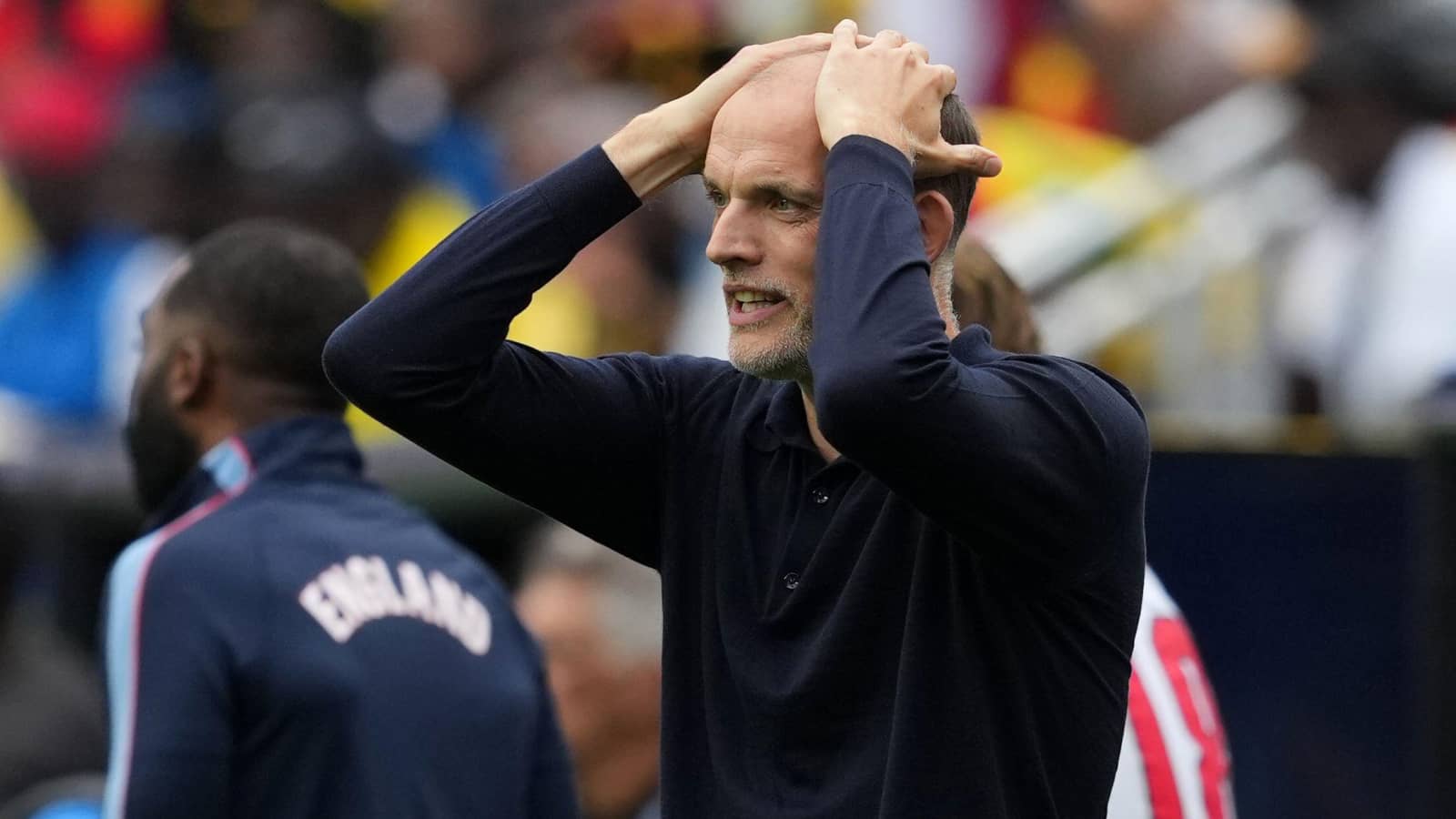
Thomas Tuchel faces a defensive emergency on the right flank. England have used five different right-backs in just four matches. As Sky Sports reported, the right-back dilemma has left the coaching staff scrambling.
Reece James is sidelined indefinitely with a hamstring injury, proving that his selection was a massive gamble. Bayer Leverkusen's Jarell Quansah is also a major doubt after twisting his ankle against Panama. During the edgy 2-1 victory over DR Congo, Djed Spence struggled.
He was hooked in the second half because the coaching staff feared he was being overwhelmed. Assistant manager Anthony Barry decided to move Declan Rice to right-back. This desperate shift highlights the lack of reliable defensive depth.
Rice is not a natural full-back. His last stint in that position was a brief twenty-minute appearance for Arsenal against West Ham. Mikel Arteta quickly abandoned the experiment when Arsenal lost control of the midfield.
Moving Rice to the flank against Mexico presents a massive tactical risk. Furthermore, Rice is playing through physical distress. He is battling neural pain in his hamstring and lower back.
After the DR Congo game, he was seen using an icepack on his leg. Tuchel later admitted to Football365 that the midfielder was playing through severe physical discomfort.
Rice wanted to stay on but simply could not run. Tuchel confirmed that the midfielder is dealing with neural issues rather than a fresh tear.
"I asked him very late and he said 'I can do it for the team, but I am in terrible pain'," Tuchel said.
Mexico's main threat, Julián Quiñones, will target this vulnerable flank. Quiñones has already scored three goals in the tournament from the left wing. He possesses the speed to exploit any defensive hesitation.
If Rice is physically compromised, Quiñones will dominate the right channel. The battle on England's right will decide the tie. Tuchel has very few alternatives to cover the space.
Here is how England's right-back options have disintegrated during the tournament:
- Reece James: Sidelined with a hamstring injury.
- Jarell Quansah: Battling to recover from a twisted ankle.
- Tino Livramento: Left the squad early in the campaign.
- Djed Spence: Hooked against DR Congo due to poor performance.
The Midfield Shuffle
The Palmer Enigma
If Rice is shifted to right-back, the midfield requires restructure. Jude Bellingham has shown he can operate in a deeper role. When he deputised for Rice against Panama, Bellingham was named man-of-the-match.
He registered the highest combined defensive and attacking actions on the pitch. Bellingham's retreat would open a slot at the number ten position. Eberechi Eze or Morgan Rogers could step into the creative role.
This adjustment would preserve England's central solidity. It also allows Elliot Anderson to serve as a midfield option off the bench. Nico O'Reilly offers another alternative on the left flank.
Yet, the lack of squad depth raises questions about squad selection. The decision to leave Cole Palmer at home looks increasingly questionable. Palmer scored eleven goals for Chelsea this season.
He watched England's attacking struggles against Ghana's low block from his television. According to The Mirror, Palmer was frustrated by his exclusion from the World Cup squad.
The 24-year-old wanted to prove his critics wrong after his Euro 2024 final goal. Instead, he is spending his first free summer grounded at home. Tuchel's selection choices continue to draw heavy fire.
Shearer's Critique and the Winger Dilemma
Alan Shearer has openly criticised Tuchel's tactical decisions. The former England captain demanded three major changes to the starting lineup. Shearer wants Spence, Marcus Rashford, and Noni Madueke dropped.
He argues that the starting wide players have failed to influence matches. Shearer suggested playing Ezri Konsa at right-back to restore balance. This would allow John Stones to partner Marc Guéhi in central defence.
On the left, Shearer advocates for Anthony Gordon to start. Gordon's substitute appearance against DR Congo yielded two assists for Harry Kane. Gordon has impressed since his high-profile transfer to Barcelona.
His direct running and defensive work-rate contrast with Rashford's recent performances. Rashford has looked isolated against compact defensive units. Gordon's ability to track back could help support the makeshift right-back.
Bukayo Saka is also pushing for a start on the right wing. Madueke has struggled to beat his marker in one-on-one situations. Saka provides greater tactical discipline and tournament experience.
In a hostile stadium, reliability is more valuable than erratic flair. The wingers must track back constantly to help the full-backs. Quiñones and the overlapping Mexican full-backs will overload the flanks.
If England's wide players remain static, the back four will collapse. Tuchel must demand defensive work from his starters. Laziness in the wide areas will result in immediate elimination.
The Tactical Plan and Prediction
Survival or Collapse
Tactically, England must survive the opening twenty minutes. Mexico will start with high intensity, looking to score early. They will seek to feed off the energy of eighty thousand fans.
One commentator compared Mexico to a boxer who throws everything in the early rounds. If England can contain this initial surge, the game will shift. The altitude will eventually affect both teams, but Mexico's pressing will slow down.
England have the superior individual quality to exploit spaces late in the match. The finishers will decide the outcome, not the starters. Defensively, England's statistics are misleading.
The team has conceded an xG of just 2.3 over four matches. However, this figure does not reflect their actual vulnerability. The defensive line has looked shaky under pressure, especially during transition moments.
The winner of this tie faces Brazil or Norway in the quarter-finals. The bracket is difficult, but the immediate hurdle is immense. England have rarely faced an atmosphere as intense as the Azteca.
To progress, they must show mental resilience. My prediction is a 1-0 victory for Mexico. England's right-back crisis will prove fatal against Quiñones.
The altitude will sap England's energy in the second half, preventing a comeback. Tuchel's tactical compromises will ultimately catch up with him in the thin air of Mexico City.
Read Next
- Why England's World Cup run could end in the thin air of the Azteca
- Can England survive the Azteca and Thomas Tuchel's tactical identity crisis?
- England's secret hotel plan has already blown up in Mexico City
- England fans are dreaming of July 19 but a Mexico trap is waiting
- 🏴 England World Cup 2026 — Three Lions Hub
- 🇲🇽 Mexico World Cup 2026 — El Tri Hub