The Physiological Tax of 2,240 Meters
The Estadio Azteca is a tactical graveyard for visiting teams. At 2,240 meters above sea level, the physiological demands of football undergo a violent transformation. For an England squad that has spent the last year playing in temperate, sea-level European conditions, this round-of-16 tie against Mexico is primarily a battle against oxygen deprivation.
In thin air, the partial pressure of oxygen drops significantly, reducing the amount of oxygen that enters the bloodstream with each breath. The immediate impact is on the body's aerobic recovery systems. Recovery takes longer.
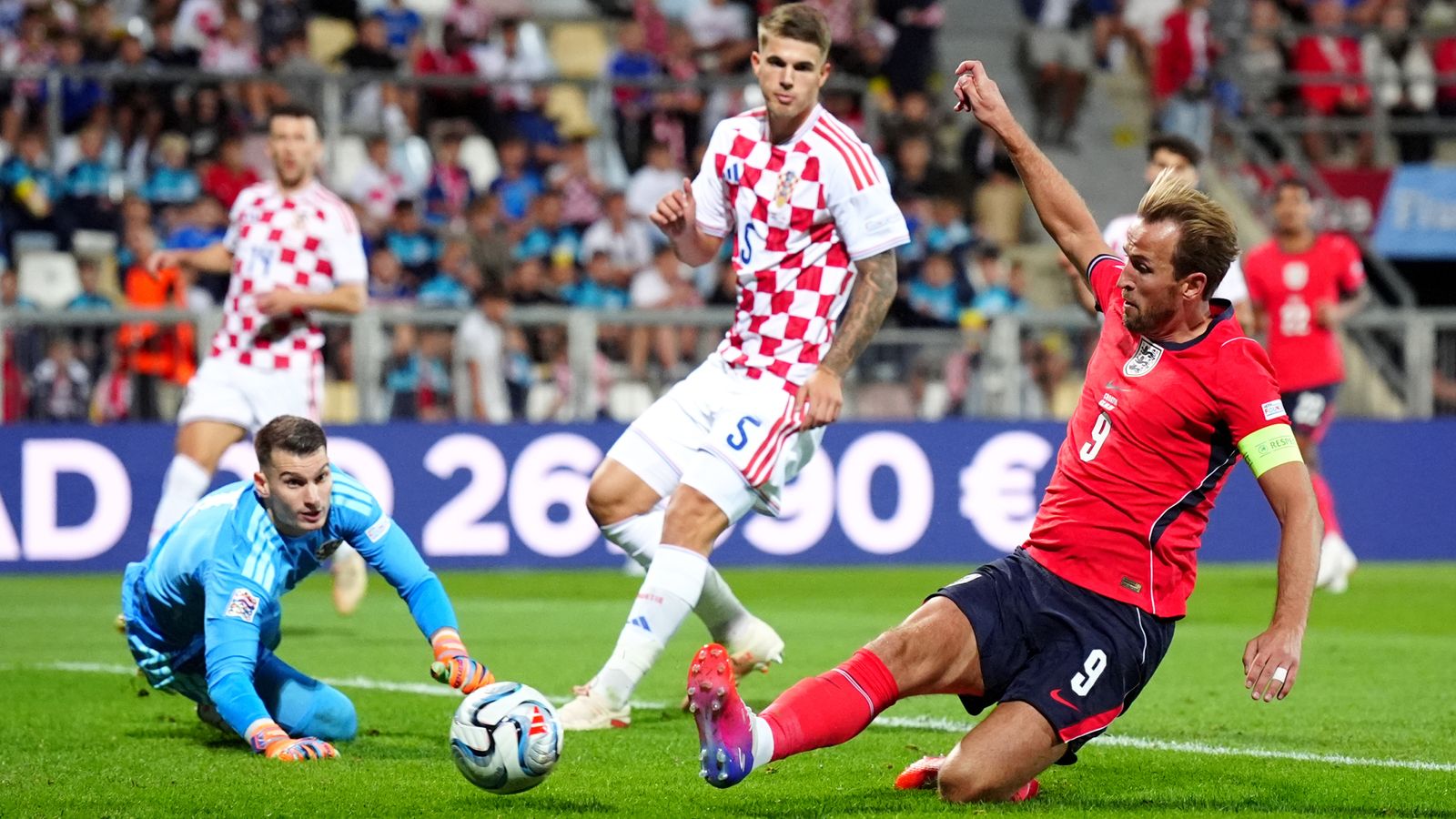
This means that a high-intensity press is structurally impossible to sustain for ninety minutes. If England attempt to replicate the aggressive, front-footed pressing system they used in their 4-2 opening victory over Croatia, they will burn out before halftime. It is that simple.
The ball also behaves differently in these conditions. The lower air density decreases aerodynamic drag by roughly ten percent. Shots travel faster.
Jordan Pickford must adjust his positioning, as misjudging the flight of a flighted ball could prove fatal against a Mexican side that is highly experienced in exploiting these physical anomalies.
Mexico's Defensive Wall and the Aguirre Setup
Javier Aguirre has built a side that refuses to concede. Four consecutive clean sheets against South Africa, South Korea, Czech Republic, and Ecuador are not an accident. They do not bend.
Out of possession, Aguirre employs a compact 5-4-1 shape that transitions into a 3-4-3 when possession is secured. The wing-backs drop deep to form a flat back five, while the midfield four contract to close the central lanes. This system is designed to force opponents into wide areas, where Mexico can trap them against the touchline.
They invite crosses, relying on their three center-backs to dominate the penalty area.
Against Ecuador in the round of 32, Mexico allowed just 0.38 xG, suffocating the Ecuadorian midfield and forcing them into low-value shots from distance. The assistant coach, Rafael Marquez, has clearly drilled the defensive line on spacing. The gap between the defensive line and the midfield unit rarely exceeds twelve meters, leaving no room for opposing playmakers to operate in the half-spaces.
England must find a way to drag this defensive block apart. Slow, lateral passing will play directly into Mexico's hands. Tuchel's side must use quick, third-man combinations and vertical passes to bypass the midfield press before the defensive block can settle.
Tuchel's Midfield and Selection Dilemmas
Tuchel faces several difficult selection decisions. The most pressing is at right-back, where Reece James remains sidelined with a hamstring strain. The Chelsea defender's absence leaves a void that Djed Spence and Ezri Konsa are competing to fill.
Spence offers electric recovery pace and attacking thrust, but he lacks the defensive positioning of Ezri Konsa. Against a winger as dangerous as Julián Quiñones, who frequently cuts inside onto his stronger foot, Konsa's defensive awareness might be preferred. This would allow England to form a temporary back three in possession, protecting against Mexican counter-attacks.
In midfield, the partnership of Declan Rice and Elliott Anderson is expected to start. Anderson's inclusion ahead of more defensive options is a tactical choice aimed at retaining possession. Against Panama, Anderson completed ninety-two percent of his passes, acting as a vital pressure valve.
Jude Bellingham will start in the advanced midfield role, but his instructions must change. Instead of making long, vertical runs into the box, Bellingham needs to drop deeper to support Rice and Anderson in possession. This will create a midfield three, helping England control the tempo of the game and prevent the match from degenerating into a track meet.
Breaking the Azteca Fortress
Mexico's home record at the Azteca is formidable. They have lost just twice in 88 official matches at the stadium, a record that spans decades and multiple generations of players. The combination of altitude, heat, and a hostile crowd creates an environment that has broken better teams than this England side.
Harry Kane will be England's primary outlet. The captain has scored five goals in the tournament so far, including a double in the 2-1 comeback win against DR Congo. But he will not get the same space he enjoyed in Atlanta. He will be closely marked by Mexico's central center-back, who will look to engage him physically from the first whistle. This will be a battle.
To succeed, Kane must drop deep to drag his marker out of the defensive line, creating space for the wide forwards to run into. Bukayo Saka and Anthony Gordon must time their runs to exploit the space behind the Mexican wing-backs. If England's wide players remain static, Mexico will easily contain Kane and launch quick transitions through Luis Chavez and Raul Jimenez.
For fans waiting in suspense for the match to begin, testing their knowledge on the BBC World Cup trivia challenge is a good way to pass the time, but the tactical reality on the pitch will be far more demanding. The opening thirty minutes will be critical; England must survive the initial Mexican surge without conceding.
The Tactical Plan for the Second Half
The match will likely be decided in the final thirty minutes, when fatigue sets in. Tuchel must use his bench wisely to refresh his team's energy levels. The five-substitute rule is a major advantage for England, who possess greater squad depth than their hosts.
Here is how England must manage the game's phases:
- Phase 1 (Minutes 1-30): Low block, slow possession, absolute energy conservation.
- Phase 2 (Minutes 31-60): Targeted pressing triggers, vertical transitions, exploiting space behind the wing-backs.
- Phase 3 (Minutes 61-90): Strategic substitutions, defensive shape reinforcement, set-piece prioritization.
If England can enter the final third of the match with the score level, the pressure will shift to Mexico. The home crowd, which can be a source of inspiration, can quickly turn hostile if they sense their team is struggling to break England down. That is the moment for Tuchel's side to strike, using the pace of their substitutes to exploit a tiring Mexican defense.
Prediction: A Tense, Low-Scoring Battle
This will not be an open, entertaining spectacle. Mexico's defensive discipline and England's need to conserve energy will result in a cagey, tactical chess match. Neither manager will want to commit players forward and risk being caught on the counter-attack.
England have the individual quality to win this tie, but they must play with supreme discipline. A single defensive mistake or a moment of fatigue will be punished. Tuchel's game plan must be executed perfectly to nullify the altitude advantage.
We predict a tight, defensive affair. England will struggle to create clear chances against Mexico's back five, but their defensive organization will keep them in the game. Expect a single goal to settle it in the second half, with England securing a hard-fought 1-0 victory through a Kane set-piece to progress to the quarter-finals. It will be ugly, but effective.
Read Next
- Why England's World Cup run could end in the thin air of the Azteca
- England must survive the Azteca noise and their own paranoia to beat Mexico
- FIFA tried to ruin the England-Mexico match and fans are absolutely furious
- England get a massive scheduling break ahead of their Mexico showdown
- 🏆 World Cup 2026 — Full Coverage Hub
- 🏴 England World Cup 2026 — Three Lions Hub
- 🇲🇽 Mexico World Cup 2026 — El Tri Hub
- ⚽ Liga MX 2026 Hub — El Clásico Nacional & WC2026 Mexico