The 61-Player Funnel Closes
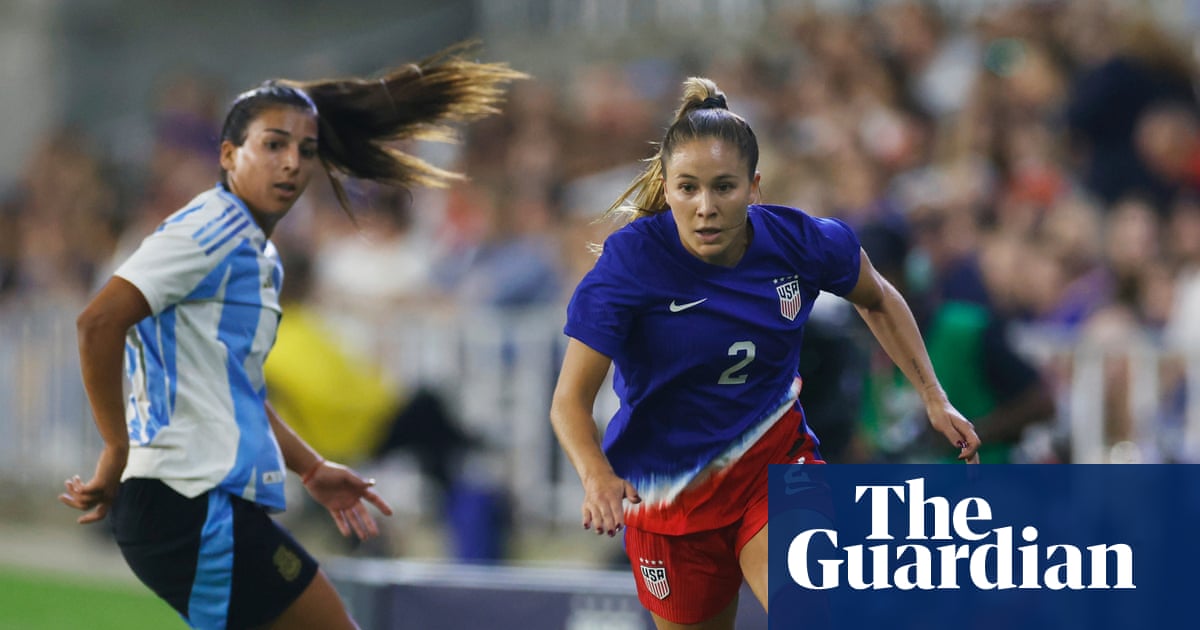
Emma Hayes spent two years evaluating 61 players for the United States. Over that 24-month span, she handed senior debuts to 33 different footballers. On Wednesday, that sprawling experimental audition abruptly halted.
Her 23-player Concacaf W Championship roster represents a decisive pivot toward tournament pragmatism. As The Guardian reported, Hayes locked in her preferred core for the 2027 World Cup cycle in Brazil. The endless roster churn has finally stopped.
The selection data reveals a dramatic contraction of trust. Of the 33 debutants trialed since Paris, only a handful survived the cut. Hayes used friendlies to gather data, but competitive stakes forced an immediate retreat toward pedigree.
The headline metric is an average squad age of 26.1 years. That figure sits in the sweet spot for tournament football. It profiles as a prime physical group built to sustain intense counter-pressing across short rest windows.
Only two players are 30 or older: midfielder Lindsey Heaps and playmaker Rose Lavelle. Everyone else is in their athletic prime. Hayes has constructed an athletic baseline designed to outrun regional opponents over 90 minutes.
Experience Curves and Outfield Outliers
Tournament football consistently punishes green rosters. Experience curves show that minutes correlate directly with game management under pressure. Hayes understands this reality, which explains why 19 of her 20 outfield selections carry double-digit caps.
Only four outfielders made the travel group with fewer than 12 senior caps. That quartet consists of Croix Bethune with seven, Kennedy Wesley with nine, Kate Del Fava with one, and Evelyn Shores with zero caps. Everyone else in the outfield pool has navigated senior international pressure repeatedly.
Bethune forced her inclusion on pure form. Last weekend, she sent the Kansas City Current into the NWSL championship with a curling free-kick. Her seven caps understate her value as an interior needle against low blocks.
At the other extreme sits Angel City defender Evelyn Shores. Shores arrives as the lone uncapped player in the 23-woman group. She becomes only the second uncapped player named to a USWNT World Cup qualifying roster, matching Taylor Flint in 2022.
Selecting an uncapped defender for qualifiers is an undeniable anomaly. Historically, American coaches treat these windows as conservative exercises. Taking Shores signals either extraordinary training data or genuine concern regarding full-back depth.
The Girma Absence Exposes the Backline
Every tactical system has a load-bearing pillar. For Hayes, that pillar is central defender Naomi Girma. With Girma sidelined by persistent muscle issues, the backline faces immediate structural questions.
Girma is far more than an elite one-on-one defender. She serves as the team's primary passing hub from deep buildup zones, consistently breaking opponent lines with driven ground balls into the half-spaces. Without her progressive passing range, American buildup tempo inevitably slows and becomes predictable.
Look closely at the remaining defensive numbers. The unit features Tierna Davidson, Emily Fox, Avery Patterson, Tara Rudd, Evelyn Shores, Gisele Thompson, Kennedy Wesley, and Kate Del Fava. Three of those eight defenders—Wesley with nine, Del Fava with one, and Shores with zero—combine for just 10 senior caps.
That is an alarming concentration of inexperience. Davidson and Fox provide veteran stability, but any disruption forces untested personnel into knockout minutes. Hayes has gambled on developmental ceiling over proven tournament resilience.
Del Fava possesses precisely one senior cap. Thompson and Rudd offer recovery pace, but neither has faced the chaotic reality of regional knockout matches. When games turn ragged, positional discipline matters.
The Goalkeeping Vacuum After Alyssa Naeher
The drop-off in goal is even starker. For nearly a decade, Alyssa Naeher provided certainty between the posts. Following Naeher's retirement, as noted in the squad announcement, Hayes opened an audition that remains unresolved.
Her three goalkeepers are Claudia Dickey of Seattle Reign, Mandy McGlynn of Utah Royals, and Phallon Tullis-Joyce of Manchester United. None has played a single minute of World Cup qualifying football in their careers. That amounts to zero combined caps in matches of this magnitude.
Tullis-Joyce posts strong shot-stopping numbers at Manchester United, while Dickey excels in domestic distribution. Yet domestic form rarely matches the physical reality of international qualifiers. Regional opponents will crowd the six-yard box on set pieces to test their resolve.
Hayes confirmed this three-way battle remains completely open. Starting a goalkeeper without knockout experience is an unavoidable gamble. If El Salvador generates set-piece chaos, that lack of international command could become costly.
Midfield Continuity and Attacking Muscle
While the defense carries clear vulnerabilities, the front six looks ruthless. Hayes retains eight gold medalists from Paris. That continuity provides a massive statistical counterweight to the unproven backline.
The biggest tactical boost comes in the central midfield pivot. Sam Coffey returns to the squad after an injury ruled her out of the previous international window. Her presence instantly stabilizes the team's defensive transition metrics and prevents counter-attacks.
Coffey acts as Manchester City's midfield metronome, screening channels and recycling possession efficiently. Alongside her, Rose Lavelle and Lindsey Heaps bring veteran poise. Claire Hutton and Lily Yohannes add technical depth, while Bethune offers a game-changing spark against low blocks.
Up front, Hayes possesses devastating firepower. The Olympic starting trio of Trinity Rodman, Mallory Swanson, and Sophia Wilson remains entirely intact. That frontline overwhelmed defenses in France two summers ago with relentless off-ball running and clinical finishing.
The supporting attackers are equally dynamic. Michelle Cooper, Ashley Sanchez, and Chelsea's Alyssa Thompson offer relentless pressing off the bench. When opponents tire late, Hayes has runners capable of exploiting broken lines.
The Black Friday Math: One Match for Brazil
The tournament format removes all room for complacency. While games run through early December, the entire qualification equation hinges on a single match on 27 November. That date defines the four-year cycle.
The United States meets El Salvador in a Black Friday quarter-final with absolute stakes. Win, and the Americans qualify directly for Brazil 2027. Lose, and they face a stressful inter-confederation playoff in Morocco next February.
Historically, the program has owned this competition, winning nine of 11 previous editions. That translates to an 81.8 percent tournament win rate. Yet historical numbers do not matter if execution falters in a single knockout game.
El Salvador knows their tactical assignment. They will deploy a compact 5-4-1 low block, congest central space, and deliberately force play into wide crossing zones. If American full-backs fail to deliver quality service from wide positions, frustration can mount rapidly.
Key Tournament Selection Metrics
- Total player pool evaluated by Emma Hayes: 61 players
- New senior international debutants under Hayes: 33 players
- Final tournament squad size: 23 players
- Average squad age: 26.1 years
- Retained Paris Olympic gold medalists: 8 players
- Outfield players with fewer than 12 caps: 4 players
- Total historical Concacaf titles won: 9 titles in 11 tournaments
Hayes built a squad with enough firepower to overwhelm El Salvador early. But knockout tournaments expose thin margins ruthlessly. If defensive lapses or goalkeeping hesitancy emerge, testing data will not save them.
As detailed in The Guardian's squad breakdown, the laboratory phase is officially over. The 23 selected players carry the burden of execution. On Black Friday, the data must produce a result.