
Egypt finally have the tactical structure to back Salah's genius
The half-space transition that solved New Zealand
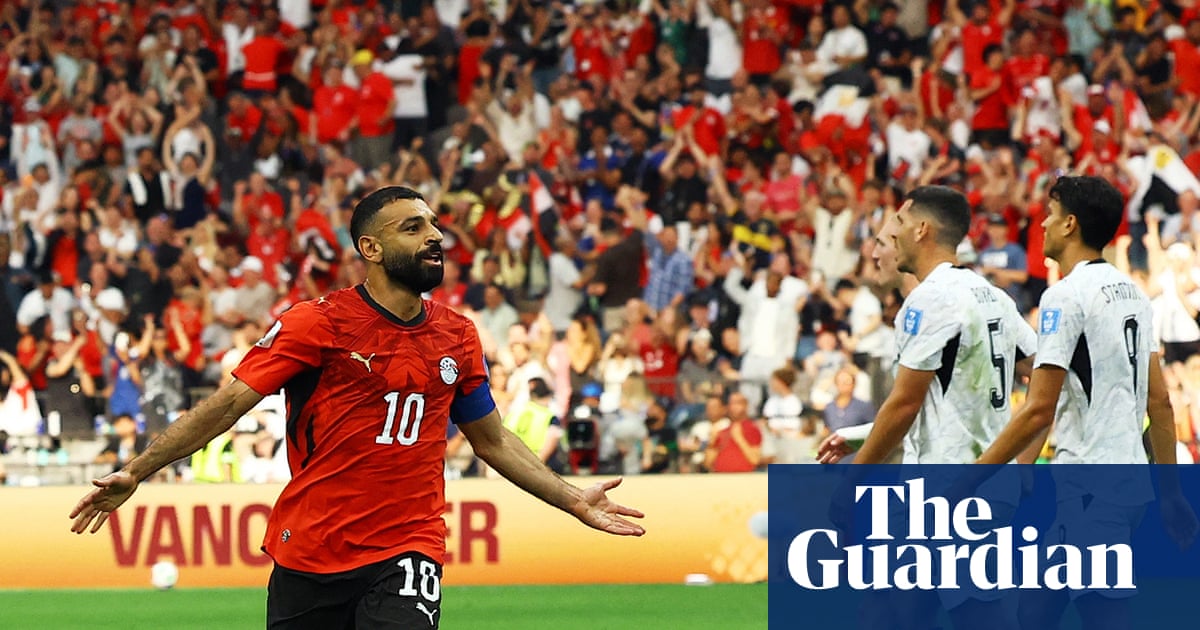
Egypt’s 3-1 victory against New Zealand on June 22 was not just a result of individual brilliance. It was a calculated adjustment in spatial management that finally allowed Mohamed Salah to function as a genuine playmaker rather than a trapped touchline winger.
For years, international managers have tried to force Salah into a rigid 4-3-3 shape that leaves him isolated against double-teams. Here, the tactical shift saw Omar Marmoush tucking inside from the left, effectively creating a 4-v-3 overload in the central channel. This forced the Kiwi defensive unit to compress horizontally, opening the space Salah needs to operate.
Breaking the gravitational pull
When Salah drifts into the right half-space, he functions as a gravitational force. During the match, this movement pulled the New Zealand defensive midfielder away from the center of the park, creating a pocket of space near the edge of the box. By abandoning the touchline, Salah effectively neutered New Zealand's fullback rotation.
This is a marked departure from the tactical rigidness that has haunted North African sides in past tournaments. The fluidity was evident in the 3-1 scoreline, a result that places Egypt firmly atop Group G. It is rare to see an Egyptian side control the tempo so effectively after conceding first, but the composure in the second half was measured and clinical.
The defensive cracks remain
While the offensive chemistry flourished, the defensive transition remains a glaring weakness that better sides will exploit. New Zealand’s opening goal exposed a recurring gap between the Egyptian center-backs and the pivot.
The defensive line stepped up with poor timing in the 14th minute, leaving a massive chasm that the Kiwi forwards moved into with ease. Any side with a high-pressing engine, much like the tactical adjustments we saw analyzed in recent reporting on Egypt's mid-block, will punish that lack of recovery pace in the final third. A win is a win, but Egypt cannot afford that same vertical exposure against top-tier European or South American opponents.
Valuation and depth beyond the icons
Part of why this Egyptian side looks different is the maturation of the supporting cast. The squad is finally learning how to utilize the space Salah creates rather than merely looking for him as an escape outlet whenever the pressure mounts in the midfield.
This maturity mirrors the discussions happening across the Atlantic, where clubs are re-evaluating the worth of their academy pivots. Much like the failure of Inter Milan’s £21m bid for Curtis Jones, there is a realization that internal development provides a more cohesive tactical fit than scouting external quick fixes. Egypt is benefiting from a similar internal growth, trusting regional talent to fill the lanes Salah opens.
The path to the knockout stages is now clear, but the team’s ceiling depends entirely on fixing that defensive transition. If they can tighten the gap between their lines, they are a genuine dark horse for the round of 16. If not, they will be out of the competition the moment they meet a disciplined side that knows how to exploit the pockets behind a pressing pivot.
Pep Confidential: The Inside Story of Pep Guardiola's First Season at Bayern Munich
A masterclass in football tactics from the mind of a coaching legend.
Frequently Asked Questions
How did Egypt tactically improve Mohamed Salah's role?
What role did Omar Marmoush play in the victory against New Zealand?
What represents the biggest defensive weakness for Egypt?
Why is the current Egyptian squad different from previous versions?
What is the primary concern for Egypt's future tournament performance?
More Coverage
These 10 unheralded stars could quietly decide the Premier League title race
1 week, 2 days ago
Why Carrick will be forced to abandon his Cunha false nine experiment
1 week, 6 days ago
Why Michael Carrick's Man United are getting bullied off the pitch
3 weeks ago
Sunderland finished 7th, but their underlying stats reveal a scary truth
1 month, 1 week ago
Mohamed Salah redesigned how wingers score goals in modern English football
1 month, 1 week ago
Data science is stalking football but it won't kill the game
1 month, 1 week agoMore Analysis
These 10 unheralded stars could quietly decide the Premier League title race
1 week, 2 days ago
Why Carrick will be forced to abandon his Cunha false nine experiment
1 week, 6 days ago
Why Michael Carrick's Man United are getting bullied off the pitch
3 weeks ago
Sunderland finished 7th, but their underlying stats reveal a scary truth
1 month, 1 week ago
Mohamed Salah redesigned how wingers score goals in modern English football
1 month, 1 week ago