
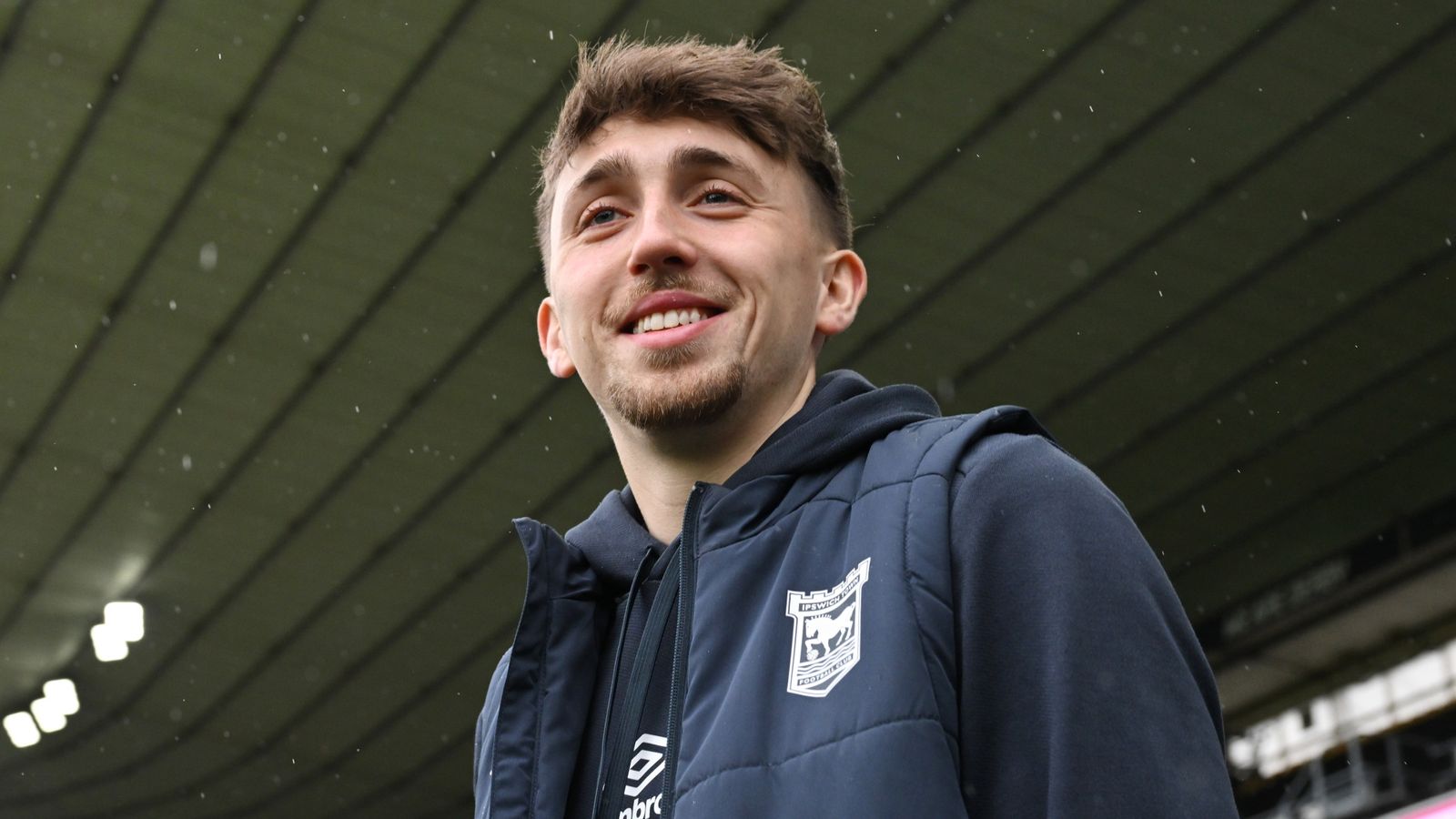
Rangers are pushing hard to secure Bologna captain Lewis Ferguson in a deal that could reach a record-breaking valuation of £17 million. The Ibrox club has held initial, exploratory talks with the Italian side to assess the feasibility of bringing the Scotland international back to Glasgow. But the midfielder's medical file remains the ultimate hurdle for a transfer of this scale.
Ferguson has successfully recovered from a major knee reconstruction and featured in the 2026 World Cup last month. Yet, the long-term physical demands of Derek McInnes's high-pressing system mean Rangers' medical department must conduct exhaustive testing. A club in Rangers' tight financial position cannot afford a multi-million pound gamble that ends up on the treatment table.
The mid-2026 exit of Scotland from the World Cup has put Ferguson back on the market as he assesses his future. Ibrox officials view this as a potential watershed moment to rebuild their midfield engine. However, Bologna's steep valuation means every medical parameter must be completely flawless before any bid is formalized.
Inside the Right Knee File: The Anatomy of a Rebuilt Joint
The origin of the physical risk dates back to April 2024 during a Serie A match against Monza. Ferguson suffered a non-contact tear of the anterior cruciate ligament in his right knee. The injury required immediate surgery, ruling him out of action for seven months and forcing him to miss Euro 2024.
Professor Stefano Zaffagnini performed the reconstruction at the Rizzoli Orthopaedic Institute in Bologna. The rehabilitation process was intense, split between specialized clinics in Italy and the national team facilities. He returned to competitive play in November 2024, but the initial comeback was far from seamless.
Medical reports confirm Ferguson experienced a series of minor hamstring and quad strains during his first three months back. These minor setbacks are typical after an autograft procedure, where tendon tissue is harvested from elsewhere in the leg to rebuild the knee ligament. The mechanical changes in the joint force surrounding muscles to compensate, increasing the risk of secondary soft-tissue tears.
The seven-month layoff also impacted his cardiovascular base, requiring a prolonged period of workload titration. Managing a rebuilt knee under the high-intensity schedule of Italian football proved a delicate balancing act. Even after reclaiming his starting role, the player required frequent ice therapy and specialized post-match recovery protocols.
The Kinetic Chain: The Risks of Soft-Tissue Compensation
An ACL tear is never just a joint issue; it is a full-leg mechanical disruption. When a player undergoes reconstruction, the harvested graft site—often the patellar or hamstring tendon—suffers a permanent reduction in peak force output. For a high-intensity box-to-box midfielder, this deficiency is a constant threat.
The nervous system alters firing patterns to protect the rebuilt knee, causing the hamstrings and calves to take on excess load. If the player's post-operative conditioning is not perfectly balanced, these muscle groups will fail under fatigue. Ferguson's minor muscular tweaks in early 2025 were classic signs of this kinetic imbalance.
Critics point out that while Ferguson played regularly in the 2025/26 season, the load of Serie A and Champions League football has accumulated. Playing through a grueling international campaign in June has left his joints with minimal recovery time. Pushing him straight into a Scottish Premiership campaign that starts on July 31 against Dundee United is a massive physical risk.
The velocity of the Scottish game places unique demands on a player's joints, particularly on dry, artificial surfaces. Ibrox medical staff are well aware that the hard turf at venues like Kilmarnock can exacerbate knee inflammation. Ferguson would be expected to anchor the midfield in these unforgiving environments, heightening the risk of joint irritation.
Strategic Alternatives: How Dan Neil Reshapes the Board
To understand the medical risk Rangers are weighing, look at their recent business. The club completed the signing of former Sunderland captain Dan Neil on a three-year contract, as Sky Sports reported. Neil arrived on a free transfer after his contract in England expired.
Neil is only 24 years old but has already accumulated 201 senior appearances. His medical history is remarkably clean, showing no major knee or ligament injuries during his time in the Championship and League One. He represents a highly robust, low-risk midfield option who can play immediately without load restrictions.
In contrast, spending a club-record fee on Ferguson represents the opposite end of the risk spectrum. While BBC Scotland reported that Ferguson would represent a marquee signing with deep family ties to Ibrox, his physical history makes him a high-maintenance asset. The medical staff would need to manage his training sessions and limit his minutes during mid-week fixtures.
Neil's profile shows that robust health can be acquired without breaking the bank. By signing a durable captain from the English leagues, Rangers secured a player who rarely misses a training session. Replicating this model is far safer than gambling the club's entire transfer kitty on a single rebuilt knee.
The Medical Verdict: Sentimentality vs. Underwriting Risk
Rangers have a painful history of recruiting players with underlying knee issues, only to watch them stall on the treatment table. Romanian international Ianis Hagi suffered an ACL injury in 2022 and has struggled to regain his pre-injury acceleration. His lengthy recovery disrupted his development and left Rangers with a high-earning asset they could not regularly deploy.
Similarly, defender John Souttar has faced repeated battles with Achilles and knee problems throughout his career. While Souttar has shown resilience, his availability has been inconsistent, forcing managers to constantly alter defensive partnerships. These cases prove that the Scottish game's physical intensity acts as an amplifier for old injuries.
Exploratory talks have included a potential swap deal involving Rangers midfielder Nicolas Raskin. While sending Raskin to Italy would lower the cash outlay, it does not eliminate the medical exposure. Rangers would still be replacing a younger, physically intact player with one who carries a rebuilt joint.
Before any paperwork is signed, Ferguson must undergo a rigorous, multi-day medical assessment at the club's training center. This screening will focus on quad-to-hamstring strength ratios and knee joint laxity. Any asymmetry greater than ten percent should abort the deal immediately.
Rangers fans are desperate for a local hero with the pedigree of Barry Ferguson's nephew, but sentimentality cannot dictate medical science. Bologna's firm valuation of the midfielder makes the transfer highly speculative. If the Italian club refuses to lower their demands, Rangers must walk away and focus their resources on healthier targets.
Read Next
- Aston Villa are panic buying and Amalie Vangsgaard won't fix their broken attack
- Why Hull City sold their best goalkeeper to clear a tiny PSR deficit
- Liverpool gamble on Jérémy Jacquet despite latest shoulder concerns
- Andoni Iraola is tearing down Liverpool to build his own machine
- ⚽ Scottish Premiership 2025-26 — Celtic vs Rangers Hub


