Old Trafford shock, Shaw's breakdown, and the VAR controversy
Manchester United secured their first Premier League victory of the 2026/27 season on Saturday, sweeping aside Ipswich Town in a seven-goal thriller at Old Trafford. Yet the final scoreline of 5-2 fails to tell the full story of an afternoon that exposed persistent defensive frailties for Michael Carrick's side.
Ipswich arrived in Manchester showing no fear of historic precedent, having once suffered a notorious 9-0 defeat on this ground back in the 1990s. Gary O'Neil's side fired an early warning shot when Julio Enciso used raw acceleration to burst past United's backline. Belgian goalkeeper Senne Lammens reacted quickly to deny the forward, but the warning went unheeded.
The visitors broke the deadlock in the 29th minute through a sharp tactical exploit on United's left flank. Abdul Fatawu isolated Luke Shaw, turned the fullback inside out with a rapid change of pace, and floated a cross toward the far post. Leif Davis met the ball on the volley, cracking a first-time strike off the crossbar and past Lammens to stun the Stretford End.
Shaw looked physically off the pace throughout the opening half. His inability to track Fatawu's lateral movement left United vulnerable whenever Ipswich launched direct transitions. Carrick's defensive unit wobbled repeatedly under pressure, forcing midfield teammates to drop deep to cover Shaw's compromised zone.
United restored parity before the interval thanks to an unforced error from the visitors. A defensive miscommunication left Ipswich exposed in a two-on-one scenario inside their own half. Matheus Cunha capitalized instantly, slipping a precise pass to Bruno Fernandes, who hammered his shot past Kjell Scherpen.
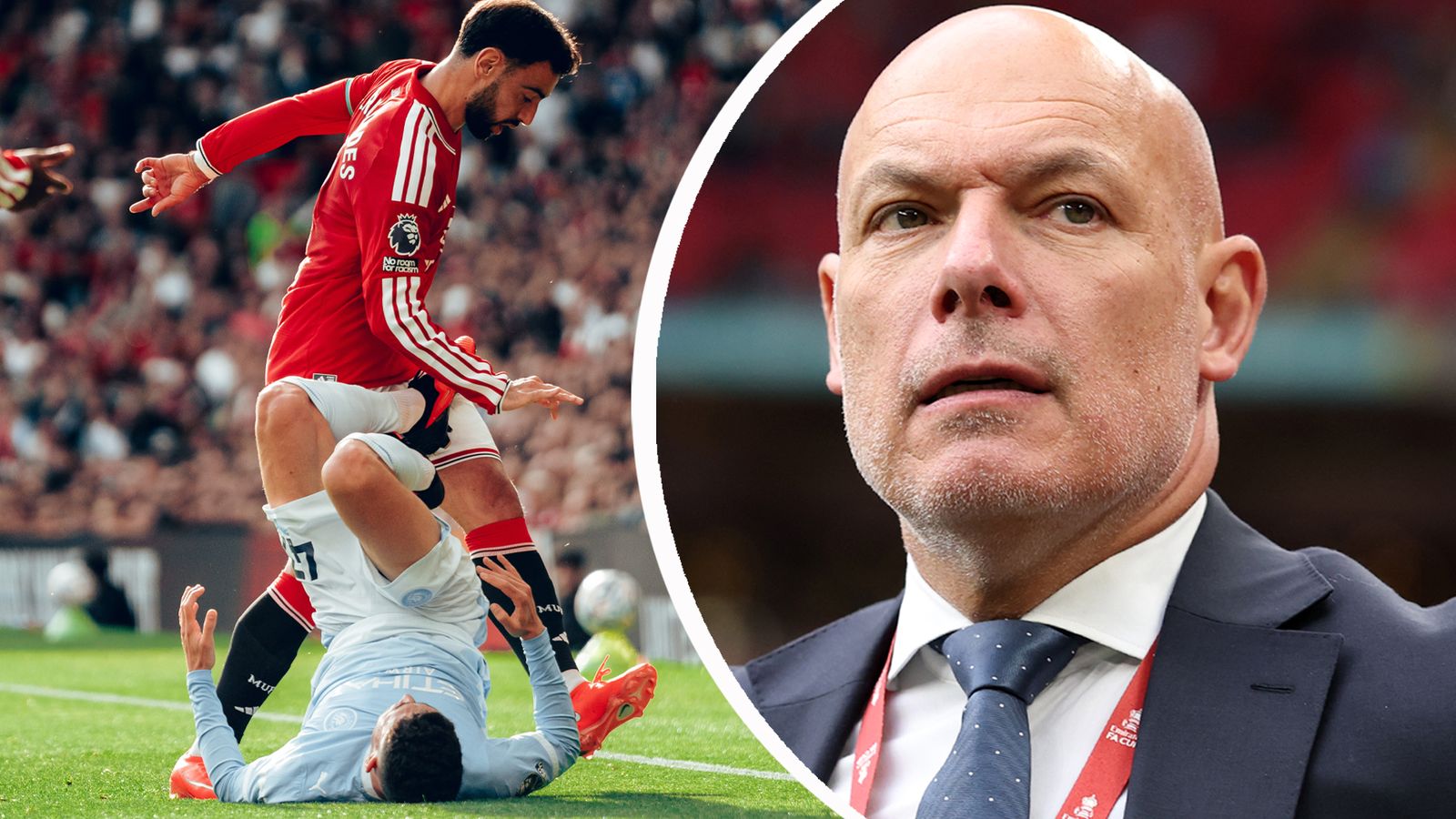
The pivotal turning point arrived early in the second half under deeply controversial circumstances. Harry Maguire clearly handled the ball inside the penalty area before taking a shot that was traveling wide of the post. Ipswich defender Jacob Greaves turned the wide attempt into his own net while trying to clear.
Despite obvious contact between Maguire's arm and the ball, VAR allowed the goal to stand as a Greaves own goal. Under current rules, an unintentional handball by an attacking player prior to an own goal does not automatically invalidate the play unless that player is the actual goalscorer. The decision infuriated O'Neil on the touchline and left Ipswich nursing a sense of injustice.
Bruno Fernandes delivers another masterclass to rescue Carrick
If United's team structure remains a work in progress, their captain remains an elite individual match-winner. Fresh off winning the PFA Player of the Year award after breaking the single-season Premier League assist record last term, Fernandes delivered a complete attacking display. His movement between Ipswich's midfield and defensive lines dictated the entire direction of the second half.
On commentary for Sky Sports, Gary Neville remarked that Fernandes stands as the single best signing of the post-Sir Alex Ferguson era. Few inside Old Trafford would dispute that assessment. Even with high-profile attacking arrivals surrounding him, the Portuguese playmaker remains the indispensable central hub of Carrick's system.
Fernandes doubled his tally from the penalty spot on the hour mark after Cunha drew a foul inside the box. The captain stepped up and coolly dispatched his spot-kick past Scherpen from 12 yards. That strike effectively broke Ipswich's resolve and gave the home side complete scoreboard control.
The treble was completed shortly after through opportunistic positioning. A deflected ball bounced fortuitously into the six-yard box, allowing Fernandes to react fastest and poke home from close range. It marked his third hat-trick in a United shirt, cementing his status as the division's premier creator and finisher.
Bryan Mbeumo added gloss to the final score with a late fifth goal. The finish provided redemption for the forward, who had earlier produced a bewildering miss by smashing the crossbar from just a yard out. Chuba Akpom pulled back a stoppage-time consolation goal for Ipswich, capping off a chaotic second half.
As Mirror Football reported in their match analysis, Fernandes consistently hauls United out of difficult situations. His relentless pressing and line-breaking passes masked structural deficiencies that stronger opponents will inevitably target. Reliance on individual magic remains Carrick's most dangerous habit.
The Benjamin Sesko dilemma and forward rotation tension
While Fernandes dominated the headlines, Carrick's tactical decisions upfront raised serious questions about squad management. Marquee summer signing Benjamin Sesko started on the bench for the second consecutive week. The Slovenian international was granted just 11 minutes of action as a late substitute.
Sesko endured a similarly restricted role against Hull City last weekend. Holding back a high-profile center-forward suggests Carrick's staff are enforcing a strict physical workload strategy following summer international fixtures. However, limiting the forward to brief cameos slows his integration alongside Cunha and Marcus Rashford.
Rashford returned to the starting lineup on Saturday after coming off the bench at half-time against Hull. The England international offered direct running and stretch on the left wing, providing width that opened space for Fernandes inside. His physical output proved encouraging, but his inclusion forced Cunha into a hybrid central role.
Carrick faces a delicate balancing act managing forward egos and match fitness. Sesko was expected to lead United's front line this season, yet he currently finds himself behind Cunha in the central rotation. Prolonged benching risks damaging the striker's confidence during a critical adaptation period.
The counterargument favors Carrick's cautious approach. Rushing a player into heavy Premier League contact before full match sharpness is achieved risks soft-tissue injuries. With fixture congestion mounting in September, preserving Sesko for the long haul may prove prudent. Still, match rhythm cannot be built from the bench.
Gary O'Neil's tactical blueprint and United's defensive reality
For Ipswich manager Gary O'Neil, the five-goal concession marks a harsh return to Old Trafford. Yet for the first 60 minutes, the visitors displayed impressive structural discipline. Their compact mid-block disrupted United's build-up play and forced Carrick's center-backs into rushed sideways passes.
This iteration of Ipswich looks far better equipped for top-flight survival than their previous campaign under Kieran McKenna. During that season, Ipswich won just four matches and finished 16 points adrift of safety. The current squad possesses greater physical resilience and tactical clarity.
Summer signings Daizen Maeda, acquired from Celtic, and former West Ham defender Issa Diop provided clear physical upgrades. Maeda's defensive work rate tracking back neutralized several United overlap attempts in the first half. Diop anchored the box effectively until the controversial second-half handball sequence shifted momentum.
O'Neil's primary challenge is solving his team's physical fade late in matches. Ipswich collapsed rapidly after Fernandes converted his 60th-minute penalty, conceding three goals in a twenty-minute collapse. Maintaining pressing intensity across 90 minutes remains the threshold between competitive performances and heavy defeats.
Further tactical details from the match coverage highlight United's lingering transition flaws. Carrick must address Shaw's mobility drop-off before facing elite opposition wingers. If opposition managers overload United's left channel, Carrick may be forced to alter his mid-block coverage or make personnel changes at fullback.
Saturday's victory delivers vital points and early-season momentum to Old Trafford. Bruno Fernandes once again proved why he is the league's most effective creator. But until Carrick fixes his backline's lateral speed and establishes a clear central striker hierarchy, United's top-four aspirations will rest on fragile ground.
Read Next
- Bruno Fernandes just saved Michael Carrick from an early Old Trafford meltdown
- Spurs Sink to the Bottom, Gakpo Chooses City, and United Panic Early
- Man United have a glaring set-piece problem they can no longer hide
- Why Manchester United's set-piece crisis is worst in the Premier League
- 🇵🇹 Portugal World Cup 2026 — A Seleção Hub