The 19-Day Comedown and Brighton's Weekend Heist
Put down your phones and grab a glass of water, because the Premier League hit us with a massive dopamine hit before yanking the cord out of the wall. Over the past 17 days, we gorged ourselves on 30 matches that delivered 79 goals across five rounds of chaotic domestic action. Now we get slapped in the face with 19 blank days of international break withdrawal symptoms where we have to watch mid-tier nation friendlies and pretend to care about tactical adjustments against San Marino.
- 30 Premier League games squeezed into 17 days
- 79 total goals scored across five opening rounds
- 19 consecutive blank days of international break misery ahead
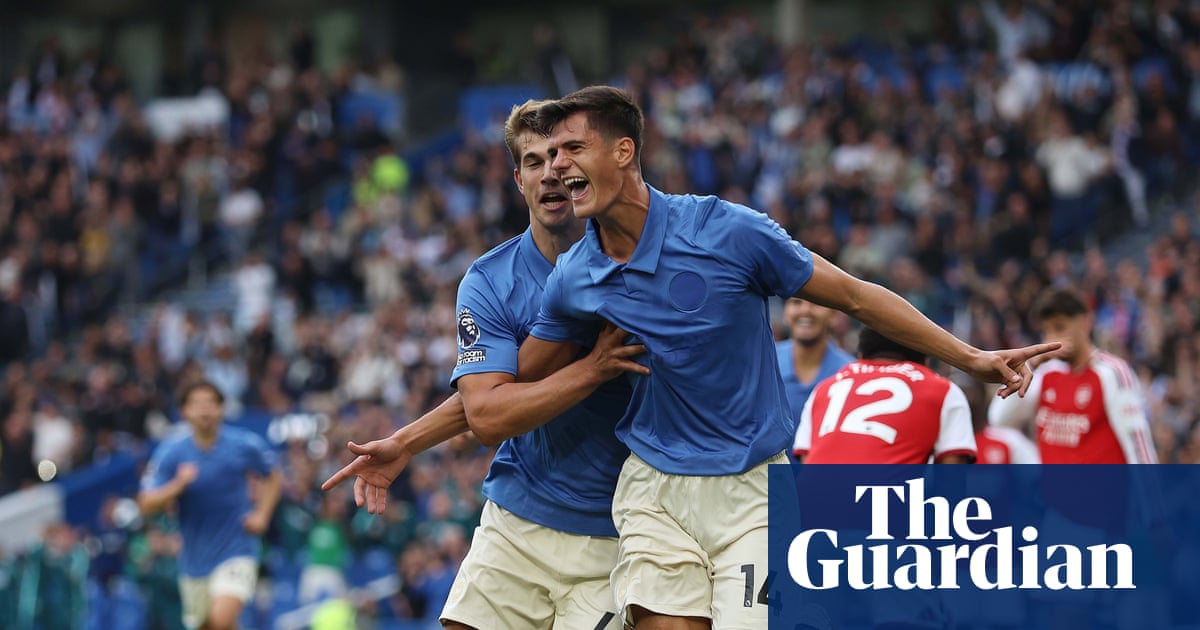
If you take Tottenham Hotspur out of the math, the numbers look even more staggering. Spurs have essentially evolved into a post-goal experimental art collective that operates completely detached from the concept of football scoring. But for everyone else, the opening stretch was a high-octane frenzy that capped off on Saturday with Brighton utterly bullying Arsenal on home turf.
Nobody saw Saturday's ambush coming, least of all the reigning champions. Arsenal didn't just lose a tactical chess match on the south coast; they got physically manhandled from the opening whistle to the final whistle. For 90 straight minutes, Fabian Hürzeler's squad looked like the legitimate title contender while Mikel Arteta's side looked like they forgot to check their mirrors on the highway.
blockquote>"For 90 minutes, only one of these teams looked like genuine contenders for every trophy on offer."That result sent shockwaves through the league table because it broke the monotonous rhythm we were all getting used to. Rolling back the clock one year, the top of the table felt like a copy-paste job with a bald, angry manager winning five straight despite looking shaky in defense. But Brighton showed up on Saturday with brass knuckles and stripped the champions of their aura in broad daylight.
Now we sit in the cold turkey phase, desperately scrolling for transfer rumors while our brains try to process what just happened at the Amex. As Barney Ronay reported in The Guardian, this sudden stoppage leaves fans staring into a giant content abyss. It is the classic autumn crash where the adrenaline wears off and you're left shivering on the couch waiting for October.
The Brighton Blueprint vs The Omniball Borg
Let's talk about Fabian Hürzeler, who is 33 years old and currently looking like the smartest kid in the classroom. He is booked to sit on TalkSport for an hour on Tuesday morning to explain how he pulled off the heist of the weekend. That radio appearance is the ultimate modern badge of honor for a young manager whose stock is rising faster than tech shares.
The entire Premier League has become a homogenised playground dominated by the Cruyff-Michels-Guardiola press-baiting machine. Every team rolls out the exact same Omniball template, passing out from the back until two robotic systems stare at each other across an empty patch of turf. It feels like driving a high-end electric vehicle: smooth, terrifyingly fast, but occasionally devoid of soul.
Brighton broke that algorithm by turning up the physical violence and winning every single duel on the pitch. In a league where technical execution is standardized across almost every squad, pure raw physical desire becomes the ultimate point of difference. Brighton didn't out-pass Arsenal; they bumped them off their spots, won the second balls, and ran them into the turf.
Can Brighton actually sustain this over a full 38-game marathon while handling midweek cup fixtures? Probably not, and history tells us middleweight dreamers usually run out of gas by February. The cold reality of modern football is that well-run middle-class clubs like Brighton act as open auditions for mega-rich European giants.
Hürzeler and his star players are locked into a cycle of collective individualism where every masterclass is just a job application for Paris Saint-Germain or Bayern Munich. The players aren't dreaming of building a 20-year dynasty on the south coast when life-changing money is sitting in a Champions League contract. But for one glorious Saturday, that audition tape looked like a blockbuster movie that put the entire division on notice.
When fans of elite clubs watch their millionaires get outworked by Brighton, the immediate reaction is fan-board meltdown. Supporters start diagnosing soul sickness, locker room rot, and debauched management the second their midfield gets run over. But as recent analysis from The Guardian highlights, that ruthless physical ladder is precisely what keeps the Premier League brutal, state-of-the-art, and addictive.
Manchester United's Waxwork Museum and the Spurs Void
Moving up north, Manchester United remains the most entertaining soap opera on television, even when the product on the pitch is completely dead inside. Is Michael Carrick the tactical genius destined to restore Old Trafford, or is he the sole reason United remain stuck in mediocrity? The answer to both questions is a resounding no.
United has stopped being a football club striving for trophies and has instead morphed into a living metaphor for modern Britain. It is a grand, angst-ridden waxwork museum operating on pure nostalgia, run by temporary caretakers and corporate opportunists retailing past glory to tourists. There are no higher levels waiting around the corner for this squad; this current purgatory is the destination.
blockquote>"The reality for United is that there are no other levels. This is the level, a club that instead acts as a grand, angst-ridden but very accurate metaphor for modern-day Britain, furiously retailing its own heritage, run by fill-ins and opportunists, a mobile waxwork museum living on tourism and memories."Bruno Fernandes continues to be the primary engine of that circus, throwing his hands up in despair like a young Elvis while spamming risky forward passes. His entire game is built on high-variance shithousery that either generates a highlight goal or leaves his center-backs completely exposed. He is the ultimate reflection of United right now: loud, dramatic, exhausting, and fundamentally chaotic.
Meanwhile in North London, Tottenham Hotspur is quietly occupying 17th place without causing even a ripple of public panic. Spurs have achieved a level of mid-table apathy so profound that they could get relegated tomorrow and most neutral fans wouldn't even stop scrolling their feeds. They possess just enough semi-interested talent to hover above the drop zone while providing zero actual drama.
Even the bottom of the table feels degraded by repetition when Spurs are involved. The drama used to come from traditional powerhouse clubs panicking near the relegation line, but Tottenham has turned misery into a flatline. They don't score, they don't concede memorable goals, they just exist as a fixture filler on your weekend slate.
Across the pitch, counter-attacking specialists like Anthony Elanga are thriving simply by putting their heads down and sprinting into empty space. When an inverted winger discovering he can cross with his strong foot counts as a tactical breakthrough, you know the league has reached peak standardization. Yet we tune in every week because even predictable speed runs look glorious in high definition.
Tuchel's Naval Command and the 87% Remaining
Now we enter the international window where Thomas Tuchel gets to suffer through the media meat grinder for nearly three weeks. Watching Tuchel manage England is like watching a scurvy-ridden Napoleonic naval commander trying to pilot a battleship on a diet of ship's biscuits and morphine. He has been tasked with fixing deep cultural flaws in English football during three-hour training blocks while the press roasts his nationality.
The tabloid anger over Tuchel's tactical setup is already boiling over before the squad even takes the pitch for international duties. Pundits will spend the next fortnight debating why English players can't keep ball possession, as if a German manager can magically erase twenty years of technical anxiety in two sessions. Expect endless hot takes on whether his stoic demeanor on the touchline is a sign of tactical brilliance or utter detachment.
Over in France and Germany, scouts are already circling around Florian Wirtz as his transition to English football encounters turbulence. Wirtz possesses magical feet and elite spatial awareness, but he bounces off Premier League defenders like a pinball when contact arrives. In this league, physical resilience is non-negotiable, and Wirtz looks far more suited for the tactical cathedrals of Paris Saint-Germain or Bayern Munich.
If you can't absorb a shoulder charge from an angry center-back on a wet afternoon, the Premier League will chew you up and spit you out. That physical threshold is why top-tier foreign playmakers often look like fish out of water during their first autumn in England. You can have all the Cruyff turns in the world, but if a defensive midfielder snaps you in half, your highlights mean nothing.
We still have 87% of the season left to play, which means plenty of time for chaos to reign supreme before May. Will Erling Haaland continue knocking down defenders like bowling pins, or will the physical grind finally slow down the scoring machines? Will Arsenal rebound from their south coast nightmare, or will Arteta's tactical rigidity start showing deeper cracks?
The beauty of this league isn't that it's flawless; it's that the flawless parts are so polished they border on ridiculous. The Premier League is a brutal, endlessly moreish mega-product that hooks you, breaks your heart, and leaves you begging for the next round. So take a deep breath, survive the international break, and get ready for the circus to roll back into town come October.
Read Next
- Brighton exposed Arsenal's broken build-up and Arteta knows it
- Arsenal's £75m midfield experiment just crashed into a Brighton brick wall
- Arsenal fans are spiraling after getting battered 3-0 at Brighton
- Arsenal's Amex nightmare and Newcastle's back-three panic show tactical cracks
- ⭐ UCL 2026 — Champions League Quarter-Finals Hub