The 91st-minute lie at the Vitality Stadium
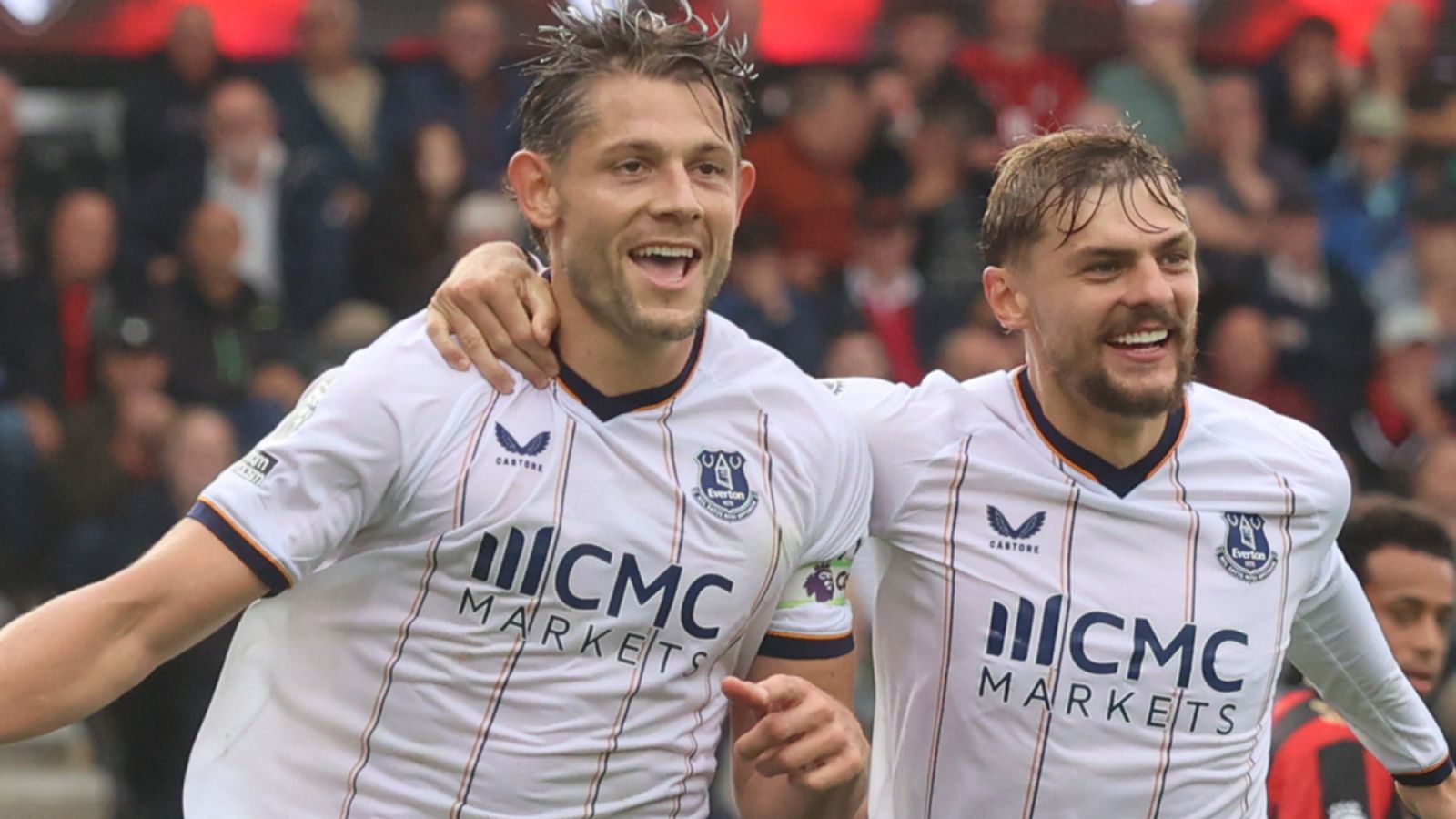
If you only glanced at the scoreboard on Saturday, you might think Everton produced a standard David Moyes smash-and-grab on the South Coast. James Tarkowski turning home a loose corner in the 91st minute gave the visitors an unlikely point. But the final result is a structural lie.
For the first half-hour, Everton actually dictated terms, firing 8 shots toward Dorde Petrovic's goal. Kiernan Dewsbury-Hall carved open pocket space between Bournemouth's lines, creating early set-piece danger. Jarrad Branthwaite almost scored in the 10th minute, but Petrovic reacted brilliantly to tip his near-post header over the crossbar.
Petrovic was called into action again five minutes later to deny Iliman Ndiaye, before producing a spectacular double save at the 20-minute mark. After parrying a driving effort from Tyrique George, Petrovic scrambled across his line to deny Louie Barry from less than six yards. Barry flubbed three golden opportunities on the day, highlighting Everton's chronic lack of open-play firepower.
Moyes defended his side's early output after the match, pointing out that his players created enough to lead before the break.
"I was disappointed with the second-half performance. I was pleased with the first half and I don't think we deserved to be 1-0 down at half-time." — David Moyes
Yet Moyes' frustration ignores why Everton fell behind in the first place. The moment Marco Rose adjusted Bournemouth's defensive spacing to bypass Everton's central press, the match inverted. Everton's initial burst faded completely, exposing a midfield that could not keep pace once the tempo turned vertical.
Marco Rose’s vertical blueprint takes shape
The Vitality Stadium was battered by wind and rain for Marco Rose's home Premier League debut. Outside, towering exoskeletons mark ongoing stadium renovations, mirroring the club's growth as Europa League clashes against AC Milan and trips to San Sebastián await. On the pitch, Rose's team showed why that ambition is well-founded.
Bournemouth were unchanged from the opening weekend loss to Manchester City, while Moyes introduced James Garner alongside Harrison Armstrong in midfield. That decision backfired when Rayan began tormenting Garner and Vitaliy Mykolenko on Bournemouth's right flank. Rayan beat Garner cleanly in the 15th minute, forcing Jordan Pickford to save low with his legs.
Bournemouth discarded slow build-up play for rapid transitions, breaking the deadlock in the 41st minute with ruthless speed. Rayan collected the ball near his own penalty area and launched a long, precise pass forward to Evanilson. The Brazilian striker turned Tarkowski inside out before sliding a pass across the edge of the box to Alex Scott.
Scott showed remarkable composure, taking one extra touch to set his feet before drilling a right-footed shot into the far corner past Pickford. Operating with his socks rolled low, the Channel Islander controlled the middle of the park. As noted in Sky Sports' match report, Scott made time and space bend to his will while others skidded across the wet turf.
Rose praised his young midfielder after the match, describing his display as "a top performance." Scott completely outmaneuvered Garner and 19-year-old Armstrong in central areas. His ability to dictate vertical transitions gives Bournemouth an attacking gear Everton simply cannot match.
In the second half, Bournemouth's full-backs pushed aggressively into the final third to stretch Everton's narrow shape. Adrien Truffert galloped forward down the left, while Rayan continued to stretch Mykolenko on the right. Everton spent long stretches pinned inside their own half, relying on Pickford to keep the scoreline manageable.
Pickford produced another sharp low save in the 79th minute when Evanilson tried to turn home a loose ball. The strike deflected off substitute Hayden Hackney and looped behind for a corner. At that stage, Bournemouth looked far more likely to score a third than concede an equalizer.
Slapstick defending and Everton's off-field rebellion
Yet for all their attacking fluidity, Bournemouth still suffer from a frustrating habit of leaking late goals. Their unbeaten home record dating back to January 3 survived, but dropping two points left Rose visibly agitated by his team's stoppage-time discipline.
In the 91st minute, Hackney delivered an outswinging corner that should have been cleared without incident. Instead, Marcus Tavernier and Ryan Christie got into an embarrassing tangle, colliding with each other as neither player communicated. The ball fell to an unmarked Tarkowski, who drove a low shot past Petrovic to snatch an equalizer.
Rose pulled no punches when assessing the defensive breakdown after the whistle.
"It's not even a set-piece goal, it was just slapstick. We could have scored a second goal two, three or four times and now we have to deal with a point." — Marco Rose
While Rose deals with tactical growing pains, Moyes faces an existential crisis off the pitch. The away support spent pre-match chanting for Harrison Armstrong amid rumors of a £40m bid from Nottingham Forest. Fans explicitly warned the board that selling another academy star would trigger a riot among supporters.
Moyes tried to distance himself from the transfer turmoil during his press conference. As highlighted in The Guardian's coverage, Moyes stated "It would be a club decision," before adding, "I don't really want to talk about it."
Selling Armstrong would continue a decades-long pattern of Everton sacrificing young talent like Wayne Rooney, John Stones, and Francis Jeffers to satisfy balance sheet pressures. With squad cost ratios tight and a legal dispute with Burnley hanging over the club, every core player has become a potential bargaining chip. Rumors even suggest Iliman Ndiaye could be used in a swap deal to bring Jack Grealish back from Manchester City.
That backdrop of financial distress directly impacts performance on the pitch. When Armstrong and Garner lost control of the central zones, Moyes had no tactical answer on his bench. Replacing Barry with Beto late in the second half provided little spark, leaving Everton dependent on corner scrambles.
What Saturday's draw reveals about both clubs
It would be easy to dismiss Bournemouth's failure to close out the win as a structural flaw under Rose. The manager himself conceded that adapting to English football will take time.
"I have to get used to the Premier League. It's quite different. It's always an open game." — Marco Rose
However, slapstick miscommunications between Tavernier and Christie are minor details that can be corrected on the training ground. What cannot be easily coached is structural speed and midfield vision, two areas where Bournemouth already look light-years ahead of Everton.
Everton's issues run far deeper than defensive grit can mask. Barry's struggles in front of goal—despite scoring four goals already this season—show why Moyes desperately needs an upgrade at center-forward. Relying on central defenders to rescue points in injury time is not a sustainable business model over a 38-game campaign.
The contrast between these two clubs could not be sharper. Bournemouth are expanding their stadium, building a vertical attacking identity, and preparing for European nights against continental royalty. Everton are fighting off fan revolts over transfer sales while clinging to tactical philosophies from a bygone era.
Saturday's 1-1 result was a gift for Everton, but luck fades quickly in the Premier League. Bournemouth may have settled for a point on Rose's home debut, but their trajectory is pointing firmly upward. Expect Rose's side to compete for a top-seven European place, while Everton face another grueling winter in midtable purgatory.