Mud-slinging at Villa Park and a £10 secret proposition
English football's first major financial scandal did not begin in a corporate boardroom or a modern courtroom. It started on the messy final day of the 1905 season at Villa Park, where Manchester City needed a win against Aston Villa to secure their first league championship. Instead of a tactical masterclass, the match devolved into chaos, complete with flying punches and literal mud-slinging on the pitch as City's title dreams vanished.
The match itself was ugly, but what happened away from the referee's eyes proved far more damaging for the future of Manchester football. City's star winger, Billy Meredith, approached Villa captain Alec Leake with a discreet proposition. Meredith offered a direct £10 bribe to Leake if the Villa captain agreed to throw the contest in City's favor.
City lost the match regardless, forfeiting the league crown in the process. Yet the consequences of Meredith's proposition extended far beyond a lost trophy. An anonymous spectator overheard the exchange and reported the bribe attempt straight to football authorities. That single report set off a chain reaction that tore City apart from the inside.
The Football Association launched an immediate inquiry into Meredith's actions. After reviewing the evidence, the FA handed the Welsh international a full one-year suspension from all football activities. At the time, many supporters expected the matter to end with Meredith's personal punishment.
Instead, City made a catastrophic tactical error in handling their suspended star. Rather than distancing themselves from the investigation, club officials permitted Meredith to remain around Hyde Road during his suspension. That visible presence infuriated FA investigators, who began questioning how the club managed its finances while supporting a banned player.
Under-the-table cash and the FA's total squad purge
What began as an isolated bribery inquiry quickly exploded into English football's first forensic financial audit. When FA investigators examined City's internal ledgers, they discovered a hidden banking network designed to circumvent league rules. The investigation revealed that gate receipts from turnstiles were routinely diverted straight into the private bank accounts of club directors.
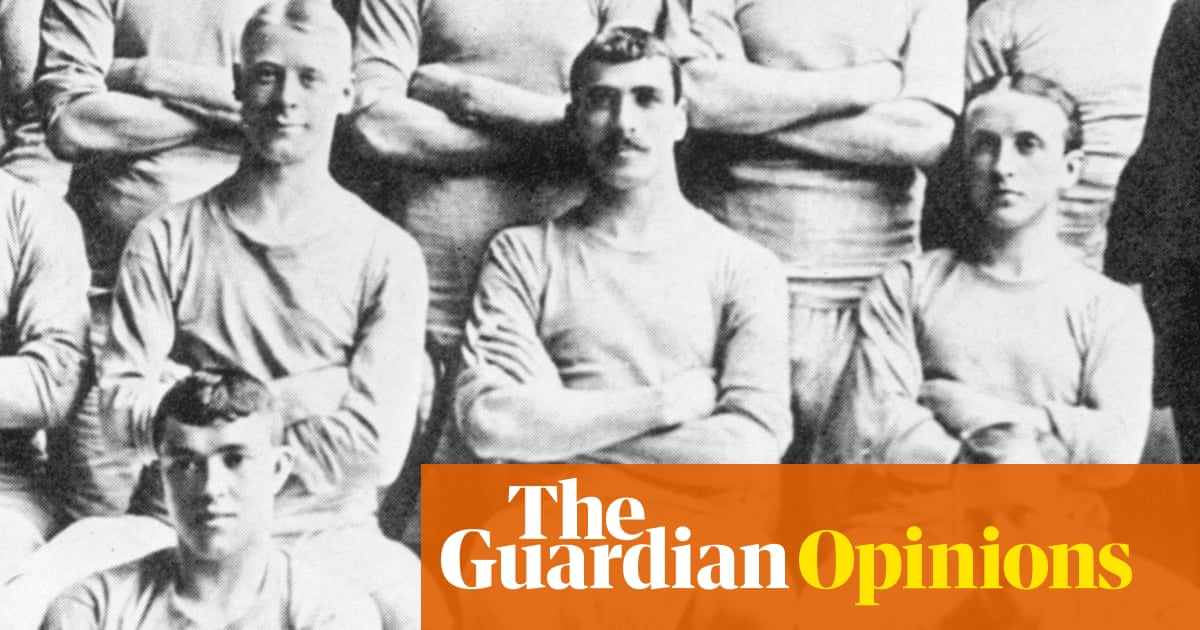
Those hidden funds served a clear operational purpose at Hyde Road. City directors used the off-the-books cash to pay top squad members wages far above the legal limits enforced by the governing body. In a recent analysis of historical precedents, Sean Ingle examined City's first scandal, highlighting how early financial breaches permanently altered the balance of power across Manchester.
At the time, the Football Association strictly enforced a national maximum wage cap of £4 per week for all professional players. City ignored that ceiling entirely to build their FA Cup-winning side of 1904. Meredith himself admitted that his actual earnings at City reached £6 a week, exceeding the mandatory cap by fifty percent.
When confronted with the audit evidence, Meredith offered a remarkably pragmatic view of governance in professional sport. He noted that the team had simply ignored the rule because every competitive club sought an advantage. His candid retrospective reflected an early cynical truth about sports administration.
"Clubs are not punished for breaking the law – they are punished for being found out."
The governing body showed zero leniency once the systemic deception was laid bare. The FA delivered a crushing verdict that dismantled City's entire sporting operation in one stroke. Their headline declared:
"FOOTBALL SENSATION – MANCHESTER CITY’S GRAVE OFFENCES – HEAVY PUNISHMENTS"
The official ruling contained a devastating indictment of the club's administrative culture. As the FA stance confirmed:
"It is now proved that the club had for years systematically broken the rules of the Football Association by very unscrupulous means."
The resulting penalties reshaped English football history for decades. The FA issued lifetime bans from football management to two City directors who facilitated the illegal account structures. More destructively for the team on the pitch, the governing body banned 17 players from ever representing Manchester City again.
Stripped of virtually their entire starting lineup, City collapsed almost overnight. The squad went from FA Cup winners in 1904 to an administrative wreck scrambling for replacement talent. Three years after the sanctions took effect, City were relegated to the second division, and they would not win another league title until 1937.
Crossing the Manchester divide without terrace hatred
City's sudden administrative collapse created an unprecedented transfer market opportunity for their nearest neighbors. Manchester United, then operating out of Bank Street, moved swiftly to sign the displaced talent. With City legally prohibited from playing their stars, United secured Meredith without having to survive a prolonged bidding war.
Meredith's switch from blue to red marked the pivotal turning point in early Manchester football history. Rather than suffering career ruin from his year-long suspension, the Welsh winger walked into a United side poised for growth. He immediately replicated his attacking success on the red side of the city.
Under United's management, Meredith anchored the attack during the club's first genuine golden era. He helped United secure their first league titles and the FA Cup, proving that his individual brilliance worked seamlessly across different tactical systems. Meanwhile, City supporters could only watch as their former hero lifted silverware down the road.
Modern fans might expect that such a high-profile move across town sparked intense anger among the fanbases. Yet historical press reports from the era reveal a surprisingly calm atmosphere when the teams met. Tribal hostility in early twentieth-century football was far less aggressive than modern derby rivalries.
When Meredith lined up for United against City in a 1910 derby match, United secured a 2-1 victory on the pitch. However, press observers covering the match noted a distinct lack of passion in the stands. The atmosphere resembled a generic fixture rather than a fiercely contested derby battle.
The Guardian's correspondent attending the 1910 derby expressed skepticism about player loyalty in an increasingly commercialized sport. He questioned whether spectators could expect deep emotional commitment from athletes who moved freely between competing clubs. As the reporter observed, the play gave no indication of fierce local rivalry.
The reporter wrote that the two teams might as well have represented Penzance and Berwick-on-Tweed for all the local fervour on display. He openly wondered if local patriotism could thrive when a player wore a red jersey one season, a blue one the next, and a white one after that. His observations captured an early friction between professional player mobility and supporter tribalism.
Toothpicks, player unions, and caps scattered in the Blitz
Despite the controversy that defined his mid-career years, Meredith built a reputation as one of the most remarkable figures in British sports history. The wiry winger was easily recognizable on the pitch by his unique habit of chewing on a toothpick during matches. He claimed the habit helped sharpen his mental focus during long periods of play.
Meredith was far more than an eccentric character; he was an obsessive student of tactical movement. Observers noted that his mind persistently dwelt on the strategic problems of the game. That deep technical understanding allowed him to maintain elite performance levels long after his contemporaries had retired.
His longevity remains astonishing by any era's standards. Meredith continued playing top-flight football until four months before his 50th birthday, finally hanging up his boots at age 49. His international career was equally impressive, representing Wales 51 times across three decades of international competition.
Off the field, Meredith displayed a strong political edge that frequently unnerved football administrators. He was a driving force behind early attempts to form a professional players' union to fight for workplace rights. He also relentlessly campaigned for the complete abolition of the maximum wage cap that had triggered City's downfall.
Some historians believe his outspoken union organizing made him a prime target for FA regulators during the 1905 bribery investigation. Authorities were eager to curb the influence of a vocal player who challenged their financial control. Yet his union work earned him enduring respect among fellow professionals across the country.
Meredith's historical standing remains elite among Britain's all-time sporting greats. Legendary Guardian football correspondent David Lacey ranked Meredith alongside Stanley Matthews in the annals of British football. Lacey noted that before United fans celebrated George Best or Eric Cantona, Meredith held the crown as Manchester's ultimate football icon.
After retiring from play in 1924 following a brief second stint at City, Meredith bought a local pub in Manchester. His post-playing life took a surreal turn decades later during World War II. During the Manchester blitz, a German bomb exploded directly behind his pub, blowing out the back structure.
The blast scattered Meredith's collection of 51 Welsh international caps across the ruined neighborhood streets. Local residents spent days searching through the rubble to recover the velvet caps of Manchester's first football superstar. It was a fittingly dramatic chapter for a man whose career repeatedly survived explosive disruptions.
The lessons of Meredith's era remain strikingly relevant to modern football governance. Rapid financial expansion built on hidden accounts eventually triggers regulatory correction. When the dust settled in 1906, City paid a decades-long price in obscurity, while United used City's fall to build their first great dynasty.
Read Next