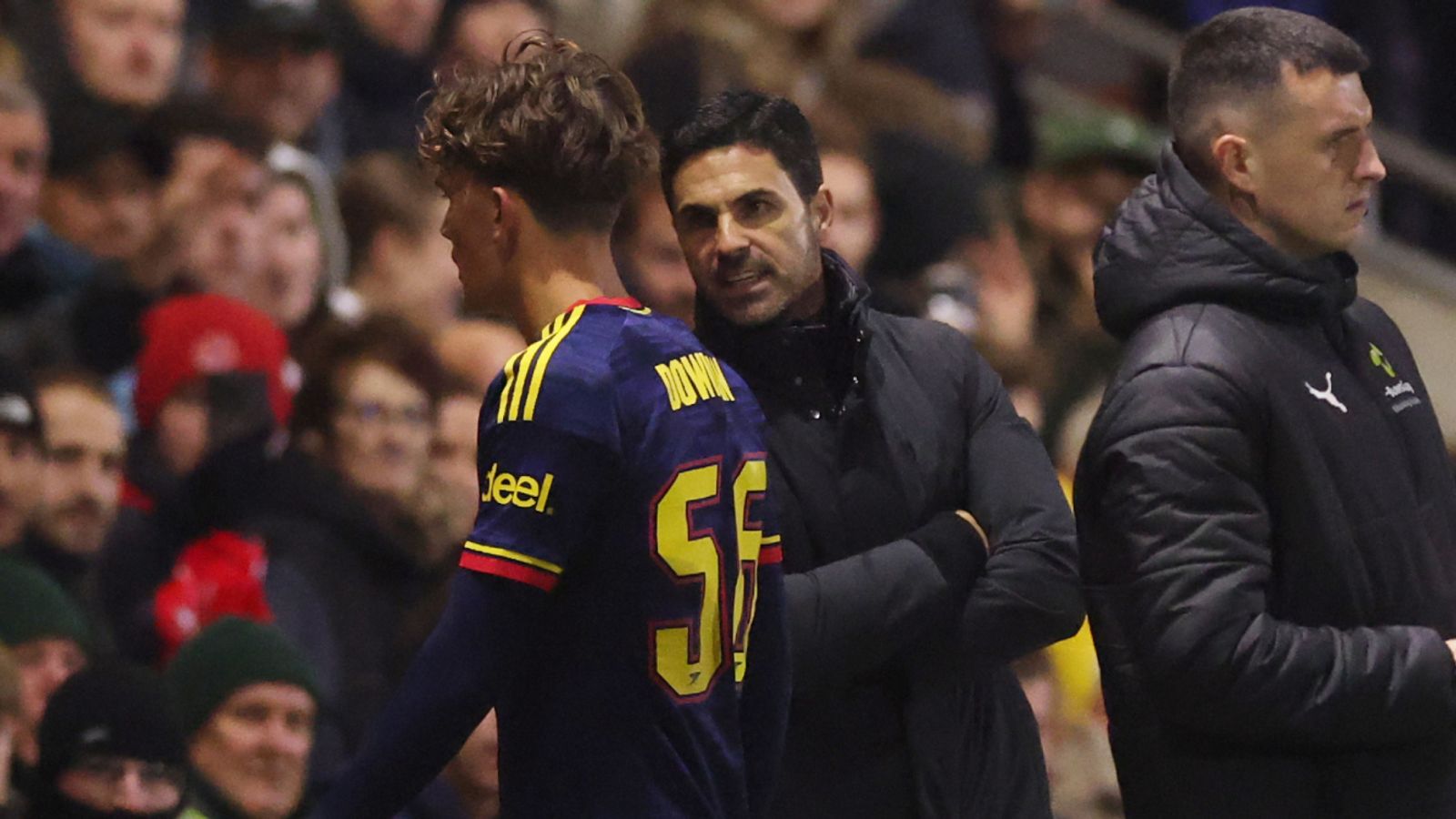
Arsenal's transfer strategy is becoming a gamble on uncertainty

The fixation on Julian Alvarez and the tactical mirage
Arsenal are currently navigating a transfer window defined by aggressive posturing rather than cohesive squad building. The pursuit of Julian Alvarez, now confirmed as a point of friction between North London and Madrid, reflects a club trying to buy its way out of attacking stagnation. Recent reports suggest a deal is being pushed by Atletico Madrid, yet the player remains caught between the promise of Premier League minutes and the allure of Barcelona. From a tactical standpoint, Alvarez offers undeniable versatility but his integration into a high-pressing, rigid system remains a projection rather than a proven success.
Bringing in a striker of his profile suggests Mikel Arteta is still chasing a dynamic front three solution. The club’s willingness to entertain a swap deal, as outlined in recent coverage, is a massive risk. Swapping established personnel for a player who has spent his recent tenure alternating between roles at City and Madrid feels like a short-term fix for a long-term tactical imbalance. The 87th minute substitution patterns often reveal a coach searching for a goal-scorer who fits the press; Alvarez checks that box, but the cost to depth could be terminal.
The Mourinho factor and the reality of the market
The wider transfer market has become a game of high-stakes musical chairs. Jose Mourinho’s arrival at Real Madrid has already started to bleed into Arsenal’s recruitment plans. The news that Rodrygo is available for sale, as cited by various outlets this week, introduces a new variable that complicates any focus on Alvarez. If Arsenal are pivoting toward Rodrygo, it suggests a lack of clarity in their primary objective. Pursuing both feels like a scattergun approach that history suggests rarely succeeds at the Emirates.
We have to question the internal scouting consistency. When a club targets widely different profiles like Alvarez and Bradley Barcola—names currently swirling in the latest transfer bulletins—the message sent to the current squad is one of instability. Barcola provides width and blistering pace, whereas Alvarez excels in the half-spaces. These are not interchangeable assets. Arteta’s preference for a specific type of ball-carrying winger might make the pursuit of Barcola more logical than doubling down on a central striker who wants to drop deep.
The danger of ignoring internal development
Perhaps the most concerning aspect of this transfer window is the assumption that new signings automatically raise the floor of the team. Martin Odegaard is reportedly slated for a new role next season, which implies an internal shift in progression vectors. If the tactical team is already planning to reorganize the captain's responsibilities, chasing marquee names from La Liga feels like a distraction. Adding a star name in June 2026 does not resolve the creative lethargy that became evident during the final stages of the previous campaign.
The club remains susceptible to an unhealthy fixation on prestige names. Alvarez is a talent, but expecting him to immediately replicate his best output while adjusting to a new league is a gamble. If Arsenal fails to secure a clinical edge in the final third, the blame will lie with this obsession over names rather than the system's underlying issues. The current links to players like Mateus Fernandes suggest a desire for youthful energy, yet the Premier League is a graveyard for untested prospects who lack a defined purpose.
At some point, the recruitment team must stop reacting to market availability and start executing a clear design. Whether it is Alvarez, Barcola, or an unnamed wildcard, the objective should remain the same: reducing the reliance on individual moments of brilliance. The current plan feels erratic. If they commit north of €70 million on a player without a locked-in position, the regression might be closer than fans expect.
Read Next
- Arsenal and Liverpool in high-stakes battle for Yan Diomande
- Real Madrid are turning the transfer market into a private shopping spree
- Arsenal and Chelsea are already turning the transfer market into a circus
- Liverpool just snatched Victor Munoz and Newcastle fans are absolutely melting
- 🇦🇷 Argentina World Cup 2026 — Defending Champions Hub
- ⭐ UCL 2026 — Champions League Quarter-Finals Hub
Select Numero 10 Soccer Ball
The gold standard for club and high school match play.
Frequently Asked Questions
What are the risks of Arsenal's current transfer strategy?
Why is the pursuit of Julian Alvarez considered a logistical risk?
How does the interest in Rodrygo impact Arsenal's transfer goals?
What is the difference between pursuing Julian Alvarez and Bradley Barcola?
How might internal tactical changes affect Arsenal's need for new signings?
More Coverage

Top 10: Top Moments
8 hours ago
Premier League sack race data reveals who really deserves the axe
8 hours ago
Arsenal travel to Liverpool with both seasons on the brink
9 hours ago
Coventry fans showed how to respond to that sick Bradley Lowery taunt
10 hours ago
Oliver Glasner is out of patience and Nottingham Forest are out of time
16 hours ago
Bournemouth roll on with six straight shutouts as Leeds unravel
1 day agoMore Analysis
Arsenal travel to Liverpool with both seasons on the brink
9 hours ago
Why Mikel Arteta barking at Max Dowman will make him a superstar
1 day, 21 hours ago
Arsenal forward crisis deepens ahead of massive Liverpool clash
1 day, 21 hours ago
Arsenal's striker nightmare is back and Micah Richards wants Gyokeres sold
2 days ago
Why Arsenal cannot afford another Anfield collapse this weekend
2 days, 11 hours ago