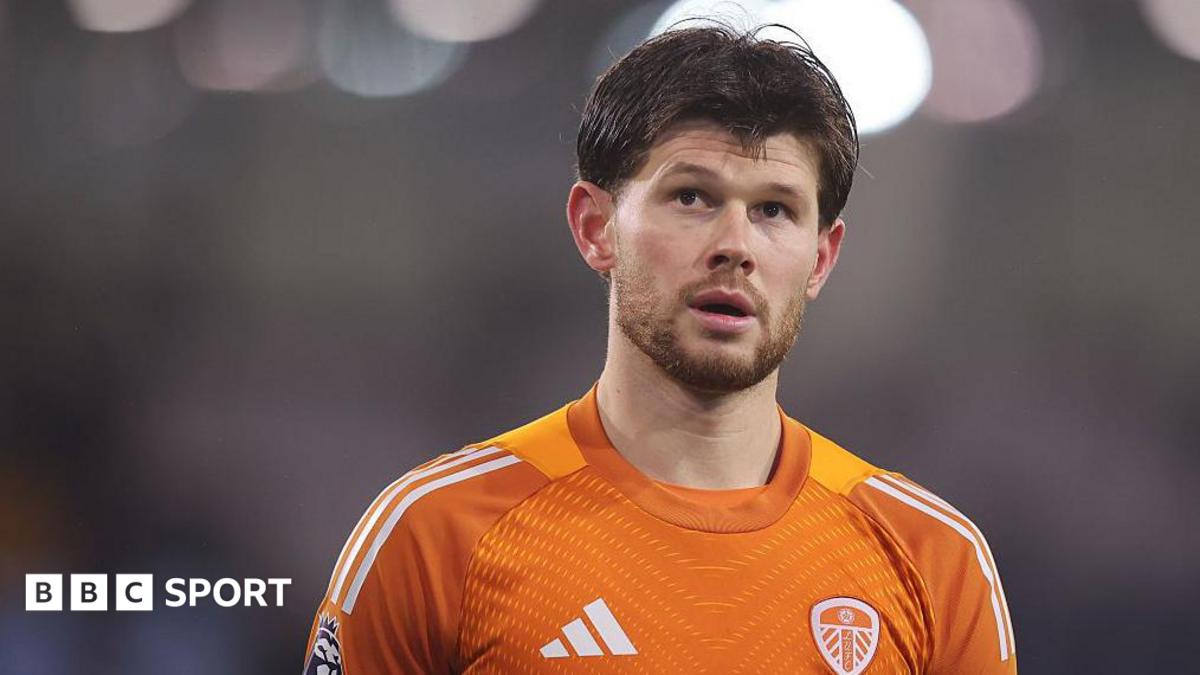
Illan Meslier is undergoing a medical at Arsenal ahead of a free transfer that raised eyebrows across the division. The 26-year-old goalkeeper has agreed terms to join the Gunners after his Leeds United contract expired last month. But this is not a standard medical check for a routine backup signing.
Meslier spent the entirety of the 2025/26 campaign frozen out at Elland Road. He did not play a single competitive minute under Daniel Farke. This complete lack of match action turns a standard physical check into a complex sports science evaluation.
For Arsenal, the immediate goal is to establish a physical baseline for a player who has not faced a competitive shot in over a year. The medical team must assess whether his body can handle the intensity of top-flight training. The transfer represents a calculated gamble on a player who once looked destined for the top.
The Physical Cost of a Year Sidelined
Sitting on the bench for 12 months does more than rust a player's reflexes. It alters their musculoskeletal conditioning. For goalkeepers, the lack of match play is particularly damaging to their explosive power.
Goalkeepers rely on rapid plyometric movements to cross the goalmouth. Pushing off to dive requires maximum force generation from the calves, quadriceps, and glutes. Without the unique, chaotic stress of competitive matches, these fast-twitch muscle fibers lose their peak efficiency.
Training sessions can mimic match actions, but they cannot replicate the velocity and unpredictability of real games. The drop in competitive load leads to a decline in tendon stiffness, particularly in the patellar and Achilles tendons. This stiffness is vital for storing and releasing energy during explosive jumps.
The lack of ground impact also weakens the joints. Goalkeepers land on hard turf dozens of times during a match, building up micro-tolerance in their shoulders, hips, and elbows. Sidelined players lose this protective conditioning, leaving them highly vulnerable to impact injuries when they return to full action.
Cognitive Decay and Visual Tracking
The physical decline is only half the problem. Goalkeeping is a highly complex cognitive task that requires rapid visual tracking and motor response.
A goalkeeper must track a ball moving through a crowded penalty box, calculating its trajectory while ignoring distracting movements from defenders and attackers. This split-second processing relies on neural pathways that must be constantly sharpened by high-velocity scenarios.
A year without competitive match speed causes these neural connections to slow. Reflexes do not disappear, but the transition from visual input to physical action becomes slightly delayed. At the Premier League level, a delay of even a hundredth of a second is the difference between a save and a goal.
Furthermore, the cognitive fatigue of returning to intense matches is substantial. The mental load of tracking attackers and organizing a defense is hard to replicate in low-stress training drills. Meslier will need weeks of simulated match scenarios before his brain is fully up to speed.
Mapping the Injury Risk Curve
Arsenal's medical staff face a delicate balancing act as they integrate Meslier into training. The risk of soft tissue injuries is exceptionally high during the first 6 to 8 weeks of his return.
The groin and hip flexors are the primary areas of concern. Goalkeepers frequently strain these muscles when kicking or making split-second adjustments to their stance. Because Meslier has not kicked a ball under match pressure for a year, his adductor muscles will be under immense strain.
To mitigate this, the conditioning staff will likely implement a progressive loading program. This program will restrict his training volume and monitor his muscle fatigue using GPS and biometric tracking. Rushing him into full team training too quickly could lead to a hamstring or calf tear.
The shoulders and wrists also require progressive strengthening. The impact of saving shots from elite forwards like Bukayo Saka in training will place sudden, intense stress on his upper body. The medical staff must ensure his rotator cuffs and wrist ligaments are strong enough to withstand these forces.
How Sidelined Keepers Fared in the Past
We have seen similar situations play out with mixed results across European football. Goalkeepers who sit out for long periods often struggle to reclaim their previous physical form.
Consider the case of Kepa Arrizabalaga, who spent long spells on the bench at Chelsea before finding a path back to regular football. His initial return matches showed a clear deficit in spatial awareness and cross-collecting. It took several months of consistent minutes for him to look physically sharp again.
Similarly, Neto experienced a significant drop in match-sharpness during his years as a backup at Barcelona. When called upon, his lateral movement was noticeably slower, and he suffered minor muscle strains due to the sudden jump in workload. These examples show that training sharpness is not match sharpness.
Conversely, some keepers have managed the transition smoothly through meticulous conditioning. Emiliano Martinez sat on Arsenal's bench for years before stepping in seamlessly when Bernd Leno got injured. Martinez's success showed that a dedicated individual program can offset the lack of competitive minutes.
Strategic Implications for Arsenal
The arrival of Meslier changes the dynamic of Arsenal's goalkeeping department. As BBC Sport reported, the transfer will allow the club to make strategic moves with their younger talent.
With Meslier providing experienced backup, Arsenal can send 20-year-old Tommy Setford out on loan. This loan is essential for Setford's development, as he needs regular senior minutes rather than sitting on the bench. It is a smart piece of squad management from sporting director Edu.
However, the move is not without risk. If David Raya suffers an injury early in the season, Arsenal will be forced to rely on either Kepa Arrizabalaga or a potentially unready Meslier. Relying on a player who has not played in a year as a key backup is a gamble that could backfire.
Arsenal's rivals will be watching closely. Goalkeeper transfers often trigger a domino effect across the league. If Meslier is set to sign after undergoing his medical, it validates Arsenal's strategy of scanning the free agent market for high-value squad players.
Rebuilding a Premier League Goalkeeper
Meslier represents a fascinating case study in sports science. A player with 215 senior appearances for Leeds, including promotion in 2020, does not simply lose his talent. But his body has been in storage, and the process of unpacking it will require patience.
The medical team's findings will dictate how quickly Meslier can contribute. Arsenal are betting that their advanced conditioning program can rebuild the Frenchman into a reliable Premier League performer. If they succeed, they get a talented keeper on a free transfer; if they fail, they waste wages on a player stuck in the treatment room.
Read Next