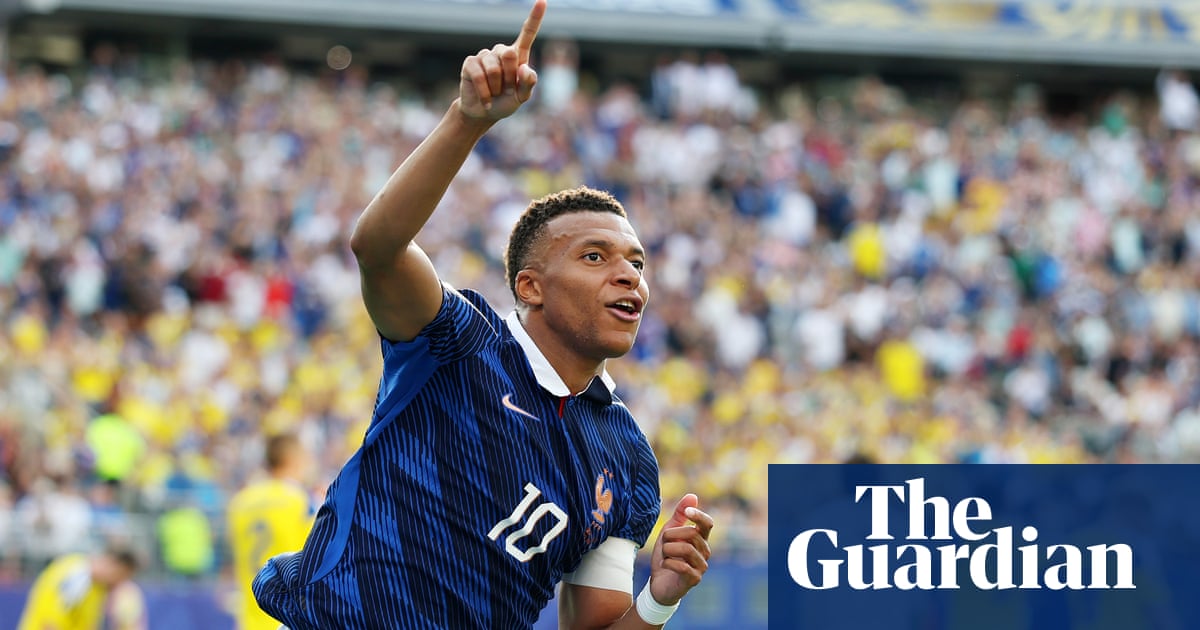
MARCUS THURAM
Inter's UCL Quarter-Final Striker
The son of a French World Cup legend. A striker who has stepped out of his father's enormous shadow and built a reputation entirely his own. Marcus Thuram is Inter Milan's spearhead in the UCL quarter-final against PSG — Serie A's most feared forward line, the son of Lilian, France's clinical finisher, and the man PSG's defence must stop at all costs.
Player Profile
| Full Name | Marcus Thuram-Ulien |
| Date of Birth | 6 August 2001 |
| Birthplace | Parma, Italy |
| Nationality | French |
| Position | Centre-Forward |
| Height | 6'2" (187 cm) |
| Borussia Mönchengladbach | 2019–2023 |
| Inter Milan | 2023–present |
| International | France — regular starter, 40+ caps |
Career Milestones
- ◆ Born in Parma while his father Lilian was playing for the club — the perfect Inter-football origin story
- ◆ Borussia Mönchengladbach 2019–2023: 130 appearances, 32 goals, 29 assists
- ◆ Signed by Inter Milan in summer 2023 to partner Lautaro Martínez upfront
- ◆ First full Serie A season: 13 league goals, 8 assists — integral to Inter's title challenge
- ◆ France international: featured at Euro 2024, key player for 2026 World Cup squad
- ◆ Son of Lilian Thuram — France's most-capped outfield player (142 caps), 1998 World Cup winner
Son of a Legend — Stepping Out of His Father's Shadow
Lilian Thuram — France's Greatest
Lilian Thuram is one of the greatest defenders France has ever produced. 142 international caps — the all-time record for an outfield player at the time. A 1998 World Cup winner who scored both goals in the semi-final against Croatia — his only two international goals in 142 matches. Playing for Parma, Juventus, and Barcelona. A colossus of French football for 15 years.
Growing Up Thuram
Imagine growing up with a father who is a national hero. Every coach comparing you to him. Every journalist asking about him. Every fan seeing the name 'Thuram' and thinking of the 1998 World Cup semi-final. Marcus grew up in a household where football was not just a game — it was the family's identity, their legacy, their public face. The pressure to succeed was not ambition; it was inheritance.
Marcus Builds His Own Name
What Marcus has done at Inter is establish his own identity. He is not a defender like Lilian — he is a striker, a different player entirely. He brings something unique: power, pace, technical skill, and a left foot that is as clean as any in European football. At the 2026 UCL quarter-final, the name on the back of his shirt belongs to him alone. Lilian's legacy is his inheritance; Inter's attack is his own.
UCL 2025-26 Campaign Stats
Thuram's UCL 2025-26 numbers put him among the top five strikers in the competition. Seven goals from nine appearances — an extraordinary return for a forward who also contributes four assists. His xG per 90 of 1.22 means Inter are generating more than a goal's worth of expected quality through him in every match. PSG's centre-backs, Marquinhos and Lucas Hernandez, face the most dangerous striker they have encountered in this UCL run.
Inter's Fearsome Front Two — Thuram and Lautaro
The Thuram–Lautaro Martínez partnership is the most feared forward combination in Serie A and, arguably, in European club football outside of the Premier League. What makes them so difficult to defend is not just their individual quality — it is the way they interchange, press together, and find each other in the spaces that most forward pairings never discover.
Lautaro brings Argentine intensity, predatory instinct in the box, and a clinical right foot. Thuram brings size, pace, technical quality, and a creative left foot that can operate as both finisher and creator. When they play together, defenders face an unsolvable problem: neither man stays in a fixed position long enough to be man-marked effectively.
In the UCL quarter-final against PSG, this fluid interchange is Inter's most dangerous weapon. PSG's back line — however talented — must cope with two forwards who constantly swap roles, pull defenders out of position, and find the space between the lines. Coach Simone Inzaghi has designed his attacking structure around maximising exactly this disorientation.
The Target Man Who Is Not
On paper, Thuram plays as the physically dominant forward who wins headers and holds the ball up. In practice, he drops deep to receive, runs in behind, operates wide, and arrives late into the box from outside the penalty area — exploiting the confusion his movement creates for centre-backs who cannot decide whether to follow him or hold their line.
Combined Season Tally (All Comps)
Thuram and Lautaro together in Inter colours have scored 45+ combined goals across all competitions in 2025-26 at this point in the season. The ratio of their direct goal contributions to Inter's total is extraordinary for a two-man forward partnership — they are responsible for over 65% of the club's scoring in European competition.
vs PSG Quarter-Final — Tactical Breakdown
Thuram vs PSG's Central Defence
PSG defend with Marquinhos and Lucas Hernandez at centre-back. Marquinhos is 31 — a UCL veteran with enormous experience, but not a defender who will comfortably deal with Thuram's pace over the first 10 metres. Lucas Hernandez brings physicality but has shown vulnerability to forwards who drop off and receive between the lines before turning and running at him.
Thuram's movement — constantly pulling wide, dropping deep, and then accelerating into behind — makes him one of the most difficult opponents a PSG defender has faced in this UCL campaign. If he can get Marquinhos to follow him when he drops deep, the space he leaves behind for Lautaro becomes vast.
Inzaghi's System — The Framework
Simone Inzaghi's Inter operate a 3-5-2 / 3-4-1-2 hybrid. In attack, the three-man forward line collapses into Thuram and Lautaro as the two forwards with Hakan Çalhanoğlu as the deep playmaker. The attacking midfielder — usually Nicolò Barella — arrives late into the box as the third man, creating overloads that PSG's midfield must account for.
The system is designed to generate numerical equality in the penalty area while maintaining defensive security behind. Inter transition extremely quickly — and when they win the ball in midfield, Thuram's run in behind is usually the first option Çalhanoğlu looks for. PSG's defensive line must sit deep enough to stop this or risk conceding in transition.
Movement: Dropping Deep
Thuram routinely drops to the edge of his own attacking third to receive — pulling a centre-back out with him. This creates space behind for Lautaro to exploit. PSG's defence must decide: follow Thuram into midfield (and leave the striker's channel open) or hold their line (and let Thuram receive facing goal with room to run).
Movement: Running in Behind
His second key movement is the diagonal run in behind — from a wide starting position, curving inside to attack the near post or the central channel beyond the last defender. Çalhanoğlu's range of passing means this run can be played from 50 metres away with a single ball over the PSG defensive line. One pass, one run, one goal.
The Aerial Threat
At 6'2", Thuram wins headers — not just in the box, but across the pitch. Inter use him as a target for long balls when they need to bypass PSG's press and find a foothold in the opposition half. His aerial superiority is not limited to goals — he turns headers into layoffs, holds the ball, and sets Inter in motion from nothing. Marquinhos at 5'11" faces a physical disadvantage on every set-piece and every long ball.
Style of Play — Complete Centre-Forward
Aerial Presence (6'2")
Thuram is imposing in the air — not just tall, but well-timed and aggressive in his aerial challenges. He uses his height and strength to dominate his direct opponent, win crosses and set-pieces, and lay the ball off to runners arriving behind him. In a UCL quarter-final, where dead-ball situations often decide ties, his aerial quality is a significant asset for Inter.
Pace to Run In Behind
Despite his size, Thuram has genuine pace. He is not as quick as a dedicated speed striker, but his acceleration over 20-30 metres is sharp enough to beat centre-backs with a well-timed run. The combination of his size — which initially makes defenders think he is a traditional hold-up target — and his pace — which surprises when he runs in behind — is what makes him so difficult to defend against.
Clinical Left Foot
His left foot is his primary technical weapon. The technique is clean — he can finish across the goalkeeper, curl into the far corner, or drive low with power. His left-footed shot from outside the penalty area is a genuine danger; PSG cannot allow him to cut in from the left and set himself for a shot in the channel between the full-back and the centre-back. Several of his UCL goals this campaign have come from exactly this position.
Thuram's Champions League Career Highlights
Marcus Thuram's Champions League record coming into the 2026 quarter-final represents a rapid ascent into European football's elite. His appearances for Borussia Mönchengladbach gave him exposure — but Inter Milan has given him a stage on which his quality is magnified by the system, the personnel, and the intensity of the opposition.
His two-goal performance against a strong opponent in the group stage announced to European audiences that Inter's striker was not merely Lautaro's supporting act — he was a genuine match-winner in his own right. The assists he has added across the campaign demonstrate his selflessness: he takes the shot when it is the right choice, and he lays off when a teammate is better-placed.
The PSG quarter-final will be the biggest stage of his career to date. A performance at Parc des Princes or the San Siro under the UCL lights — against Marquinhos, Hernandez, and a French national team full of his international teammates — will define how Europe views Marcus Thuram going into the 2026 World Cup summer.
Two Goals, One Statement
His two-goal performance against Bayer Leverkusen in the UCL group stage was the performance that put European audiences on notice. A classic striker's goal — clinical finish from a low cross — and a thundering header from a Çalhanoğlu corner. Two different types of goal, two demonstrations of his complete centre-forward skill set in a single match.
Rising to the Big Occasion
In the UCL round of 16, Thuram showed the mental quality that separates UCL players from mere league performers. When Inter needed a goal, he found it — not from a flowing move, but from a moment of individual quality: receiving with his back to goal, spinning his marker, and placing it into the far corner. That moment, in a tight knock-out tie, showed what Inter have in him.