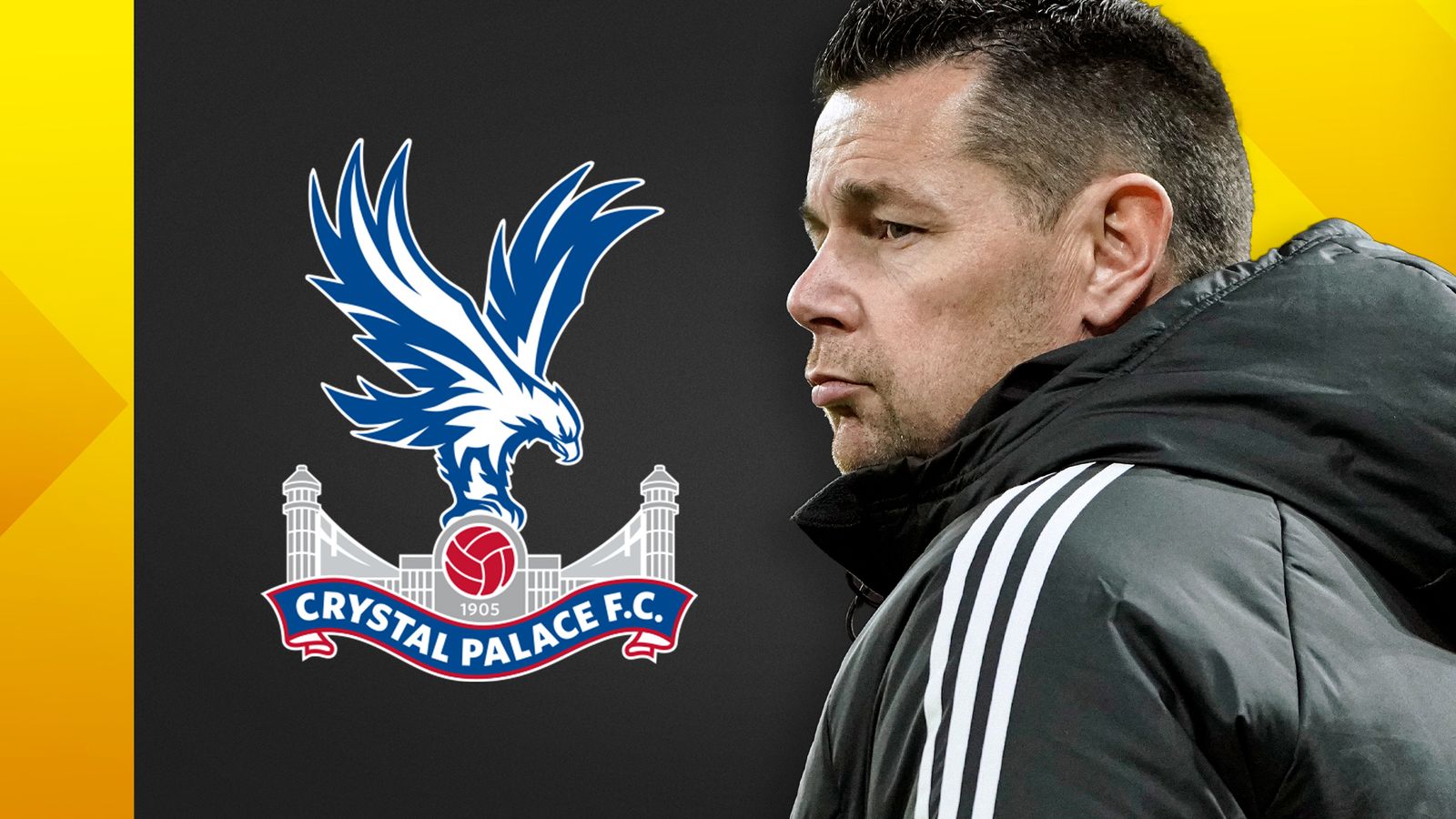
The Ghost of Selhurst Past Meets the Reality of Pierre Sage
When the Friday night lights turn on at Selhurst Park on August 28, the atmosphere will be thick with the residue of a chaotic summer. Pierre Sage will walk out of the tunnel for his first home game as Crystal Palace manager, staring down Enzo Maresca's Manchester City.
Across the technical area, he will see a City side that features Marc Guehi, the very centre-back Palace sold in January and failed to replace. It is a tactical and emotional puzzle that will define Palace's early-season trajectory.
The narrative is almost too neat. Palace fans are still recovering from the whiplash of losing Oliver Glasner to Nottingham Forest, whose move to the City Ground was detailed in the Palace transfer live blog.
The tension between the clubs spiked after UEFA demoted Palace to the Conference League due to John Textor's Lyon connection, allowing Forest to take their Europa League spot. Palace got their revenge by winning the Conference League in Leipzig with a 1-0 victory over Rayo Vallecano, but the wounds remain open.
Now, Sage is left to pick up the pieces. His tenure starts with a brutal tactical test against the reigning champions.
This match is not a simple early-season fixture. It is a confrontation between Sage's emerging structure and Maresca's refined possession machine. If Palace are to survive, they must solve their defensive vacuum and exploit the transition spaces City always leave behind.
The Midfield Box and the Half-Space Trap
Maresca's Manchester City build play through their signature 3-2-4-1 shape, pushing an inverted full-back next to the lone pivot to form a midfield box. This box is designed to overload central areas, forcing opponents to contract their defensive block.
Once the opponent constricts, City release their wingers into isolated 1v1 situations on the flanks. Sage's challenge is to disrupt this build-up before the ball reaches the final third.
At Lens, Sage favored a high-intensity press that triggered when the opponent's centre-backs played into the half-spaces. He is likely to deploy a similar system at Palace, utilizing the energy of Mamadou Sangare if the Lens midfielder is signed in time.
The pressing triggers must be precise. If Palace press too early, City's midfielders will bypass them with third-man runs. If they drop too deep, they will be suffocated in their own penalty box.
The key defensive battleground will be the right half-space, where City love to locate their creative playmakers. Daniel Munoz will need to balance his natural attacking instincts with his defensive duties.
Munoz showed his goal-scoring capability with a double for Colombia at the World Cup this summer, but against City, he cannot afford to wander. He must stay locked to his zone, working in tandem with the right-sided centre-back to shut down the passing lanes.
The Kamada Decision and the Sarr Release Valve
The biggest boost for Palace this summer is Daichi Kamada agreeing to a new one-year contract. As reported by Sky Sports, the midfielder has committed for another season despite intense interest from Italy and Spain.
Fears were growing that former boss Glasner would lure him to Nottingham Forest. Instead, Kamada chose to stay in London, fresh off scoring a double for Japan at the World Cup.
Kamada is a master of finding space in transition. In Sage's system, he will likely play as one of the twin ten's in a 3-4-2-1 formation.
When City lose possession, Kamada's role is to immediately occupy the space behind City's inverted full-back. He has the vision to turn and release Palace's fastest outlet on the counter-attack.
That outlet is Ismaila Sarr. The Senegal international, who also scored a double at the World Cup, is currently subject to strong transfer interest from Manchester United.
Sarr was the Player of the Tournament when Palace lifted the Conference League, making his verticality essential to Sage's game plan. His matchup against City's left-sided defender will be the primary source of Palace's attacking threat.
If City fail to restrict Kamada's supply line to Sarr, their high line will be exposed. Palace players contributed six goals at the World Cup, and that attacking confidence will be vital.
The Unresolved Vacuum in the Eagles' Defense
For all the optimism surrounding Kamada's renewal, Palace are playing a dangerous game at the back. The club never replaced Marc Guehi after his January move to Manchester City.
Now, Chelsea and Xabi Alonso are circling centre-back Maxence Lacroix, according to the Sky Sports Palace news feed. If Lacroix is sold before the window closes, Sage will be forced to field a patchwork defense against the most lethal attack in Europe.
The interest in Toulouse defender Charlie Cresswell is a start, but Cresswell is not Guehi. Relying on an unproven target while Chelsea test Palace's resolve with inquiries is a recipe for disaster.
If Lacroix starts on the night, his mental focus will be under intense scrutiny. A single step late against City's forward line will result in a goal.
Furthermore, Palace's off-field discipline has been questioned after UEFA handed them an £86,000 fine for fan behaviour in Leipzig. The fines stemmed from fireworks, thrown objects, and an expletive-laden banner criticising European football's governing body.
While that creates a hostile atmosphere at Selhurst, Sage needs his team to remain calm on the pitch. Palace must maintain their discipline, or City will dissect them within the first twenty minutes.
How Sage Can Engine an Upset
To win this game, Sage must accept that Palace will have less than forty percent of the ball. The temptation for a new manager at home is to play expansive football, but doing so against Maresca is suicide.
Palace must defend in a compact 5-4-1 mid-block, denying City space between the lines. The defensive line must drop only when City's midfielders look up with time on the ball.
When the turnover occurs, the transition must be vertical and immediate. There is no utility in recycling possession against City's counter-press.
The ball must go from the defensive third straight to Kamada or Sarr within two passes. If Palace can break the first wave of City's press, they will find acres of space behind the midfield box.
Palace must also use set-pieces as a primary weapon. With Munoz's aerial ability and Kamada's delivery, Palace can exploit City's occasional vulnerability on defensive corners.
Every set-piece in the attacking half must be treated as a golden opportunity. In a game of thin margins, a single corner could be the difference between a famous point and a heavy defeat.
The Verdict: Selhurst Spark or City Class?
This match will expose the structural flaws that Palace failed to address in the transfer window. The lack of a true Guehi replacement will prove costly against City's intricate passing combinations.
While Sarr's pace and Kamada's intelligence will cause City moments of genuine panic, Palace cannot keep them quiet for ninety minutes. Expect a spirited display from Sage's men, but City's class will ultimately tell in the final third.
City will dominate the ball, patiently probing Palace's low block. Sarr will likely get one back on the counter, but Guehi will anchor a solid defensive performance for his new club.
Palace will fall short, leaving Sage with clear evidence of why his board must sign a centre-back before the window shuts.
My confident prediction is a 3-1 victory for Manchester City. City will secure the points late in the second half, but the tactical lessons will guide Sage for the rest of the season.