
Why Celtic's summer transfer inertia is a recipe for European disaster
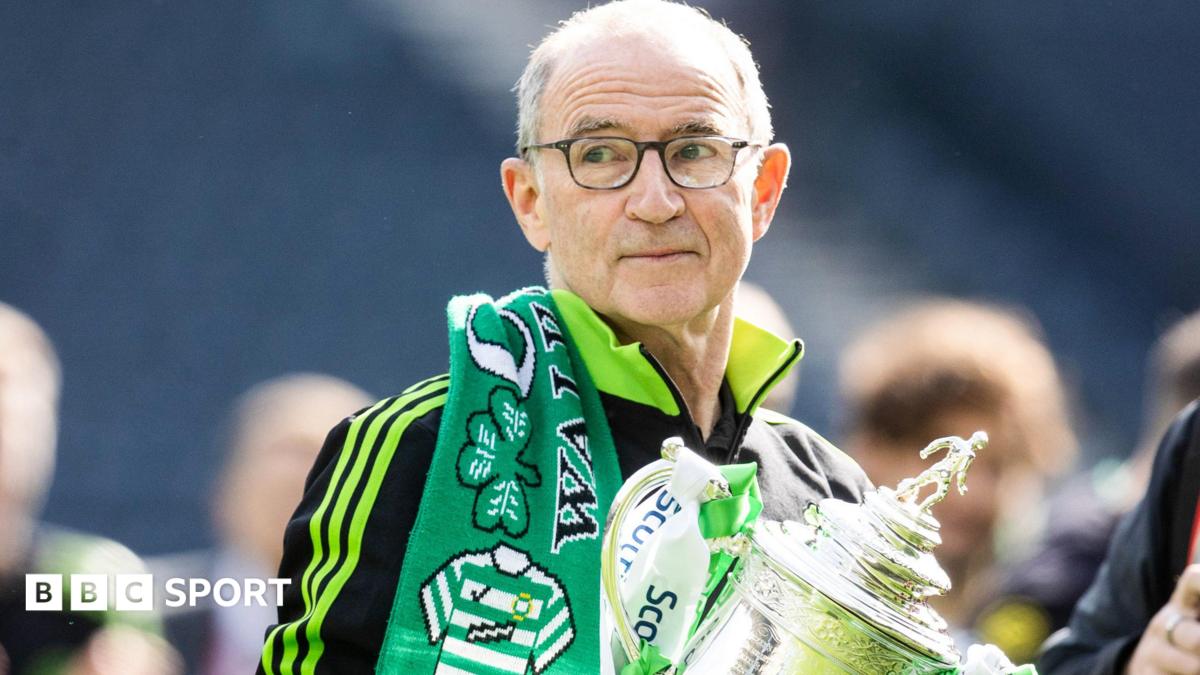
The Riyadh-to-Glasgow Trap
On the surface, a Scottish Premiership and Scottish Cup double looks like business as usual for Celtic. The trophy cabinet was opened twice more, cementing their fourteenth league championship in fifteen years. Yet, those who watched the tactical decay on the pitch know this double was a hollow triumph.
The campaign was defined by positional chaos, system changes, and a near-disaster that was only salvaged by a late-season salvage job. Now, as the squad reports back to Lennoxtown for pre-season, the warning bells are ringing. Martin O'Neill has issued a public warning, calling the campaign a needed "wake-up call" for the entire club.
"A trophyless season for Celtic would be a wake-up call for the football club."
In a recent article, Charlotte Cohen's analysis for BBC Sport raised the central question of the summer. Are Celtic reacting quickly enough to O'Neill's warning? The current physical evidence suggests a worrying paralysis at the board level.
The club has entered a critical pre-season period with a massive squad clearance and a total standstill in recruitment. The board's sluggishness is not just frustrating for the supporters. It represents a tactical risk that could derail their European aspirations before the autumn even begins.
With the Champions League play-off round scheduled for mid-August, the clock is ticking. Celtic cannot afford to repeat the structural failures that led to their embarrassing European exit last season. This is not a time for calculations; it is a time for immediate action.
The Tactical Carnage of the 2025/26 Campaign
To understand the urgency, one must analyze the tactical carnage of the previous campaign. Brendan Rodgers began the season with a stale possession model that struggled to break down low blocks. His 4-3-3 shape lacked the verticality of his previous tenures, leaving the team vulnerable to counter-attacks.
The low point came in August, when Celtic fell in the Champions League play-off round to Kairat Almaty. After a defensive breakdown in transition, the tie ended in a penalty shootout defeat. It was a tactical failure of the highest order, exposing Rodgers' inability to organize a rest defense.
Rodgers departed on October 27, 2025, paving the way for a bizarre managerial experiment. After a brief interim spell under O'Neill, the board appointed Wilfried Nancy on December 3, 2025. Nancy tried to implement a complex positional model that was completely incompatible with the squad.
Nancy demanded a 3-2-4-1 build-up shape with inverted full-backs. The players looked lost, failing to grasp the rotation triggers and spatial responsibilities. The experiment ended in disaster, with Nancy sacked after a mere 33 days in charge.
During that brief month, Nancy suffered six of his eight matches as defeats. The central defensive zone was left completely open on turnovers, with opposition wingers exploiting the space behind the advanced wing-backs. It was a booking mistake that nearly cost Celtic the league title.
When the opposition won the ball, they bypassed the high press with simple diagonal passes to the flanks. Without natural central defenders comfortable in wide channels, Celtic conceded soft transition goals. This tactical mismatch forced the board to abort their project and appeal to familiarity.
O'Neill's Rescue and the 4-2-3-1 Compromise
Martin O'Neill returned on January 5, 2026, to restore order. He immediately binned Nancy's positional play, reverting to a pragmatic and structured 4-2-3-1 system. The tactical blueprint became simple: protect the center-backs and transition rapidly.
O'Neill utilized a solid double pivot to screen the defensive line. This system relied heavily on individual physical dominance rather than intricate passing patterns. The strategy worked domestically, but it exposed a lack of technical variation.
The focal point of this system was Benjamin Nygren. The Swedish forward was tasked with dropping deep to link play and acting as a target man. He delivered spectacularly, finishing the season with 21 goals in all competitions, including sixteen in the league.
Yet, Nygren's goalscoring output masked a deeper tactical flaw. When opponents successfully marked Nygren out of the match, Celtic lacked a secondary goal threat. This was evident in the Scottish League Cup final, where they fell to a tactical defeat.
O'Neill's system requires high physical intensity on the wings. Without technical quality in wide areas, the attack becomes predictable and easy to defend. As O'Neill himself noted, Celtic cannot rely on the same individuals to carry them through another demanding season.
The current midfield structure also lacks a dynamic carrier who can progress the ball under pressure. Opponents who deploy a high, aggressive press frequently suffocate Celtic's build-up from the back. This forced O'Neill to rely on long-ball directness, a tactic that fails against elite European opposition.
The Roster Clearance and Boardroom Paralysis
This brings us to the current crisis in recruitment. While rivals are building their squads, Celtic's board is moving at a glacial pace. This summer has seen a massive squad clearance, with 12 departures from Celtic Park.
The departures include winger Luis Palma, who completed a £3.5 million move to Lech Poznan. Other departures, such as Stephen Walsh, Josh Clarke, and Hayato Inamura, have further thinned the squad. This massive clearance has left O'Neill with a threadbare roster for pre-season training.
As of late June, Celtic has announced zero permanent incoming signings. The board is reportedly tracking several targets, including Benjamin Tahirovic, Elias Filet, Tairyk Arconte, Alfie Devine, and Alvaro Rodriguez. There is also interest in Hibernian midfielder Chaiwa, but no deals have been closed.
This paralysis is partly due to changes in the boardroom. Chairman Peter Lawwell departed on December 31, 2025. Brian Wilson took over as interim chairman on January 1, 2026, but the leadership transition has lacked speed.
The backroom staff was only finalized recently, with Shaun Maloney, Mark Fotheringham, and Stephen McManus joining O'Neill. With pre-season matches already underway, the lack of new signings is inexcusable. Pundit Chris Sutton has dismissed rumors that O'Neill might walk away, but the manager's frustration is clear.
The loss of twelve squad players has gutted the team's rotation options. Training sessions at Lennoxtown are reportedly filled with academy players who are not ready for first-team action. Without immediate reinforcements, the squad will suffer from early season fatigue.
The Champions League Play-off Danger
The immediate threat is the Champions League play-off round in August. The draw is scheduled for August 3, 2026, with the ties taking place on August 18/19 and 25/26. This leaves less than two months for new signings to integrate into the squad.
Entering these qualifiers with the current squad would be tactical suicide. European opponents will press Celtic's double pivot, forcing turnovers in dangerous areas. Without reinforcements, O'Neill will be forced to play a defensive, low-block game that invites pressure.
The board's hesitation feels like a repeat of previous European failures. They seem to view the transfer window as a financial balancing act rather than a sporting necessity. This approach ignores the massive financial bounty that Champions League qualification brings.
O'Neill's direct style requires players who can win aerial duels and progress the ball quickly. If the board does not back him, the tactical system will collapse under the weight of European intensity. Celtic's domestic dominance will mean nothing if they are embarrassed on the continent again.
The fans' frustration is reaching a boiling point at Lennoxtown. They have seen this movie before, where board inaction leads to a European exit and a domestic scramble. The wake-up call has been sounded, but the board remains asleep.
A club of Celtic's size should not be entering pre-season with a weaker squad than the one that finished the previous year. The management has stabilized the coaching side, but the executive branch is failing to deliver on the pitch. If this delay continues, the consequences will be felt long before the winter window opens.
Read Next
- Arsenal's trophy parade choice is a massive gut check for fans
- Ross McCrorie is the exact signing Derek McInnes needs at Rangers
- Top 10: Defining Moments of Modern Scottish Football
- Hearts are betting the house on Wouter Vrancken
- ⚽ Scottish Premiership 2025-26 — Celtic vs Rangers Hub
- ⭐ UCL 2026 — Champions League Quarter-Finals Hub
Roku Express 4K+ | Streaming Player
Never miss a Premier League kickoff with crystal clear 4K streaming.
Frequently Asked Questions
Who warned Celtic about their performance despite winning the double?
When are Celtic's Champions League play-off matches scheduled?
How did Kairat Almaty eliminate Celtic from the Champions League?
Why did Celtic sack manager Wilfried Nancy?
What formation did Wilfried Nancy try to implement at Celtic?
More Coverage
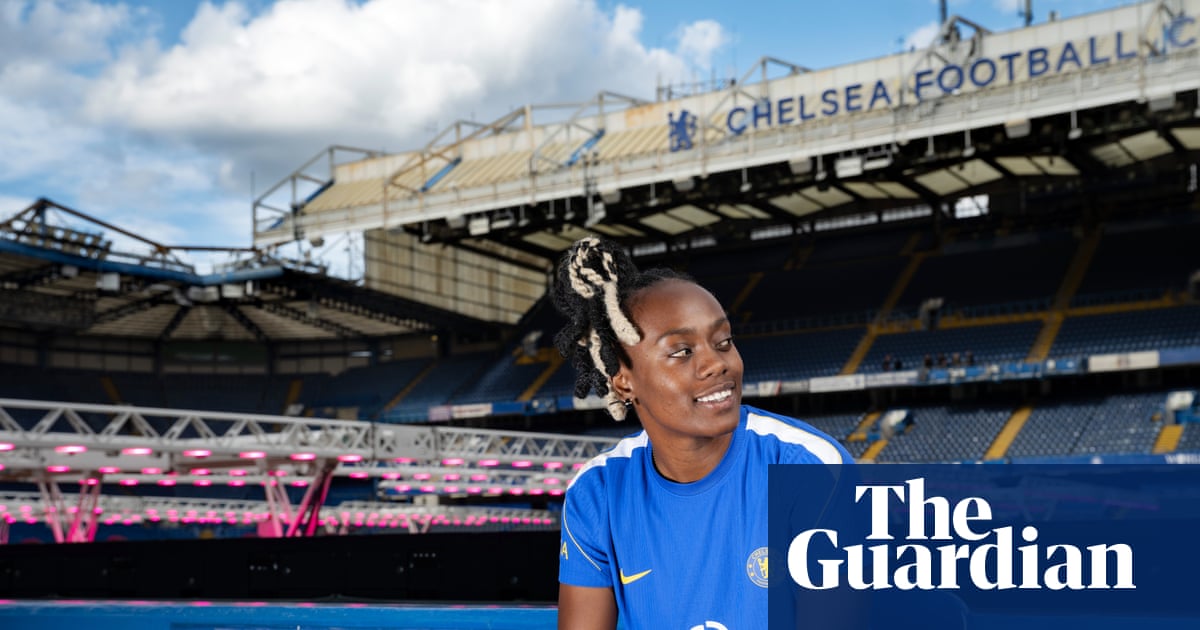
Melvine Malard isn't waiting around to become a Chelsea legend
an hour agoSeptember 26 is secretly the most unhinged date in football history
7 hours ago
Disney treated the Women's Champions League like CBBC and paid the price
1 day, 18 hours ago
Mohamed Salah built an empire on Anfield's right wing
2 days, 5 hours agoOn This Day in Football: September 24
2 days, 7 hours ago
Celtic back Martin O'Neill despite three straight losses and manager doubt
3 days, 13 hours agoMore Analysis
Melvine Malard isn't waiting around to become a Chelsea legend
an hour agoSeptember 26 is secretly the most unhinged date in football history
7 hours ago
Disney treated the Women's Champions League like CBBC and paid the price
1 day, 18 hours ago
Mohamed Salah built an empire on Anfield's right wing
2 days, 5 hours agoOn This Day in Football: September 24
2 days, 7 hours ago