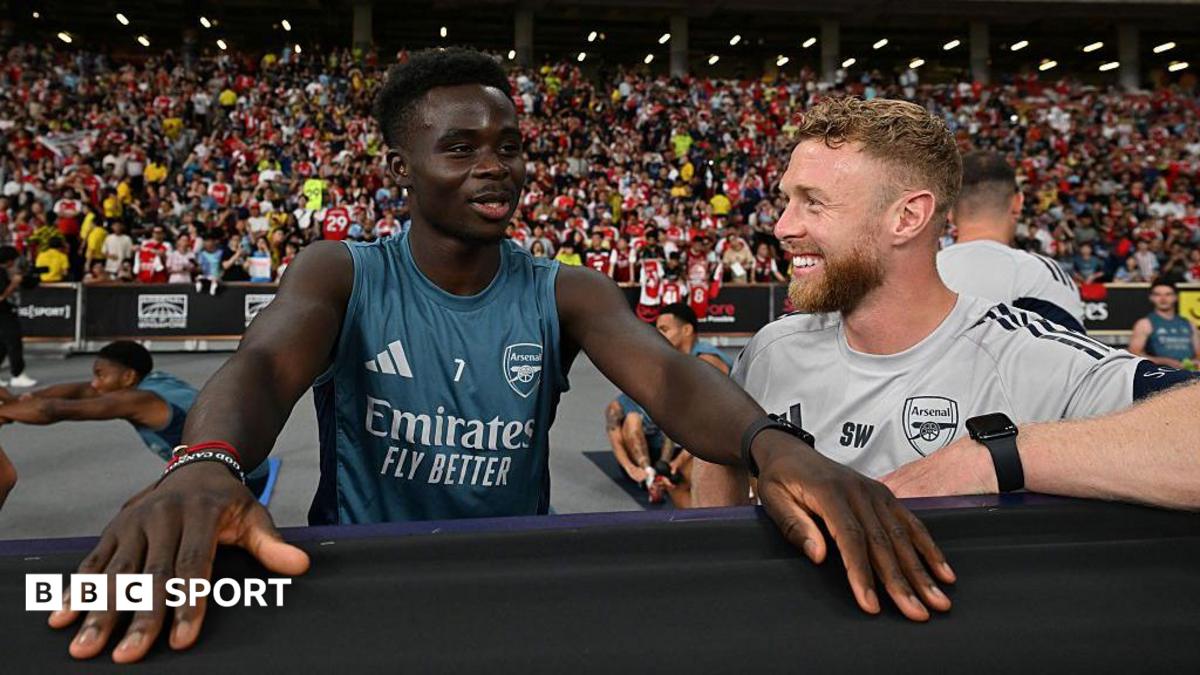
Arsenal are parting ways with lead performance coach Sam Wilson, ending his twelve-year association with the club. As BBC Sport reported, Wilson is set to leave north London for a new role at a European club. Industry sources indicate he is headed to Serie A side Juventus, where he will reunite with former Arsenal head of performance Darren Burgess.
Wilson first joined the Gunners in 2014 and spent the last seven seasons working directly within the first-team environment. His departure is described as a personal choice to step into a more senior role abroad. However, the timing points to a broader shake-up under Mikel Arteta following a grueling season.
This exit is not an isolated event. It represents the latest domino to fall in an aggressive restructuring of Arsenal's medical and fitness staff. The club has initiated a thorough assessment of its sports science protocols to address player availability issues.
The Pathology: 1,043 days on the treatment table
Arsenal won the Premier League title in May, but the achievement masked a severe physical toll. The squad accumulated a staggering 1,043 days lost to injury across the 2025/26 campaign. This heavy workload eventually caught up with them in European competition, culminating in a Champions League final defeat to Paris Saint-Germain in early June.
The high injury count during the 2025/26 campaign represented one of the worst physical tolls in the division. It is the core reason why technical director Edu and manager Arteta initiated an immediate post-season review. While the Premier League trophy resides at the Emirates, the cost of that trophy was nearly unsustainable.
The review culminated in the departure of Dr. Iqbal, who had arrived in 2024 with a mandate to modernize player care. Instead, his tenure was plagued by recurring muscle strains. The club's leadership decided that a change in leadership at the medical clinic was necessary to protect their multi-million-pound squad assets.
Look no further than Declan Rice to understand Arsenal's physical dilemma. The midfielder started 55 matches for club and country but spent the final months of the season managing a persistent hamstring injury. He was only sidelined for a single club match, playing through discomfort to keep Arsenal's title charge on track.
That high-stakes gamble has already backfired on the international stage. Rice experienced fresh fitness complications while playing for England at the World Cup, raising questions about his long-term recovery. Running players through soft-tissue issues has become a recurring problem under Arteta's regime.
Other key players suffered even longer spells on the sidelines. Noni Madueke missed 15 matches during the campaign due to a serious knee injury. By December, both Madueke and captain Martin Odegaard had already missed six games apiece, forcing Arteta to constantly field makeshift lineups.
The defensive unit fared no better. Right-back Ben White was ruled out near the end of the season with a knee injury, while Jurriën Timber struggled with a groin strain. Summer signing Mikel Merino and forward Kai Havertz also missed matches due to various impacts and knocks, limiting Arsenal's tactical flexibility.
A breakdown of the key injuries from the 2025/26 season reveals the scale of the crisis:
- Declan Rice managed a hamstring injury for months, starting 55 matches but suffering a setback during the World Cup.
- Noni Madueke was sidelined for 15 matches due to a knee injury.
- Martin Odegaard missed six matches before the winter break with an ankle issue.
- Ben White missed the season's final month due to persistent knee joint issues.
- Jurriën Timber spent weeks out with a groin strain suffered in training.
The Spanish Connection: Arteta's new recovery specialist
To fix these issues, Arsenal have appointed Eneko Angulo as their new Head of Rehabilitation. Angulo arrives after a successful 12 years at La Liga club Real Betis, where he built a reputation for accelerating player recovery without triggering recurrences. He will task himself with redesigning how Arsenal transition injured players back into first-team training.
The club is also working to fill the vacancy left by Dr. Iqbal. Negotiations are underway to secure Portuguese specialist Arnaldo Abrantes as the new Head of Sports Medicine. Abrantes is highly regarded for his modern approach to preventative training and soft-tissue injury mitigation.
These appointments suggest a clear shift toward Spanish and Iberian medical methodologies. Arteta wants closer alignment between the coaching staff and the medical team to prevent overtraining. The goal is to establish a system that flags fatigue before it turns into a tear or a strain.
This is not the first time Arsenal have gutted their physical preparation staff. In 2014, following years of relentless muscle injuries under Arsene Wenger, the club brought in Shad Forsythe from the German national team. That move was heralded as the solution to Arsenal's fragile squads, yet the underlying issues remained.
Forsythe's arrival was supposed to mark a scientific revolution in London. Instead, the club continued to suffer seasonal injury crises, proving that backroom changes are not a magic wand. History suggests that changing the staff does little if the manager's tactical demands remain unchanged.
Sam Wilson's entry into the first-team setup coincided with that 2014 transition. Now, twelve years later, his exit marks the end of that specific cycle of sports science. Arsenal find themselves back at the starting line, searching for a new formula to keep their players on the pitch.
The Strategic Outlook: Can Arteta learn to rotate?
Rebuilding the medical staff is only half the battle. Arsenal's real issue might be their manager's selection policy. Arteta notoriously ranks among the lowest in the Premier League for squad rotation, preferring to rely on a core group of fourteen players.
This reluctance to trust his bench creates an unsustainable physical load. Rivals Manchester City have spent years building a deep squad where load sharing is institutionalized under Pep Guardiola. If Arteta does not trust his backup options, even the best sports science department in the world cannot save his starting eleven from burnout.
The upcoming season will test this new backroom structure immediately. With Champions League commitments and another title defense on the horizon, Arsenal cannot afford another season of high injury volumes. The arrival of Angulo and the departure of Wilson mark the end of one era and the start of a high-risk experiment in player preservation.
Read Next
- Why William Saliba is not leaving Arsenal anytime soon
- Why Arsenal are ready to abandon Bruno Guimaraes for a £60m gamble
- Ranking the ten most dramatic and controversial football moments of the year
- Gary Neville exposing Rio Ferdinand's William Saliba takes is pure gold
- ⭐ UCL 2026 — Champions League Quarter-Finals Hub