Arsenal's first-team squad missed a combined total of 99 matches due to injury across the first 20 games of the 2025/26 Premier League season. That single statistic exposes the paradox of their campaign: Mikel Arteta's side secured their first league title in 22 years, yet they did so while operating on the edge of physical collapse.
The cost of their success was a squad stretched to its absolute limit, culminating in a heartbreak in Budapest where a depleted side lost the Champions League final 4-3 on penalties to Paris Saint-Germain. Winning the league obscured the structural cracks, but Arteta, a manager obsessed with control and marginal gains, has spent the weeks since conducting a ruthless autopsy of his backroom team.
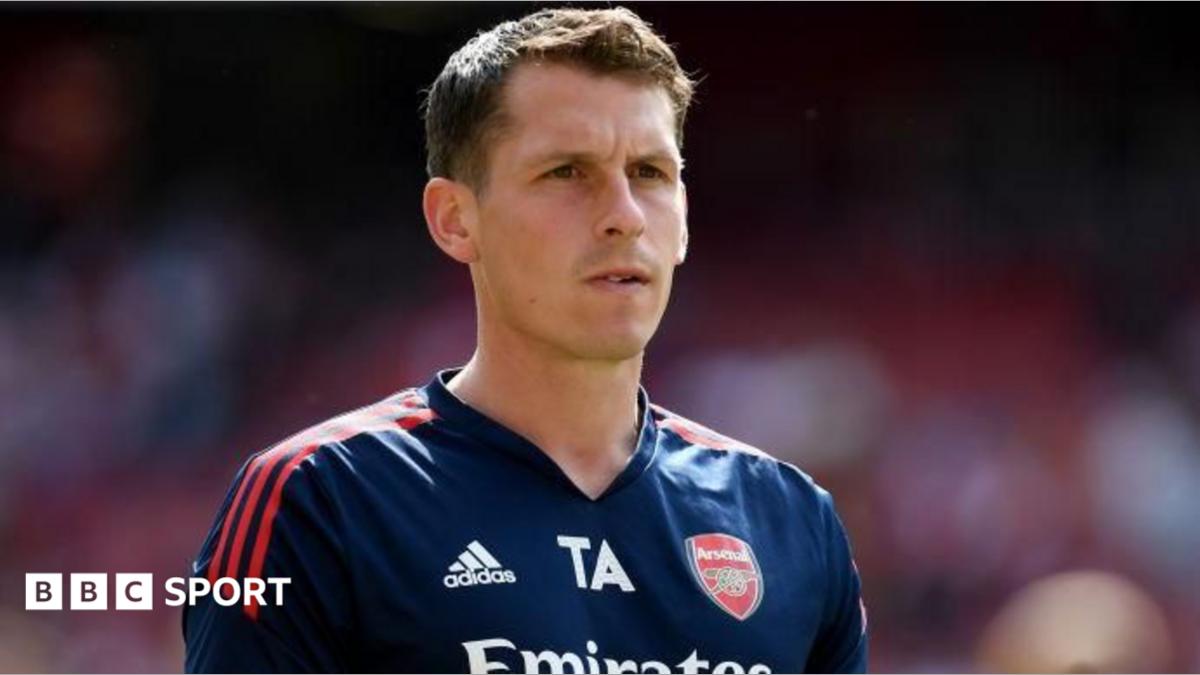
The departure of Tom Allen, the head of sports science and performance, is the final act in a sweeping purge of the club's medical and physical performance staff, as first reported by the BBC on June 29, 2026. Allen’s exit follows that of Dr. Zafar Iqbal, the head of sports medicine who was dismissed shortly after the defeat in Hungary, and lead performance coach Sam Wilson, who ended his 12-year association with the club.
Winning the title was not enough to save them. For Arteta, the rate of attrition had become intolerable, prompting a systematic reconstruction of the club's physical preparation model.
The Tactical Deconstruction of the Injury Toll
To understand why Arteta acted so aggressively, one must look at how the physical breakdown of key players forced Arsenal to compromise their tactical identity. During their title charge, the starting eleven was rarely a stable entity.
When Martin Odegaard was sidelined with recurring knee and muscle issues, Arsenal's pressing efficiency plummeted. With the Norwegian captain leading the first line of engagement, Arsenal recorded a league-best Passes Per Defensive Action (PPDA) of 8.6 during the 2023/24 season. During the winter injury peak of 2025/26, with Odegaard absent and Mikel Merino recovering from a foot injury, that PPDA figure drifted to 11.4.
The aggressive high press was replaced by a passive mid-block, and high turnovers within 40 meters of the opponent's goal dropped by 18 percent. This physical decline also affected Bukayo Saka, who struggled with chronic Achilles tendon discomfort.
Saka was forced to ration his sprints, averaging just 16.8 high-intensity bursts per 90 minutes compared to 22.4 in the previous campaign. While his output remained high through set-piece delivery and intelligent positioning, Arsenal lost the explosive, direct transition threat that had previously unbalanced deep blocks.
The side became reliant on slower, more deliberate possession, increasing the load on Declan Rice to cover lateral ground in midfield. In defense, the stability that defined their previous run vanished.
William Saliba, who famously played every minute of the 3,420 minutes in the 2023/24 Premier League campaign, was plagued by ankle and back issues. He missed key winter fixtures, forcing Gabriel Magalhaes to partner with Jakub Kiwior. Without Saliba's recovery pace, Arsenal's defensive line dropped an average of 4.2 meters deeper, making it harder to pin opponents in their own half.
The Final Attrition in Budapest
The physical toll was most visible on the European stage. Ben White sustained a serious knee injury against West Ham in early May, ruling him out of the Champions League final entirely. Jurrien Timber, who had missed over two months with a groin injury, was only fit enough for the bench.
Without their first-choice full-backs, Arteta had to field a makeshift defensive line against Paris Saint-Germain's wingers. Kai Havertz scored a clever opener in the 6th minute, but the team's physical energy began to fade by the hour mark. Arsenal's midfield could no longer sustain the lateral shifting required to track Ousmane Dembele and Bradley Barcola.
Dembele won and converted a 65th-minute penalty after Thomas Partey, playing on weary legs, arrived late in the box. By the time the match reached extra time, Arsenal had exhausted their substitutions, leaving several players visibly cramping.
The subsequent penalty shootout loss was a cruel lottery, but the physical decline during the preceding 120 minutes was a trend that had been building for months. It made the internal review of the club's physical department inevitable.
The Core Problem: Re-injury Rates and Soft-Tissue Failures
The internal review initiated by the board focused on a specific metric: the recurrence of soft-tissue injuries. Arsenal suffered 14 separate muscle recurrences during the 2025/26 season, representing a 40 percent increase in re-injury rates compared to the prior two campaigns.
Players would return to training, only to break down again within three weeks. Gabriel Jesus and Timber experienced multiple setbacks that disrupted their reintegration. The medical staff's rehabilitation protocols were deemed too reactive, focused on pain management rather than physical readiness for Arteta's high-intensity system.
This was the catalyst for the departures of Iqbal, Wilson, and now Allen. The club's leadership concluded that the performance department was failing to prepare the squad for the demands of playing 55 matches a year at the highest intensity.
The sports science team had failed to manage the transition from rehabilitation back to competitive matches. This gap in performance readiness cost Arsenal their defensive cohesion when it mattered most.
The New Performance Model: Abrantes and Angulo
The restructuring is designed to shift the club toward a proactive, data-driven performance model. The incoming Head of Sports Medicine, Dr. Arnaldo Abrantes, brings a reputation for advanced neuromuscular screening.
Abrantes, who previously worked at Aston Villa and Nottingham Forest, focuses on identifying muscular imbalances before they manifest as clinical injuries. His staff will use real-time electromyography (EMG) data during training to monitor muscle activation patterns.
This allows them to identify when a player is compensating for a minor strain, allowing for intervention before a tear occurs. The arrival of rehabilitation specialist Eneko Angulo from Real Betis is also significant.
During his 12 years in Seville, Betis consistently recorded one of the lowest soft-tissue reinjury rates in La Liga, averaging just 4.2 muscle recurrences per season over the last three years. Angulo’s approach focuses on eccentric strength training and progressive ballistic loading during the final phases of rehab.
This ensures that players do not return to Arteta’s squad until their tissue can withstand the deceleration forces of rapid changes of direction. Additionally, Spanish physiotherapist Joaquin Acedo has been consulting with the club.
Acedo’s role is to bridge the gap between medical clearance and tactical performance, ensuring that players match their baseline physical metrics before they are cleared for match selection. This multi-layered screening process marks a significant shift in philosophy.
The Margin for Error in 2026/27
Arteta’s decision to rebuild his medical department shows that he refuses to accept physical attrition as an inevitability. Winning the Premier League was a remarkable achievement, but doing so while managing a high volume of injuries is a high-risk strategy that cannot be repeated.
With Manchester City and a resurgent Chelsea strengthening their squads, the margin for error at the top of the Premier League is narrow. Arsenal cannot afford to have their key players missing large portions of the campaign or playing at sub-optimal fitness levels.
The departures of Allen, Iqbal, and Wilson mark the end of an era for the backroom team. By restructuring the sports science and medical departments, Arteta is betting that advanced recovery protocols and proactive screening will give his squad the physical resilience needed to defend their domestic title and challenge for the Champions League once again.