The Statistical Reality of Liverpool's Defensive Cliff Edge
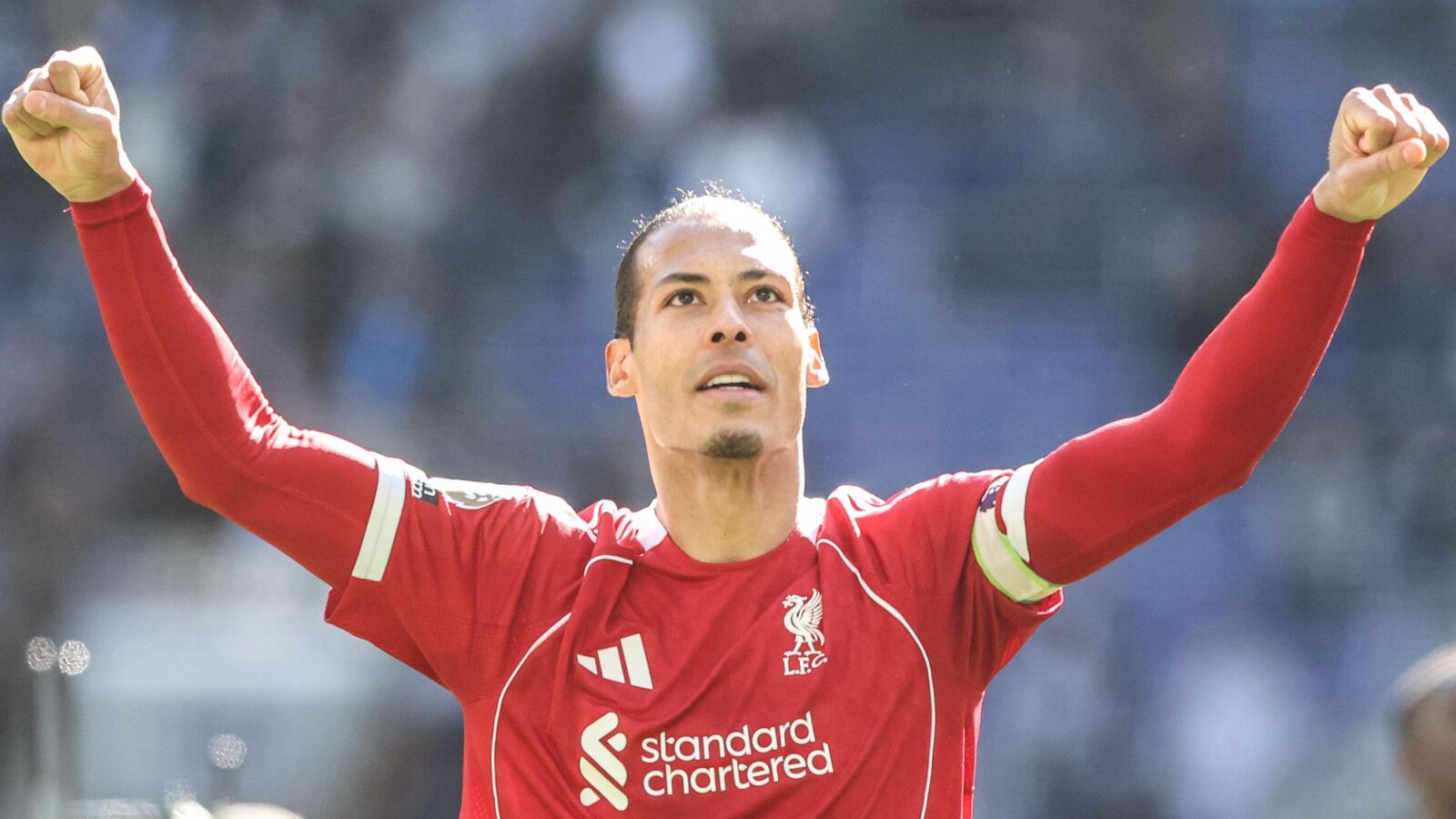
If Andoni Iraola allows Fenway Sports Group to cash in on Virgil van Dijk this summer, he will inherit a central defensive unit with an average age of 22.6 years. This calculation excludes the veteran captain but includes a defensive roster with exactly zero minutes of Premier League experience outside of Joe Gomez. It is a statistical cliff edge that no elite manager would willingly walk over.
Yet, as Football365 reported, Liverpool's ownership has considered evaluating serious offers for the central defender. This comes at a time when the squad has already lost Mohamad Salah and Andy Robertson. Furthermore, Ibrahima Konate departed on a free transfer to Real Madrid earlier this summer, gutting the team's defensive core.
The Roster Void: Life Without Konate and Van Dijk
To understand the danger of this proposal, one must look at the numbers behind Liverpool's current roster. Since his £75 million transfer from Southampton in January 2018, Van Dijk has been the foundation of the club's success. Under contract until June 2027, the Dutch international currently commands a wage of £350,000 per week.
Cashing in on a player turning 35 on July 8 makes financial sense on a spreadsheet. However, the sporting cost is immense.
Behind the captain, the drop-off in quality is immediate and severe. Joe Gomez remains the only experienced alternative. His career has been defined by utility roles rather than sustained defensive dominance.
The other two recognised centre-backs on the books are teenagers. They represent a massive gamble for a team with title ambitions.
The Youth Experiment: Jacquet and Leoni by the Numbers
The remaining depth chart consists of Jeremy Jacquet and Giovanni Leoni. Jacquet is a 20-year-old prospect who has just arrived from Rennes. Leoni is a year younger at 19.
He missed most of last season with an ACL injury. Asking these prospects to anchor a defence in the Premier League is a setup for failure.
Without Van Dijk, the defensive options left for Iraola are dangerously thin. The drop-off in experience is stark.
- Joe Gomez (29 years old, utility defender with inconsistent central form)
- Jeremy Jacquet (20 years old, zero Premier League minutes)
- Giovanni Leoni (19 years old, recovering from a long-term knee injury)
The True Value of a Captain's Final Year
From a purely financial perspective, keeping a 35-year-old on a massive salary for his final contract year is often viewed as bad business by FSG. But football matches are not won on spreadsheets. The loss of veteran leadership has already reached critical levels after the summer exits of Salah and Robertson.
Stripping Van Dijk from this squad removes the last remaining pillar of the title-winning era. It is a gamble Liverpool cannot afford.
The Aerial Duels: Van Dijk vs. Gomez
The statistical profile of Van Dijk shows that even as his physical peak recedes, his efficiency remains elite. Last season, he maintained a pass completion rate of 91.4% and won 74.2% of his aerial duels. In comparison, Joe Gomez recorded an aerial win rate of just 58.3% when deployed centrally.
That is a drop of nearly 16% in vital defensive situations. The drop in control is clear.
The leadership impact on young players is also measurable. The incoming Jacquet highlighted this when speaking to Liverpool's official website.
"Of course, I’m really excited to line up alongside a great player like him. I think he’s up there with the best centre-backs in the world currently, so I can only learn from him."
The Mentorship Factor: Jacquet's Development Curve
Without Van Dijk as a mentor, the development curves of Jacquet and Leoni are likely to flatten. Leoni, who played fewer than 500 competitive minutes last season due to injury, needs a partner who can coach him through matches.
Van Dijk's positioning allows his partner to play with a wider margin for error. Partnering Leoni with an inconsistent Gomez exposes a teenager who has yet to adapt to the speed of the English game.
AC Milan's Search for Leadership and the Modric Parallel
The search for experience is not unique to Anfield. Over in Serie A, AC Milan are navigating a similar transition under Ruben Amorim. After missing out on the Champions League last season, Amorim identified the defence as his primary area for reinforcement.
While Milan spent weeks chasing Van Dijk, Sempre Milan squashed the rumours. They confirmed that Liverpool have put their foot down.
Amorim's Veteran Core: The Modric Extension
Amorim's desire for veteran leadership explains why Milan are simultaneously working to extend Luka Modric. The Croatian midfielder is currently a free agent after his contract expired on June 30, 2026. Initially, it was believed the 40-year-old would retire after Croatia's exit from the World Cup.
However, reports suggest Modric is inclined to sign for one more year. He has been strongly encouraged by his former teammate Cristiano Ronaldo.
Ronaldo, speaking after Portugal's World Cup clash with Croatia, urged the veteran to continue playing. His endorsement highlights why these aging figures are valued so highly by modern managers.
"I spoke with him, he’s a legend of football. I played so many years together with him in Real Madrid and I wish him all the best. I hope he will continue to play."
The Pass Progression Decline without Experience
Modric played 1,420 minutes in Serie A last season, maintaining a pass completion rate of 89.7% in the final third. While he can no longer start 38 games a year, his ability to control the tempo of a match is invaluable.
Milan's pursuit of both Van Dijk and Modric demonstrates a clear tactical philosophy under Amorim. Young talent needs older heads to provide structure.
The Tactical Cost of Ownership Impatience
For Iraola, the tactical cost of losing Van Dijk is far greater than the value of any transfer fee FSG might recoup. Under Iraola's high-tempo transition system, the centre-backs must cover massive lateral spaces. They must defend 1v1 situations when the counter-press fails.
In this setup, speed of thought replaces pure recovery pace. Gomez and Jacquet lack this anticipation.
The High-Line Exposure Under Iraola
Van Dijk's reading of the game allows Liverpool to maintain a high defensive line without getting caught in transition. If Liverpool sell their captain, Iraola will be forced to drop his defensive line by ten yards to protect Gomez and Jacquet.
This shift will create a larger gap between the midfield and defensive units, destroying the compact shape that Iraola's tactics require. It will also reduce the effectiveness of Liverpool's press, as opponents will find it easier to play through the lines.
The Economic Fallacy of Wage Savings
The financial savings of removing Van Dijk's wage bill are instantly wiped out if the club fails to return to the Champions League. The numbers do not lie. Keeping Van Dijk for the final year of his contract is a footballing necessity.
Forcing Iraola to rebuild a defence with teenagers and a backup centre-back is a recipe for mid-table mediocrity. If FSG want their new manager to succeed, they must listen to James Pearce's reporting and keep their captain.