Physical Toll and Workload Risks in Early Cup Fixtures
Early August fixtures bring immediate physical tests as managers balance tactical goals against player fatigue across squad depth. As Sky Sports live coverage detailed ahead of tonight's second-round ties, Premier League squads face immediate fitness challenges before autumn schedules intensify.
Tottenham Hotspur enter Wednesday evening under intense scrutiny following a humbling 3-0 defeat at Brentford. That loss exposed clear physical limitations as Spurs surrendered central space and suffered late defensive breakdowns under pressure.
Hosting Charlton Athletic presents a complex fitness dilemma for the Tottenham medical staff and coaching team. Charlton arrive at Tottenham Hotspur Stadium as early Championship pace-setters, carrying superior match sharpness compared to Tottenham's rotated fringe players who lack competitive minutes.
Rushing unconditioned reserves into high-tempo cup matches carries elevated muscular risk. When physical sharpness trails opponent intensity, players overcompensate mechanically, dramatically increasing groin and hamstring strain probabilities during late-match sprints.
Newcastle United face a similar conditioning challenge at St James' Park against West Bromwich Albion. Manager Matthias Jaissle remains winless since taking charge of the club, adding psychological pressure to physical workload demands.
Jaissle demands relentless high-octane pressing from his forward line throughout all ninety minutes. Asking squad players without full match fitness to execute that demanding pressing scheme risks severe hamstrings overload during transition moments.
Failing to secure a result against Championship opposition would trigger immediate concern on Tyneside. However, pushing half-fit players beyond their physical thresholds to force a victory could cost Newcastle vital starter availability in upcoming Premier League fixtures.
Everton travel to Deepdale to take on Preston North End under distinct emotional and physical conditions. Manager David Moyes returns to Preston for the first time since leaving the club in 2002, needing to protect his veteran squad members from unnecessary strain.
Moyes must navigate tight recovery turnarounds while avoiding structural fatigue in key central positions. Managing workload for experienced players is vital to prevent soft-tissue setbacks during early domestic cup rounds.
Walsall and Leyton Orient provided a clear warning about early-season physical exhaustion on Tuesday. Their tie finished 0-0 after ninety grueling minutes before Leyton Orient eventually prevailed 5-6 on penalties after exhausting energy reserves.
That scoreless penalty thriller highlighted how lower-league motivation forces top-tier opponents into extended physical duels. Midweek extra efforts without adequate pre-season loading inevitably show up as muscle tightness in subsequent weekend fixtures.
European Schedule Expansion Forces Medical Planning Shift
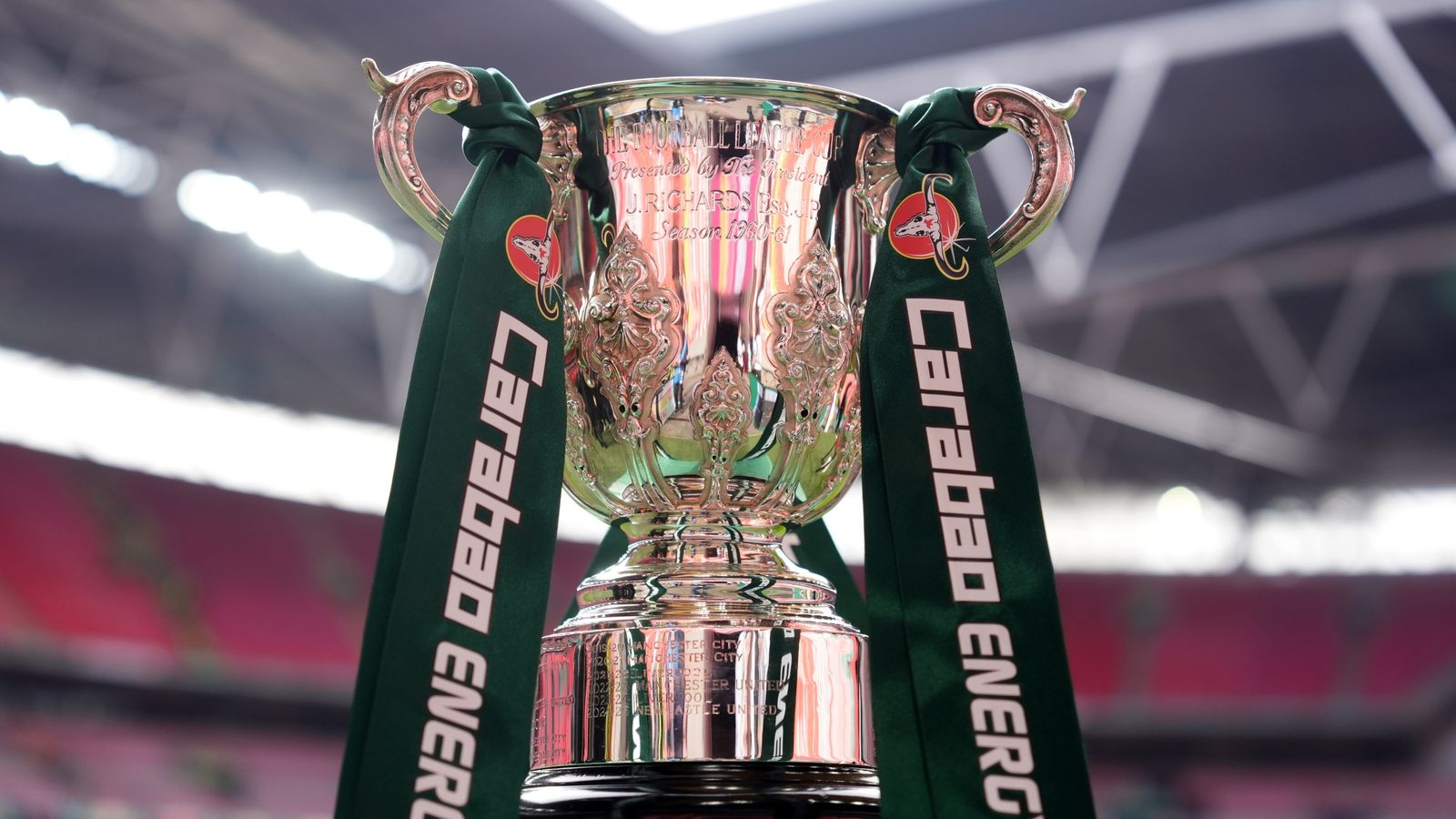
The physical burden on elite English squads is shifting due to UEFA competition calendar expansions. As Carabao Cup official updates confirmed, nine Premier League teams enter the competition directly in the third round.
Those nine sides are Arsenal, Manchester City, Manchester United, Aston Villa, Liverpool, Bournemouth, Brighton, Sunderland, and Crystal Palace. Their European commitments require unprecedented scheduling adjustments from English football authorities to prevent player burnout.
To resolve fixture congestion, organizers instituted an additional pre-draw scheduled for 7.20pm on Wednesday. According to Sky Sports broadcast details, this pre-draw determines home and away designations for Champions League and Europa League clubs.
The European calendar expansion prevents participating clubs from being drawn against each other in the third round. Matches will be split across two separate midweeks, beginning September 7 and September 14.
Spreading third-round fixtures across fortnight blocks gives medical departments essential recovery windows between competitive games. Spacing out midweek matches helps suppress acute workload spikes that traditionally cause calf tears and tendon inflammation.
Despite scheduling allowances, fixture density creates distinct physiological hurdles for squad rotational options. Reserves asked to play intense knockout minutes after weeks on the bench experience rapid glycogen depletion and elevated heart-rate spikes.
Sports medicine research indicates that sudden shifts from controlled training sessions to competitive match speed increase soft-tissue injury risk by over forty percent. Managers who rotate indiscriminately risk losing key rotational pieces to long-term muscle tears.
Furthermore, early-season domestic cup ties leave little recovery margin before weekend Premier League fixtures resume. Players absorbing heavy hits or micro-trauma midweek rarely regain baseline muscle function within seventy-two hours.
Coaches who underestimate lower-division opposition often end up burning primary starters off the bench to save results. That desperate late substitution tactic destroys planned recovery schedules and exposes key stars to high-stress sprint loads.
Without structured workload tracking, teams participating in European competitions risk compounding physical issues before autumn even begins. Medical departments must enforce hard caps on playing minutes for athletes showing elevated inflammation metrics.
Strategic Workload Management and Long-Term Squad Health
Thursday's cup double-header sees Chelsea host Luton Town at Stamford Bridge while Fulham welcome AFC Wimbledon for an 8pm kick-off. Both Premier League outfits face distinct physical challenges depending on their tactical approach and rotation depth.
Chelsea possess sufficient squad depth to field two fully distinct lineups across competitions. However, unproven tactical combinations often struggle with positional spacing, forcing individual defenders into excessive recovery running that accelerates muscle fatigue.
Fulham face a highly physical encounter against an AFC Wimbledon team built on direct aerial service and heavy set-piece contact. Defending set-piece scrambles and repeated physical collisions requires total core stability, testing players recovering from minor pre-season knocks.
Looking toward autumn and winter, Carabao Cup demands escalate rapidly following September's third-round ties. The semi-final first leg takes place the week commencing January 11, followed by the second leg in the week beginning February 1.
That mid-winter window aligns with freezing pitches and congested festive league schedules. Clubs that fail to build durable physical depth in August routinely experience systemic muscular breakdowns during January's heavy fixture load.
Sports science teams rely on several key physical indicators when monitoring player readiness during early domestic cup campaigns:
- High-speed running distance variations between regular league starters and rotational cup players.
- Neuromuscular fatigue markers measured via jump testing and force plate asymmetry tracking post-match.
- Subjective muscle soreness scores recorded forty-eight hours following high-intensity midweek cup appearances.
Tactical errors late in cup ties are frequently direct symptoms of physical breakdown rather than lack of effort. When central midfielders lose explosive deceleration capacity, defensive gaps widen and tracking back becomes impossible.
Tottenham's poor second-half showing against Brentford demonstrated how rapidly physical degradation leads to structural defensive failure. If Tottenham coaching staff ignore physiological warning signs tonight, additional muscle casualties will follow.
Matthias Jaissle faces equal peril at St James' Park if his pressing demands outpace Newcastle's current physical conditioning. Enforcing extreme physical tactics on under-prepared squad players is a recipe for early hamstring tears.
Modern elite football allows zero tolerance for haphazard workload management across congested domestic and European calendars. Navigating August cup fixtures cleanly requires precise scientific rotation based on objective physical metrics rather than managerial instincts.
Read Next
- Sávio won't fix Tottenham's tactical mess against Charlton
- Alexander Isak is running out of excuses after Liverpool's Newcastle draw
- Iraola's Liverpool honeymoon is over after that Newcastle chaos
- Liverpool salvage late point at Newcastle as Iraola's system shows flaws
- 🏆 Europa League Final 2026 — Full Coverage Hub