
Thomas Tuchel's tactical rigidity is dragging England down to Scotland's level

The Illusion of Progress Under a Tournament Specialist
Thomas Tuchel was hired to bring elite tactical structure to an England side that had spent years drifting on vibes and individual moments. Instead, his team's initial outings have looked remarkably stale, lacking the vertical progression required to break down disciplined opponents.
The failure to break down Panama in the first half of their recent encounter is the latest warning sign. Reduced to speculative pop shots and half-chances, England looked devoid of ideas in the final third.
This sluggish performance prompted a characteristically blunt assessment on television. Analyst Roy Keane savaged the performance, comparing England's display to watching Scotland.
For a team with aspirations of winning international silverware, being compared to a side that went home early is a sobering reality check. It highlights the vast gulf between England's paper potential and their actual execution on the pitch.
The numbers from the Panama stalemate confirm the eye test. England dominated possession but failed to register a single shot on target from inside the penalty box during the opening forty-five minutes. Their build-up play was slow, predictable, and structurally flawed.
The double pivot sat too deep, refusing to risk line-breaking passes into the half-spaces where creators could turn and attack. This structural cowardice forced the forwards to drop into their own half just to get a touch of the ball.
The Scotland Comparison and the Reality of Tactical Rigidity
To understand why Keane's comparison hurts, one must look at how Scotland heading home early occurred. Their star men were found wanting when it mattered most, and the supporting cast proved out of their depth on the big stage.
Scotland lacked the technical security to control games and the tactical variety to break down low blocks. When their primary game plan failed, they had no alternative strategy to fall back on.
Tuchel's England is currently exhibiting the exact same tactical pathology. By locking players into rigid positional zones, the German manager has stripped away the fluidity that makes these attackers so dangerous at club level.
The players look like they are thinking about their positioning rather than reacting to the space. The result is a team that passes the ball in a slow U-shape around the opposition block, never threatening to penetrate the lines.
Against Panama, this rigidity manifested in a complete lack of underlapping runs. The wingbacks stayed wide, the central midfielders stayed deep, and the front three remained isolated against a back five.
This static positioning made it incredibly easy for the defenders to shift and double up on England's wide threats. When the wide areas are closed off, England have no central presence to create chaos in the box.
It is a damning indictment of the coaching staff that a squad containing some of the best creative talent in Europe is reduced to taking desperate shots from thirty yards out. These pop shots are the ultimate sign of a frustrated team.
They represent a capitulation, an admission that the system has failed to create a high-quality opening. If England cannot break down Panama, they will have no chance against elite tournament opposition.
David James and the Mystery of the Tuchel Plan
Despite the visible struggles, some commentators believe there is a method to the madness. Former England goalkeeper David James argued that Tuchel has bigger plans for one specific star who must start.
This suggestion implies that the current stagnation is merely a transition phase while the manager embeds a more complex tactical framework. Yet, international football rarely affords managers the luxury of long-term developmental phases.
In tournament football, you must win the game in front of you. You cannot sacrifice immediate offensive fluidity for a theoretical tactical payoff that might never arrive.
If Tuchel does have bigger plans, they need to translate into on-pitch cohesion immediately. Leaving creative players on the bench or forcing them into unnatural roles is a recipe for early tournament exit.
The identity of this mystery star remains a subject of intense debate among fans and analysts alike. Some suggest it refers to a dynamic midfielder capable of transitioning the ball quicker, while others believe it is a forward who can stretch the opposition defence.
Regardless of the individual, the system must adapt to get the best out of them. A manager's job is to build a structure that amplifies his best players, not one that suffocates them in the name of defensive control.
Tuchel's historical preference for defensive stability often comes at the expense of attacking spark. At Chelsea and Bayern Munich, his most successful periods were built on defensive solidity and transition moments.
But England do not have the profile of players to play as a transition team. They have technical controllers who need the ball in tight spaces, and Tuchel's system is failing to provide those scenarios.
Saka's Off-Pitch Success and the Tactical Solution
While the national team struggles for cohesion, individual players find themselves in the headlines for non-sporting reasons. Star winger Bukayo Saka has recently been in the news regarding his personal life.
After a prolonged dispute with his new neighbours, he won the right to bulldoze a bungalow to build a brand new mansion. This off-pitch distraction comes at a time when his performances for the national team are under the microscope.
The project, valued at £4million, has drawn plenty of attention, but fans are more concerned with his output on the pitch. In the current rigid setup, Saka has struggled to replicate his devastating club form.
He is often left isolated on the right wing, facing double coverage without any overlapping support. The lack of dynamic movement around him makes it easy for defenders to force him inside into congested traffic.
It is unfair to blame Saka for these struggles when the tactical framework is so restrictive. When the ball reaches him, the opposition defence is already set, having had plenty of time to shift during England's slow build-up.
For a winger to thrive, they need to receive the ball on the move, with the opponent's defensive line backpedalling. Tuchel's slow-tempo possession ensures this rarely happens, forcing Saka to play with his back to goal.
The contrast between Saka's off-pitch property success and his on-pitch isolation is a metaphor for this England team. The individual wealth, talent, and prestige are undeniable, yet the collective output remains frustratingly hollow.
Building a £4million mansion is a matter of securing planning permission and spending money. Building a functional football team requires tactical intelligence, fluidity, and a willingness to take risks.
If England are to avoid a repeat of Scotland's fate, Tuchel must abandon his ultra-conservative approach. The double pivot must be pushed higher up the pitch to compress the space and win second balls in the opposition half.
One of the deep midfielders must be replaced by a progressive passer who can play forward on the half-turn. Without these adjustments, England will continue to struggle against any team that sits in a low block.
The coaching staff must also introduce more positional rotation in the final third. The players must be given the freedom to swap positions and create overloads in the half-spaces.
Static positioning is the easiest thing in the world to defend against, no matter how talented the individual players are. Fluidity and unpredictability are the keys to unlocking modern defensive blocks.
England's upcoming fixtures will test whether Tuchel is capable of adapting his philosophy. If he persists with this rigid, low-tempo system, the comparison to Scotland will become a permanent label.
The talent at his disposal is too good to be wasted on safety-first football. It is time for the manager to trust his players and unleash the offensive potential of this squad.
The fans want to see a team that plays with courage and intent. They do not want to watch ninety minutes of sterile sideways passing followed by desperate long-range shots.
The blueprint for success is clear, but it requires the manager to take off the handbrake. Whether Tuchel has the courage to do so is the defining question of his tenure.
Read Next
- Tuchel must bench Rice for Mainoo to break Panama's low block
- Thomas Tuchel is already losing the England dressing room
- Why Scotland's 0.07 percent World Cup survival math is peak comedy
- England's right-back emergency is Thomas Tuchel's comedy of errors
- 🏴 England World Cup 2026 — Three Lions Hub
- 🏴 Scotland World Cup 2026 — Tartan Army Hub
- 🇧🇷 WC 2026 Group C — Brazil, Morocco, Scotland, Haiti
adidas Men's Entrada 22 Jersey
A classic, sweat-wicking training shirt that looks as good as it performs.
Frequently Asked Questions
Why did Roy Keane compare England's performance to Scotland?
What was the main issue with England's tactics against Panama?
How did tactical rigidity affect England's wingers and forwards?
What statistics showed England's struggles against Panama?
What tactical flaws did England share with Scotland in their recent matches?
More Coverage
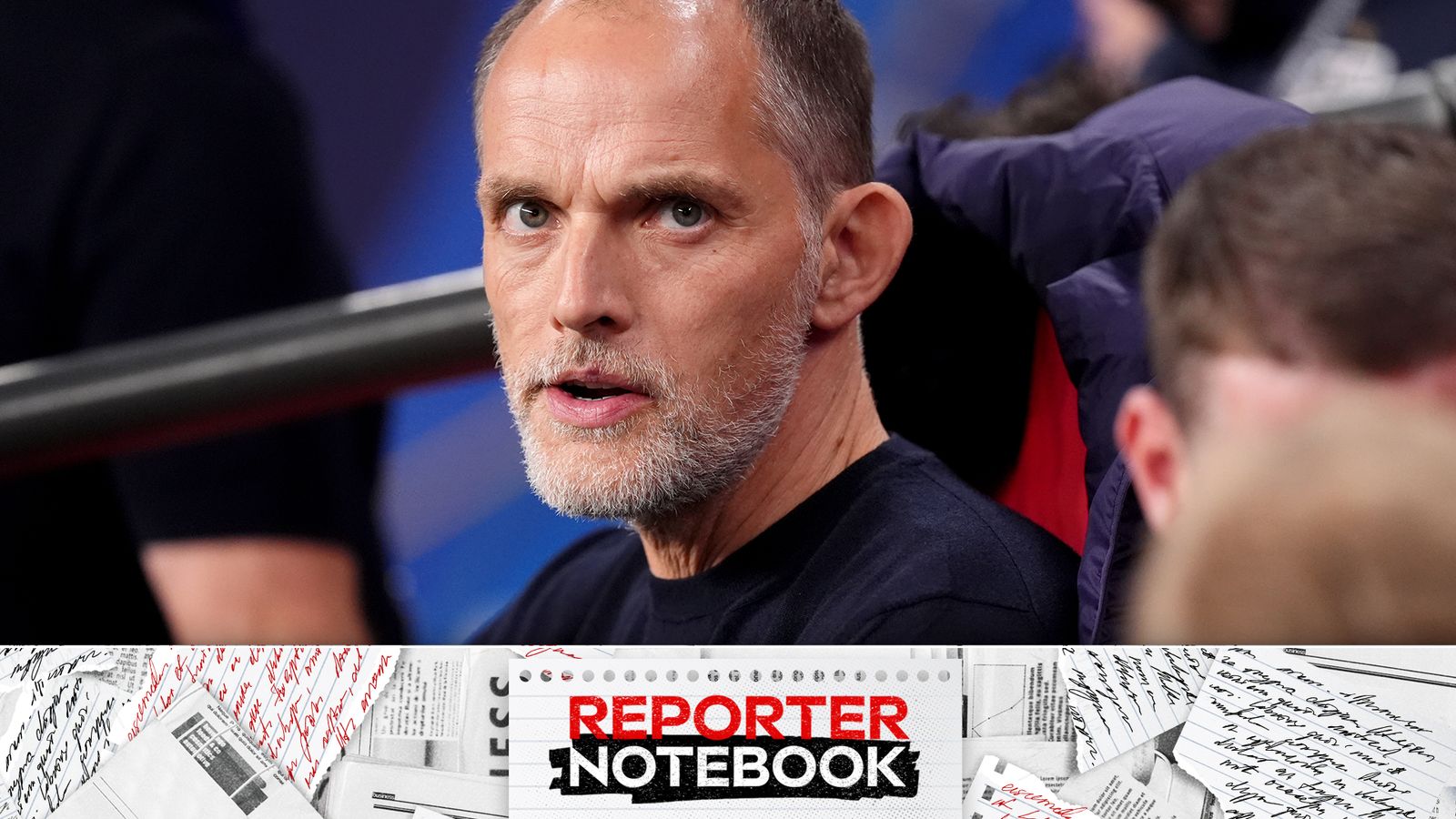
England lost to Spain again, so why is nobody screaming at Thomas Tuchel?
an hour ago
Cole Palmer made the right call prioritizing Chelsea over the Nations League
6 hours ago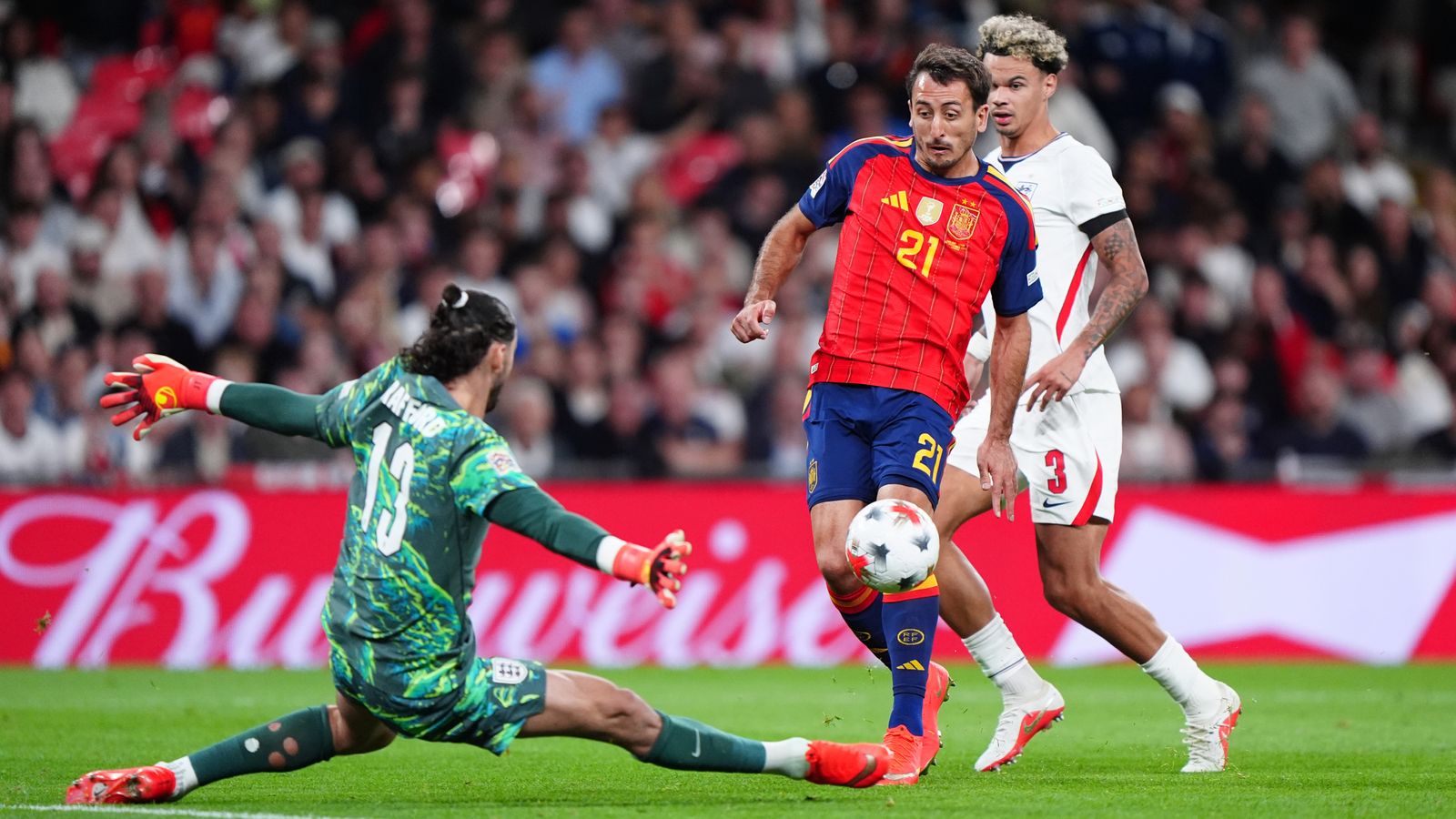
Top 10: Top Moments from England's 3-2 Nations League Thriller Against Spain
7 hours ago
Jordan Pickford's two-match absence exposes Thomas Tuchel's defensive gamble
9 hours ago
Tuchel's England look completely rattled by Man City's guilty verdict
10 hours ago
Thomas Tuchel just threw England's goalkeeping hierarchy into complete chaos
10 hours agoMore Analysis
England lost to Spain again, so why is nobody screaming at Thomas Tuchel?
an hour ago
Cole Palmer made the right call prioritizing Chelsea over the Nations League
6 hours ago
Top 10: Top Moments from England's 3-2 Nations League Thriller Against Spain
7 hours ago
Jordan Pickford's two-match absence exposes Thomas Tuchel's defensive gamble
9 hours ago
Tuchel's England look completely rattled by Man City's guilty verdict
10 hours ago