
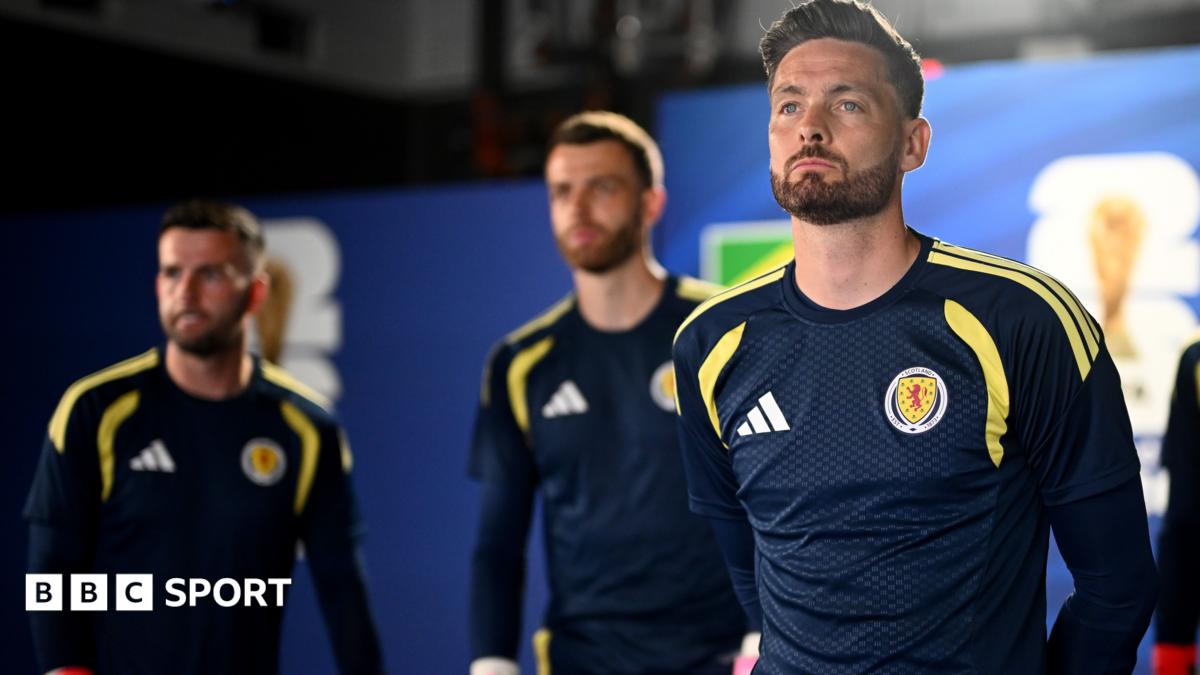
Charting the trajectory of a modern icon
Craig Gordon’s retirement marks the end of a generation for Scottish football. Measuring his career isn't just about tallying clean sheets; it is about recognizing the physical defiance required to remain relevant across three distinct decades of domestic and international competition.
We are breaking down the ten reasons why Gordon sits at the top of the conversation regarding the finest keepers to emerge from the Scottish game in the 21st century. This ranking evaluates longevity, high-stakes clutch performances, and the technical evolution he navigated from his early years at Hearts through his eventual exit.
1. The 2007 record-breaking transfer
Gordon’s move from Hearts to Sunderland for a then-British record fee for a goalkeeper remains the anchor of his career valuation. He didn't just move to the Premier League; he arrived as a statement signing for Roy Keane. The fee showed the scouting world that Scottish Premiership talent could hold its own in the most demanding league on the planet.
2. The recovery from dual knee reconstruction
Between 2012 and 2014, elite medical opinion suggested Gordon would never play again following multiple setbacks to his patellar tendons. His return to service at Celtic did more than validate his persistence; it fundamentally changed how we evaluate long-term injury recovery in professional goalkeepers. Most players would have retired at 29, but Gordon found a second wind that lasted another dozen years.
3. The penalty save against Israel in 2020
This looms large as a singular point of qualification history. In the playoff mission to reach a major tournament, Gordon stepped onto the pitch for the shootout with nerves of steel. His intervention in that psychological battle shifted the trajectory of a nation starved of tournament football, earning him the top spot for impact in a singular high-stakes moment.
4. The 2014-2015 PFA Scotland Player of the Year
Winning the top individual award as a goalkeeper is a feat bordering on impossible in a league dominated by attacking midfielders and strikers. Gordon’s form during that campaign was nothing short of total statistical dominance. He commanded his area with a level of authority that allowed Ronny Deila’s Celtic to play a much higher defensive line than they could have otherwise managed.
5. The debut performance against Trinidad and Tobago
Every legend needs a starting block, and Gordon’s 2004 international baptism was it. He arrived onto the scene with a level of composure that teenagers simply do not possess at the highest level. You could see the raw athleticism that would eventually define his career even before he had filled out his frame against seasoned professionals.
6. The longevity battle through the age of 40
Most goalkeepers struggle with the transition to age-related decline, but Gordon consistently adapted his distribution and reflexes well into his fifth decade. He proved that positioning and mental anticipation can effectively offset the inevitable loss of explosive verticality. Whether for club or country, he remained an automatic starter because he was simply the most competent option available.
7. The 2006 Scottish Cup final victory
Leading Hearts to silverware established his domestic standing as more than just a talented prospect. His performance that day ensured the trophy return to Gorgie, cementing his status as a club hero long before his later return to Tynecastle. It served as the foundation for his reputation as a big-game specialist.
8. The transition to a sweeper-keeper role
Under Brendan Rodgers, Gordon had to overhaul his game to facilitate expansive, possession-based football. He moved from a traditional shot-stopper to a facilitator capable of starting attacks from deep within his own six-yard box. While he occasionally struggled with risk-taking, his willingness to change his methodology late in his career helped modernise his own output.
9. The 2017 goal of the year candidate
While often remembered for saves, Gordon's ability to maintain high distribution stats often dragged the team forward during periods of intense pressure. However, the one minor criticism of his game remains his inconsistent command of high crosses in congested traffic. There were moments of brilliance followed by lapses in aerial decision-making that cost his sides points, reminding us he was human after all.
10. The mentorship of the next generation
As the BBC reports, the search for the successor is now in full swing, and it is Gordon’s influence on younger keepers that complicates the matter. He set a professional standard at training facilities that will haunt his successors. When you leave a role, leaving behind a culture of high performance is as big a legacy as the clean sheets themselves.
Honorable mentions
The 2016-17 unbeaten domestic campaign stands out, though it was largely a side-note compared to his individual trophy hauls. His final run at Heart of Midlothian as a veteran leader allowed the club to transition smoothly into a European-capable squad. Without his presence during that turbulent period of club management, it is hard to imagine them securing consecutive top-four finishes.
Read Next
- Hearts fans are having a complete meltdown over the keeper swap
- Craig Gordon finally hangs up the gloves and we should all be crying
- Argentina's banner stunt proves they have lost the plot before the final
- Tuchel’s England experiment is hitting a wall
- 🏴 Scotland World Cup 2026 — Tartan Army Hub
- 🇧🇷 WC 2026 Group C — Brazil, Morocco, Scotland, Haiti


