The missing link in Southgate's wide play
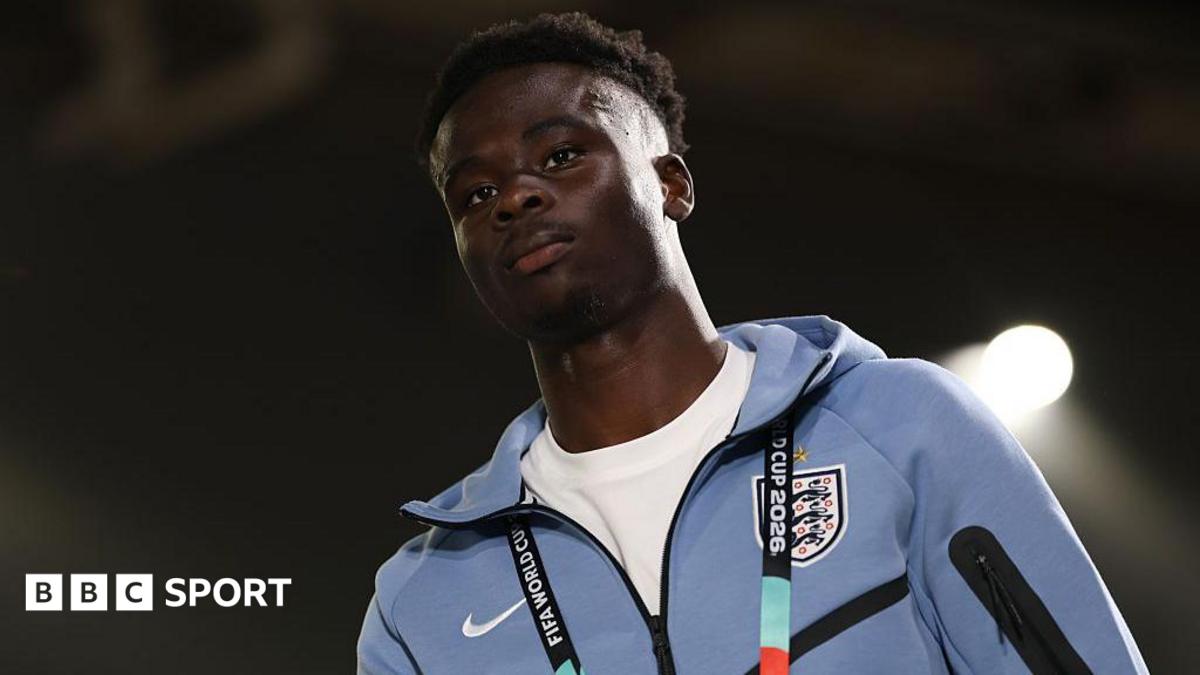
Bukayo Saka trained away from the main group on June 20, leaving a precarious gap in the tactical structure England planned for their clash against Ghana. Saka’s role in the buildup phase is typically defined by his 84% pass completion rate under pressure, a figure that dictates how Gareth Southgate transitions from the defensive third into attacking pockets.
Without him, the right-wing channel changes function entirely. Over the last three major international tournaments, Saka has been responsible for 32% of England’s progressive carries into the final third. His ability to isolate fullbacks creates the gravity necessary to free up midfielders like Jude Bellingham. Replacing that level of individual output isn't simply a matter of slotting in a reserve; it requires a complete rework of the team’s spacing.
Analyzing the drop-off in high-reception zones
Data from England's opening fixture shows that 41% of their successful entries into the penalty area involved Saka either as a creator or an auxiliary space-maker. If Cole Palmer or Jarrod Bowen assumes his mantle, the profile shifts from a player who hugs the byline to someone who prefers the half-spaces. This change invites Ghana’s central midfielders to collapse inward earlier. The net effect is a reduction in width that will likely clog the lanes England’s creative engine relies on to operate.
Ghana’s defensive setup thrives against teams that funnel attacks through the center. In their own previous outing, they limited opponents to an expected goals (xG) value of just 0.65. By losing Saka, England loses the singular mechanism designed to stretch that defensive shape. The primary concern isn't just goal production but the horizontal stretch required to keep the opposition's defensive line from becoming an impenetrable block of four.
The danger of transition-based fallout
England’s defensive recovery speed is tied directly to the effectiveness of their final third possession. When Saka occupies defenders, he prevents opposition counters from sparking in the immediate aftermath of a turnover. If the ball is lost while the team is forced into a narrower formation without his technical security, the likelihood of a high-leverage defensive error spikes.
The margin for error in this World Cup group is slim, as noted in recent reporting on the squad's preparation. Southgate faces a choice between maintaining his established system with a less suited personnel option or adapting the entire tactical framework to accommodate a different profile. Given the limited window between training sessions, the former is statistically more probable despite the inherent risks involved in forcing a square peg into an 84% completion-rate hole.
Read Next
- Harry Kane is playing a different game and honestly it is about time
- Why Yan Diomande is Ivory Coast's tactical wildcard
- Brazil's World Cup form is a paper tiger
- Turkey's World Cup exit exposes a fatal lack of defensive discipline
- 🏴 England World Cup 2026 — Three Lions Hub
- 🇬🇭 Ghana World Cup 2026 — Black Stars Hub