The 2013 Secret Deal: How Mourinho Signed Before Tapping Out
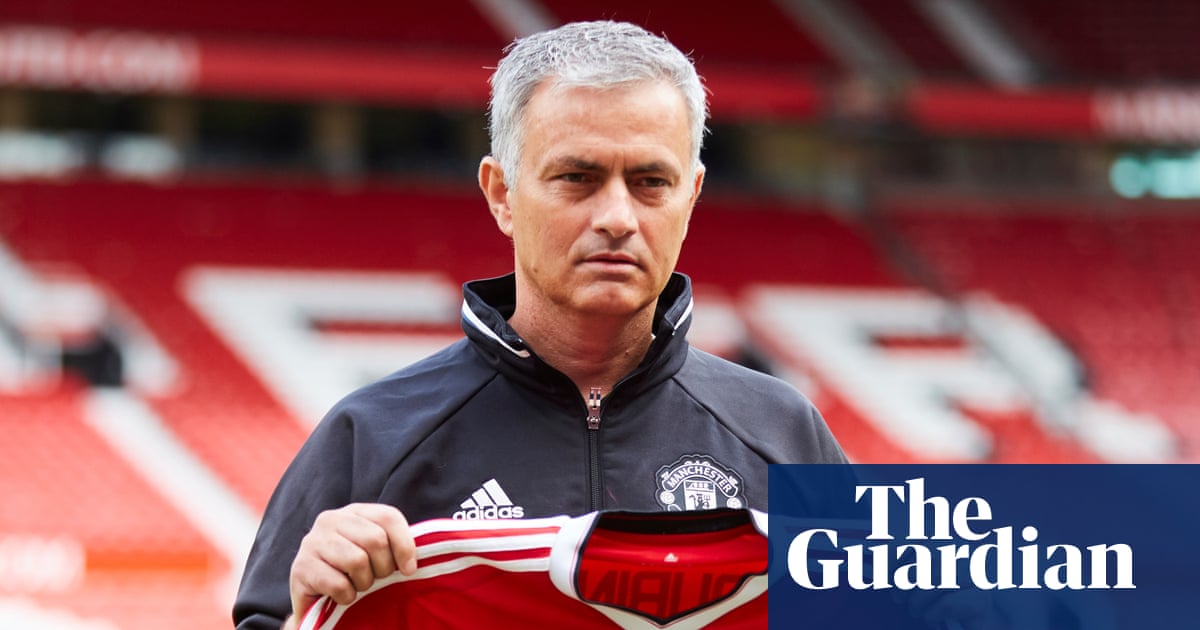
For over thirteen years, football fans believed David Moyes was Sir Alex Ferguson's hand-picked successor at Old Trafford. That story just fell apart. In a new Netflix documentary titled Mourinho, both José Mourinho and Sir Alex Ferguson confirmed that Mourinho had already signed a contract to succeed Ferguson as Manchester United manager in May 2013.
The paperwork was fully executed behind closed doors. Having decided to leave Real Madrid at the end of the 2012-13 season, Mourinho accepted United's formal offer. Executive leadership at Old Trafford secured their top target before the public even knew Ferguson was stepping down.
Yet within hours of putting pen to paper, raw emotion reversed the agreement. As detailed in reporting from The Guardian, Mourinho had previously given his verbal word to Chelsea owner Roman Abramovich. That conflict created an immediate emotional dilemma for the Portuguese manager.
The sequence of events in May 2013 unfolded faster than anyone outside the inner circle realized:
- Mourinho decided to leave Real Madrid after three years in Spain.
- Manchester United presented formal contract terms to replace Ferguson.
- Mourinho signed the agreement, securing his move to Old Trafford.
- Roman Abramovich reached out to offer Mourinho a return to Chelsea.
- Mourinho phoned Ferguson in tears to cancel his signed United deal.
Rather than taking charge of England's champions, Mourinho backed out. He placed an early evening phone call to Ferguson, wept on the line, and asked to be released from the signed agreement. United yielded, tore up the contract, and scrambling executives were forced into emergency succession planning.
Tears on the Phone and Ferguson's Disappointment
Sir Alex Ferguson was caught completely off guard by the late-night call. The Scottish legend had spent twenty-six years building Manchester United on discipline and ironclad commitments. Hearing one of Europe's top managers weeping on the line was an unexpected twist.
Ferguson admitted in his documentary interview that while he understood Mourinho's emotional pull toward Stamford Bridge, he felt genuine disappointment. United had secured their primary target. Suddenly, the club faced an unexpected managerial vacancy hours after Ferguson announced his retirement following his 13th Premier League title win.
"Early evening he phoned me and he was crying. And he says: ‘Alex, I can’t take it – I’ve given my word to Chelsea , and I’m not going to break my word.’ The reason he gave to me I could understand, but I was disappointed." — Sir Alex Ferguson
Mourinho explained his perspective on camera without hiding his feelings. He acknowledged that Manchester United possessed immense appeal, ranking alongside Real Madrid at the absolute top of world football. However, after three stressful years in Madrid, his emotional state guided his choice.
"One thing is love for football, and another thing is love for a certain club," Mourinho explained in the documentary. He felt a strong desire to feel loved by supporters and club leadership. Stamford Bridge offered that familiar affection, prompting him to choose personal attachment over Old Trafford.
He acknowledged that walking away from Manchester United was dramatic. Yet he insisted that making a choice based on love meant he was not doing anything wrong. He returned to West London feeling he was going home, even with the weight of protecting his past achievements.
The Domino Effect That Ruined Manchester United's Succession
The immediate fallout at Old Trafford was catastrophic for United's future. With Mourinho pulling out, executives rushed to hire Everton manager David Moyes on a six-year contract. Moyes was publicly framed as Ferguson's chosen heir to cover up the broken deal.
Moyes struggled immediately under the pressure of replacing Ferguson. As confirmed in The Guardian's coverage of the revelation, Moyes lasted just 10 months before getting sacked. He replaced Ferguson's experienced backroom staff, lost authority in the dressing room, and oversaw a dismal seventh-place finish.
Had Mourinho taken charge in May 2013, the tactical transition would have been seamless. He would have inherited Robin van Persie, Wayne Rooney, and Michael Carrick in their physical primes. His structured counter-attacking style fit United's veteran squad far better than Moyes' cautious approach.
The tactical contrast between what was planned and what transpired was stark. Ferguson's 2013 squad possessed seasoned winners who understood defensive accountability. Mourinho's quick transition setup would have preserved that winning habits structure instantly.
Instead, United drifted into a decade of managerial instability and lost identity. Subsequent hires like Louis van Gaal introduced rigid tactics that bored supporters and eroded squad quality. By the time Mourinho finally arrived at Old Trafford in 2016, the environment was deeply damaged.
"When I left Real Madrid, I signed with Manchester United to go to Manchester United after Sir Alex." — José Mourinho
Mourinho spent two and a half years managing United starting in 2016. He won a League Cup and a Europa League title during his spell. However, he spent most of his tenure battling internal dysfunction, having missed the ideal opportunity he abandoned three years earlier.
Critical Analysis: Was Returning to Chelsea a Strategic Mistake?
Mourinho's personal narrative frames the u-turn as a noble choice driven by heart and loyalty. That interpretation deserves sharp criticism. The competitive reality shows that returning to Chelsea carried heavy downsides for all parties involved.
His second spell at Stamford Bridge started with silverware. Mourinho guided Chelsea to the 2014-15 Premier League title and a League Cup victory. His team played disciplined, resilient football during that championship run.
The success broke down quickly. By December 2015, dressing room unrest and poor results destroyed team morale. Roman Abramovich dismissed Mourinho with Chelsea hovering near the relegation zone, ending his homecoming in public discord.
From an executive standpoint, Chelsea owner Roman Abramovich pulled off a major coup. Securing Mourinho denied United their top target while energizing the Stamford Bridge fanbase. Yet even Abramovich could not prevent the inevitable friction that cut Mourinho's second stint short.
The affection Mourinho sought at Chelsea proved temporary. His second stint lasted less than three full seasons before politics undermined his position. Nostalgia provided a brief trophy surge, but it failed to build long-term stability.
United suffered far more severe damage from his late withdrawal. Scrambling to replace Ferguson created a pattern of reactive hiring and wasteful squad rebuilding. Both Mourinho and Manchester United paid a steep sporting price for a decision rooted in emotion.
Legacy Reframed: A Decision Driven by Nostalgia
This documentary disclosure reframes how we view modern football management. Supporters often imagine elite managers as ruthless tacticians who analyze every career move through cold logic and winning probability.
Mourinho built his reputation on tactical pragmatism and mental toughness. Yet at the defining moment of his managerial career, sentimentality took control. He abandoned a signed contract with Manchester United out of affection for his first Chelsea era.
During that first spell in West London, he had won two Premier League titles, an FA Cup, and two League Cups. He sought to recreate that security rather than step into the massive pressure of replacing Ferguson. That emotional choice reshaped English football history for more than a decade.
Now back in charge of Real Madrid in 2026, Mourinho views that decision as an act of love. "I think it is nature that says something that when you do something for love, you are never doing anything wrong," he said in the documentary. Football history tells a far more complicated story.
One emotional telephone call on a spring evening in 2013 redirected titles across London and Manchester. Chelsea enjoyed a fleeting title before another painful sacking. Manchester United inherited a decade of chaos. And Premier League history was altered because an elite manager chose sentiment over a signed contract.
Read Next
- Man City eyeing Enzo Fernandez move as Barcelona test Rodri resolve
- Joao Pedro scoring against Milan is exactly why Chelsea blew the budget again
- Arsenal won the title, but keeping it will be Arteta's hardest test yet
- Rangers are spinning into an early season crisis under Derek McInnes
- 🏆 Europa League Final 2026 — Full Coverage Hub