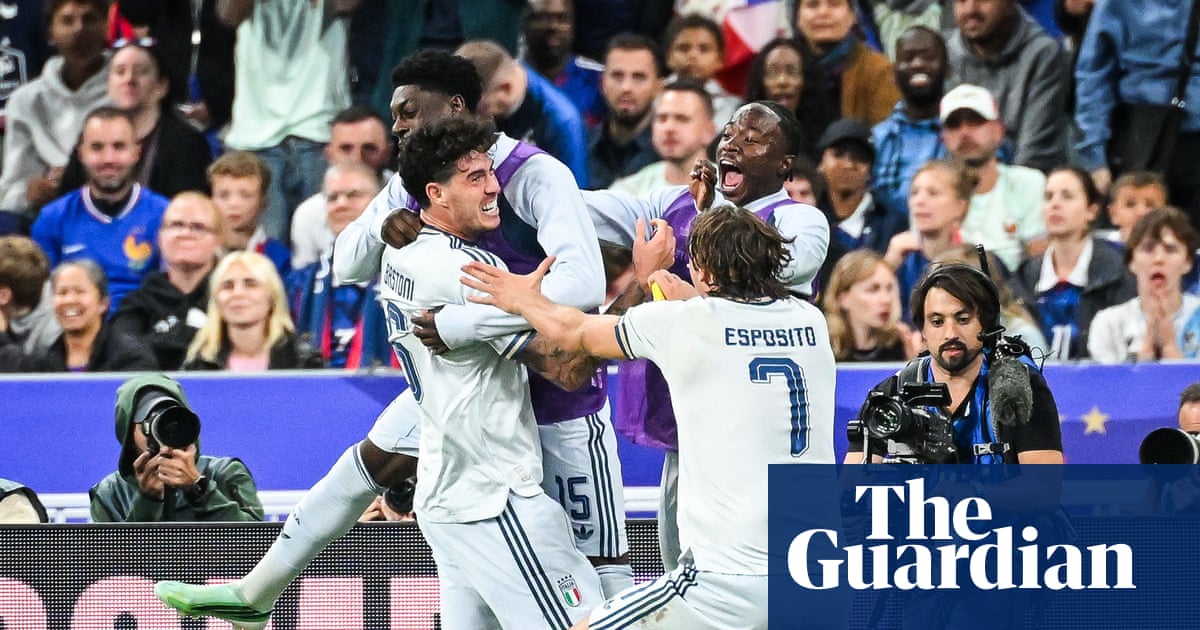
Philadelphia was not a football match. It was a street fight disguised as a World Cup round-of-16 tie.
Kylian Mbappe’s late penalty secured a hard-fought victory on Saturday, but the celebrating French players looked less like semifinalists-in-waiting and more like soldiers who had just crawled out of a trench. Under the suffocating heat of Lincoln Financial Field, Paraguay offered a masterclass in defensive disruption.
They kicked, they scuffed the penalty spot, and they chopped Mbappe’s chest. Yet the most significant stat of the afternoon had nothing to do with fouls.
Paraguay finished the match with a shocking 54% pass completion rate. It was the lowest passing accuracy recorded in a World Cup knockout match in the modern era.
Gustavo Alfaro’s men had no interest in possessing the ball, choosing instead to destroy the space in which France play. This physical blockade showed how the tournament favorites can be stifled when the spaces are choked.
Morocco, who face France in the quarter-finals in Boston on Thursday evening, will have watched the footage with keen interest. Walid Regragui’s side do not need to mimic Paraguay’s primitive physical violence to achieve the same result. They possess the tactical discipline to shut down France through pure geometry.
The blueprint for choking Les Bleus
How did a technically limited Paraguay side hold the tournament favorites scoreless from open play? The answer lies in their vertical compression.
Alfaro deployed a 5-4-1 shape that frequently collapsed into a 6-3-1 when France pushed their full-backs high. The horizontal distance between Paraguay’s right-back, Juan Jose Caceres, and his central defenders was rarely more than eight yards.
This narrow spacing completely neutralized Mbappe’s ability to cut inside from the left channel. When Mbappe did receive the ball, he was immediately doubled by Caceres and the recovery runs of midfielder Matias Galarza.
France’s response was sluggish and predictable. In the first half, they managed only two shots inside the penalty area. Their best attacking outlets were long-range efforts from Manu Kone, which sailed harmlessly into the stands.
Paraguay goalkeeper Orlando Gill was rarely tested in open play. Instead, the South Americans focused on breaking the rhythm of the game.
They committed twenty-six fouls, yet somehow finished the match without a single yellow card from referee Ilgiz Tantashev. This officiating leniency allowed Paraguay to press their physical advantage to the limit, leaving French players battered.
“If we have to dig our hands through sh*t, we’ll dig our hands through sh*t,” Mbappe said after the match. “They thought we’d show up in tuxedos to play, but we know how to play dirty football too. We’ve shown we’re not just a team that knows how to play attacking football.”
Morocco’s defensive geometry is different
Morocco will present a far more sophisticated challenge in Boston. While Jesse Marsch complained about Morocco’s defensive style after Canada’s exit, his criticisms missed the point entirely.
Morocco do not park the bus out of fear. They do it out of tactical superiority, suffocating opponents with disciplined organization.
Regragui’s defensive block is a marvel of spatial control. Unlike Paraguay, who relied on individual fouls to halt transitions, Morocco defend as a single, shifting organism.
Their mid-block is designed to funnel opponents into wide areas where they can be trapped against the touchline. Midfielder Sofyan Amrabat acts as the anchor, sliding laterally to plug gaps before they can be exploited.
Behind him, the center-back pairing of Nayef Aguerd and Romain Saiss maintains an impeccably straight line, refusing to be dragged out of position by decoy runs.
Morocco’s defensive record in this tournament is no fluke. They have conceded only one goal in four matches, and that was an unfortunate own goal.
They do not give up high-value chances. Their opponents are forced to circulate the ball harmlessly in front of them, racking up meaningless possession stats while their xG remains near zero.
The left-flank war: Hakimi vs Mbappe
The tactical battle of the match will take place on France’s left flank. Achraf Hakimi versus Kylian Mbappe is a matchup that will decide the semifinalist.
The two former Paris Saint-Germain teammates know each other’s movements perfectly. Hakimi possesses the rare recovery speed required to match Mbappe in a footrace, meaning France cannot rely on simple over-the-top balls to release their captain.
Drifting inside will also prove difficult. Regragui will likely instruct Azzedine Ounahi—who is currently attracting interest from Manchester City with a rumored €20m release clause—to drop deep and help Hakimi double-team Mbappe.
If France play their usual asymmetric attack, focusing heavily on the left side, they will walk straight into Morocco’s defensive trap. They must find alternative pathways through the center.
The solution lies in tactical variation
Didier Deschamps must learn from the Paraguay match if he wants to avoid an exit. The breakthrough in Philadelphia only arrived after the introduction of Désiré Doué.
The young PSG forward replaced a tiring Michael Olise in the 65th minute and immediately altered the dynamic of the match. Doué’s ability to dribble through tight central spaces forced Paraguay’s backline to contract, finally creating room for others.
It was Doué’s quick footwork that drew the foul from Sergio Gomez for the decisive penalty. Deschamps cannot afford to start with a rigid midfield three of Kone, Rabiot, and Tchouaméni. That setup lacks the creative variety needed to break down a block as organized as Morocco’s.
Olise looked rattled by Paraguay’s physical approach, picking up a rare yellow card for a retaliatory push. He must keep his composure in Boston.
If Morocco can frustrate France’s creative hub in the opening thirty minutes, the game will dictate their terms. They must prevent Morocco from locking down the central progression zones.
Manchester City's Rayan Cherki expressed a similar sentiment after the match. The former Lyon ace suggested France were able to wage war, reminding everyone that they know how to play beautiful football but also know how to wage war.
The post-match fallout and psychological state
The physical battles of Philadelphia did not end with the final whistle. The match degenerated into a series of ugly post-match confrontations.
Mbappe blanked goalkeeper Orlando Gill at the final whistle, prompting Gill to throw the ball at the striker's back. In his post-match interview, Gill expressed his fury at the French captain's perceived arrogance.
Gill fumed that Mbappe's behavior pissed him off, noting that he stretched his hand to congratulate him but was ignored. The goalkeeper warned that Paraguay is a tough team and they make themselves felt on the field.
Deschamps was so concerned about Mbappe's safety that he ordered his physically strongest bench players to rush onto the pitch at full-time.
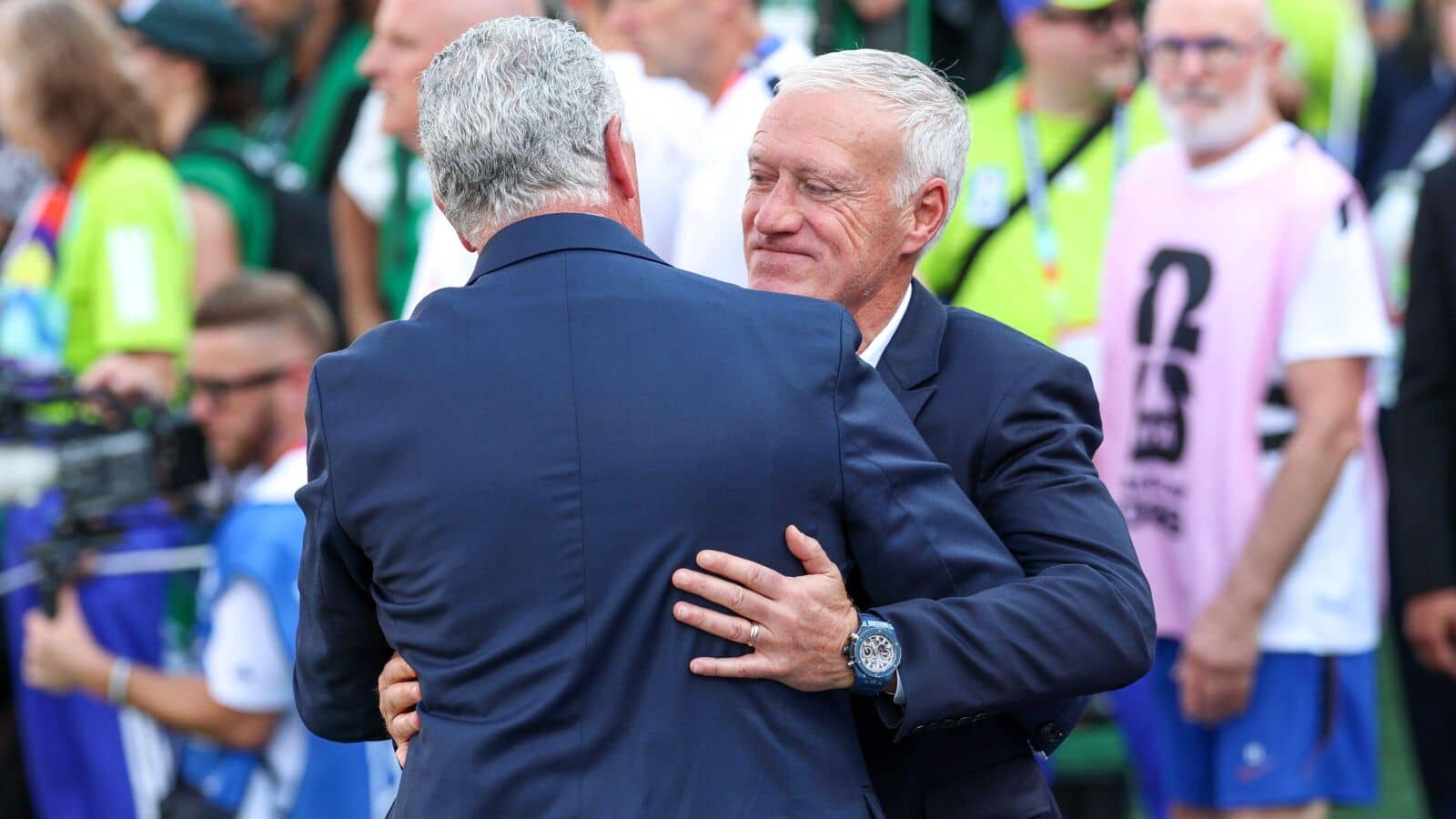
Deschamps, who had recently returned to the squad after the death of his mother, also claimed that his bench was subjected to offensive insults from the Paraguayan staff. He noted that he could have done without the insults on the bench.
Alfaro denied these accusations, insisting his staff would never sink that low. The Paraguay coach stated that football isn't war, and he was completely opposed to this kind of behavior.
The emotional toll of the tournament is beginning to show on this French team. They are winning, but they are playing with a defensive, hostile edge. If Morocco can exploit this emotional vulnerability, France could easily unravel.
“I asked the two strongest players on the bench to go and protect him immediately at the end because you never know, the match is never over,” Deschamps explained. “I don’t want to lose any players.”
Tactical prediction
This will be a tactical chess match of the highest order. Morocco will cede possession, ending the game with less than 40% of the ball, but they will restrict France to speculative efforts from distance.
Deschamps will be forced to introduce Doué early in the second half to search for a spark. But Morocco’s experience and defensive coordination will hold out. A late counter-attack led by Hakimi will release En-Nesyri for the winner.
Expect a frustrating, tactical grind in Boston. Morocco will book their semifinal spot with a disciplined 1-0 victory.
Read Next
- Mbappe laughs off Paraguay's wild antics to drag France into the last eight
- France proved they can win dirty after surviving Paraguay's battle of Philly
- France face a massive fitness race after surviving a brutal Paraguay clash
- Mbappe and Messi are turning the Golden Boot race into a bloodbath
- 🏆 World Cup 2026 — Full Coverage Hub
- 🇫🇷 France World Cup 2026 — Les Bleus Hub
- 🇲🇦 Morocco World Cup 2026 — Atlas Lions Hub
- 🇧🇷 WC 2026 Group C — Brazil, Morocco, Scotland, Haiti