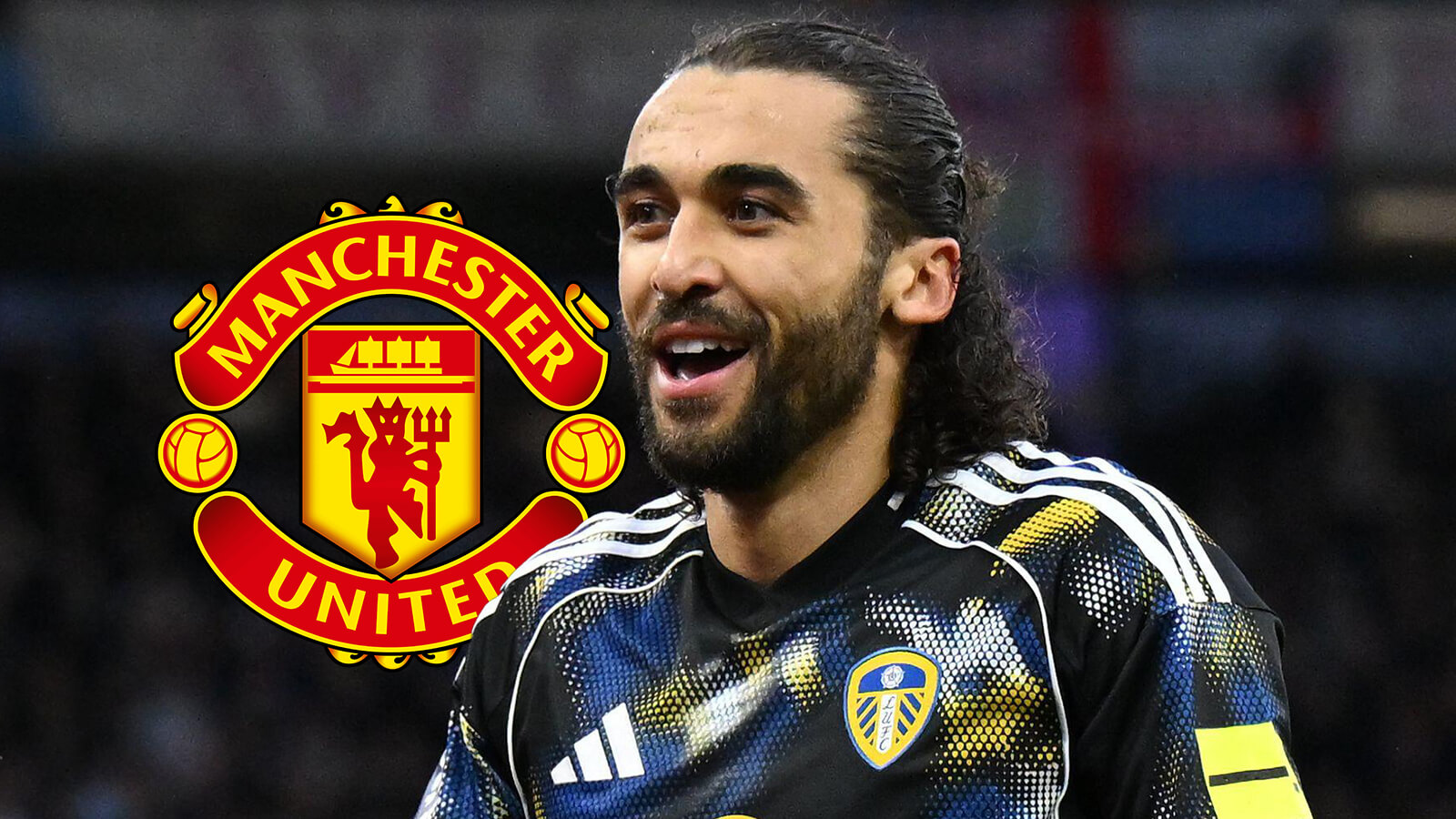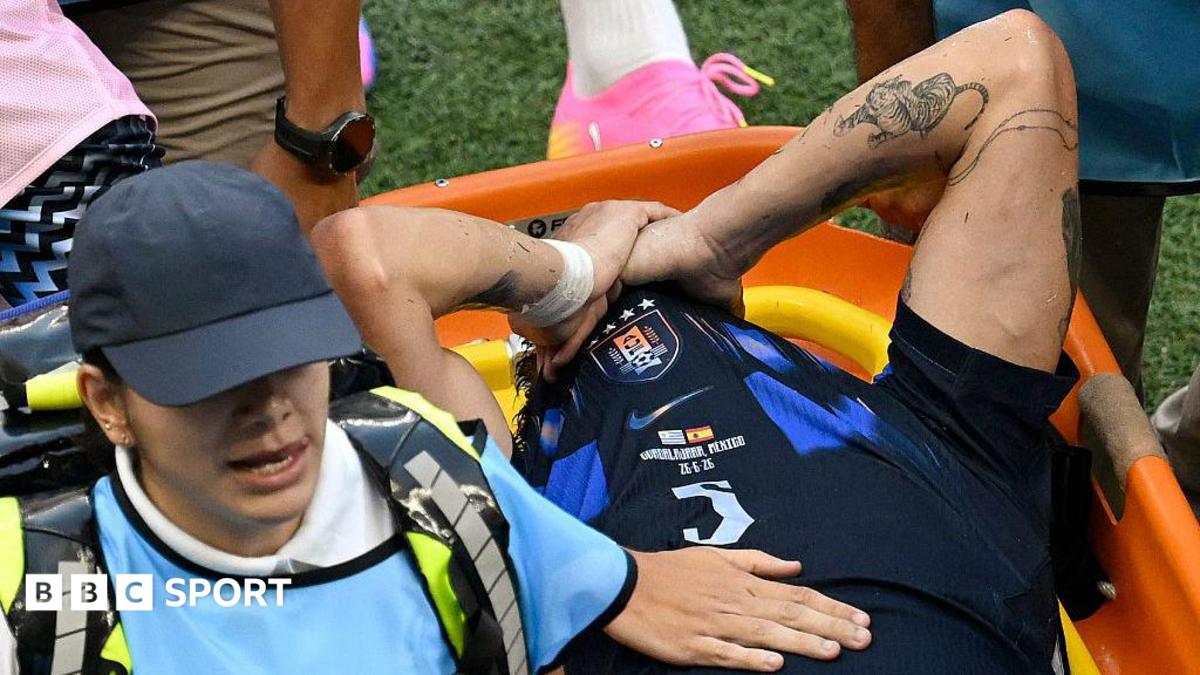
The injury occurred in the 45th minute of Friday's 1-0 defeat to Spain in Group H. Ugarte twisted his left knee awkwardly while closing down Spanish midfielder Pedri and was stretchered off the pitch.
Uruguay's elimination from the tournament was immediately overshadowed by the severity of the midfielder's condition. The player confirmed the diagnosis on Sunday, describing it as the worst blow of his career.
Manchester United's medical staff are currently conducting further scans to finalize a surgical schedule in England. As reported by BBC Sport, the club expects the player to return to Carrington immediately to begin rehabilitation.
Ugarte expressed his devastation in an emotional social media post on Saturday. The midfielder did not hide the mental toll of the diagnosis.
"Suffering the most serious injury a footballer can face in one of the most important matches in my country's history, and seeing it end this way without being able to stay on the pitch and support my teammates until the final whistle, is something that will stay with me for the rest of my life. Hitting rock bottom will make me stronger in every sense."
The injury concludes a miserable international break for Ugarte and Uruguay. The South American side crashed out of the group stage without a single victory, drawing with Saudi Arabia and Cape Verde before the final loss to Spain.
Uruguay head coach Marcelo Bielsa resigned immediately after the elimination, taking responsibility for the team's poor showing. Bielsa's notoriously demanding physical style reportedly caused internal friction, and Ugarte's injury is the final, painful footnote of a failed campaign.
United's Summer Transfer Math Broken
The timing of Ugarte's injury could not be worse for Manchester United's sporting department. Club executives had spent the weeks leading up to the World Cup actively working to sell the Uruguayan midfielder to fund a squad overhaul.
United had hoped to recoup a significant portion of their original investment in Ugarte to stay compliant with Profitability and Sustainability Rules (PSR). Those plans are now completely dead.
No club in Europe will purchase a defensive midfielder who is sidelined until at least April 2027. United must now carry Ugarte's wages on their books while receiving zero contribution on the pitch.
This financial gridlock directly impacts United's pursuit of midfield targets. A deal for Atalanta midfielder Éderson is in its final stages, with United agreeing a fee of €40.5 million plus add-ons.
However, secondary deals for West Ham's Mateus Fernandes and Borussia Dortmund's Felix Nmecha are now highly unlikely. Without Ugarte's transfer fee coming in, the club lacks the budget to execute these moves.
United's net spend is capped by strict domestic and European financial rules. Selling players is the only way to release liquidity, and Ugarte was one of their most valuable saleable assets.
The injury leaves United's recruitment department in a desperate race against time. The club has already agreed to let several fringe players go, but they are now short of central options.
The Historical Toll of Cruciate Tears at Old Trafford
Historically, Manchester United have struggled to navigate long-term knee injuries to key central midfielders. Roy Keane's cruciate ligament tear in September 1997 famously derailed United's title charge and allowed Arsenal to claim the double.
More recently, Zlatan Ibrahimovic's knee injury in April 2017 ended his peak years at Old Trafford. Cruciate injuries require meticulous recovery, and players rarely regain their pre-injury acceleration.
Ugarte's game is built on high-intensity pressing, rapid lateral movement, and aggressive tackling. Any loss of physical speed will directly affect his efficiency as a screen for the back four.
Under the FIFA Club Protection Programme, United will receive temporary financial compensation. FIFA pays clubs up to a maximum of 7.5 million euros per injury based on the player's basic salary.
But this compensation is a drop in the ocean compared to the cost of replacing him. Buying a top-tier defensive midfielder late in the summer window always carries a premium.
Modern ACL reconstruction surgeries have improved, but the recovery timeline remains rigid. A typical timeline for a professional footballer involves three months of basic mobility work, followed by straight-line running at month six.
Contact training rarely begins before month nine, and full match fitness often takes a year. Even when Ugarte returns to the training pitch, he will require months of low-intensity minutes to regain match sharpness.
Carrick's Tactical Headache
The tactical implications for head coach Michael Carrick are severe. Carrick, who was confirmed as permanent manager on a contract until 2028, needs a balanced midfield to sustain Champions League football.
The decision to let Casemiro leave as a free agent this month now looks incredibly risky. The Brazilian midfielder's contract expired, and both parties agreed to waive the extension clause so he could join Inter Miami.
Leaving the squad without a senior defensive midfielder before Ugarte's injury was a questionable choice. United are now overly reliant on Kobbie Mainoo, who is still developing and cannot carry the defensive load alone.
United have agreed a deal for Colombian teenager Cristian Camilo Orozco from Fortaleza CEIF. The 17-year-old is traveling to Manchester with chief scout Giuseppe Antonaccio for a medical.
Orozco has been compared to Moisés Caicedo due to his tenacity and mature passing. But the Colombian is a developmental prospect who was scheduled to join the Under-21 squad's pre-season camp in Germany.
Fast-tracking a teenager straight into the Premier League first-team environment is a desperate move. It could easily damage Orozco's long-term progression if he is exposed too early.
Carrick will likely have to deploy Éderson in a deeper holding role than originally planned once his transfer from Atalanta is completed. This compromises Éderson's ability to box-to-box, which is his strongest trait.
If United cannot sign another midfielder, they face a grueling 50-match season with a threadbare midfield. A single injury to Mainoo or Éderson would leave Carrick with no senior options in the engine room.
The board's failure to secure a replacement before sanctioning Casemiro's exit has left the team vulnerable. United's hard-won return to Europe's elite could be compromised before the season even begins.
United's Depleted Central Midfield Options
Prior to the completion of the Éderson transfer, United's central midfield options for the upcoming pre-season are dangerously thin. The remaining depth chart consists of only a few names:
- Kobbie Mainoo: The only established, fully fit first-team central midfielder currently on the roster.
- Toby Collyer: Returned from an injury-plagued loan at Hull City, with his long-term future at Old Trafford highly uncertain.
- Jack and Tyler Fletcher: Teenage academy graduates who are yet to be tested in senior Premier League football.
Read Next
- Lionel Messi gets benched while Manchester United enters transfer panic mode
- Tino Livramento's injury has triggered a chaotic summer transfer cascade
- Man United hijack Tottenham's deal for West Ham's Mateus Fernandes
- England face a defensive crisis as Jarell Quansah joins injury list
- 🏆 World Cup 2026 — Full Coverage Hub
- 🏆 Europa League Final 2026 — Full Coverage Hub