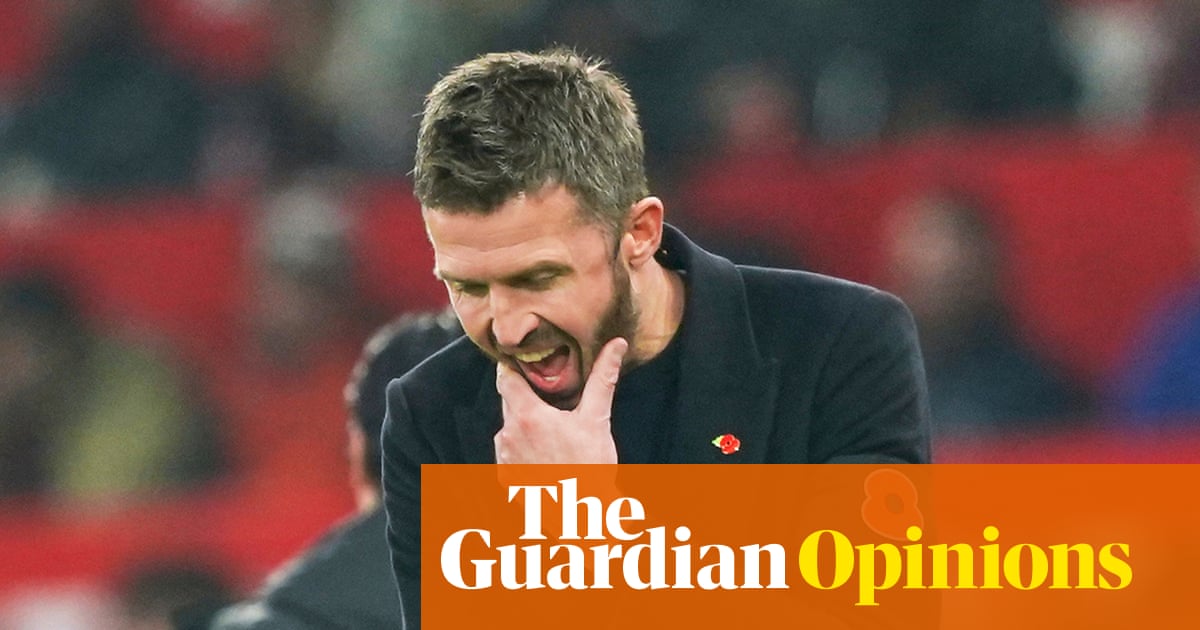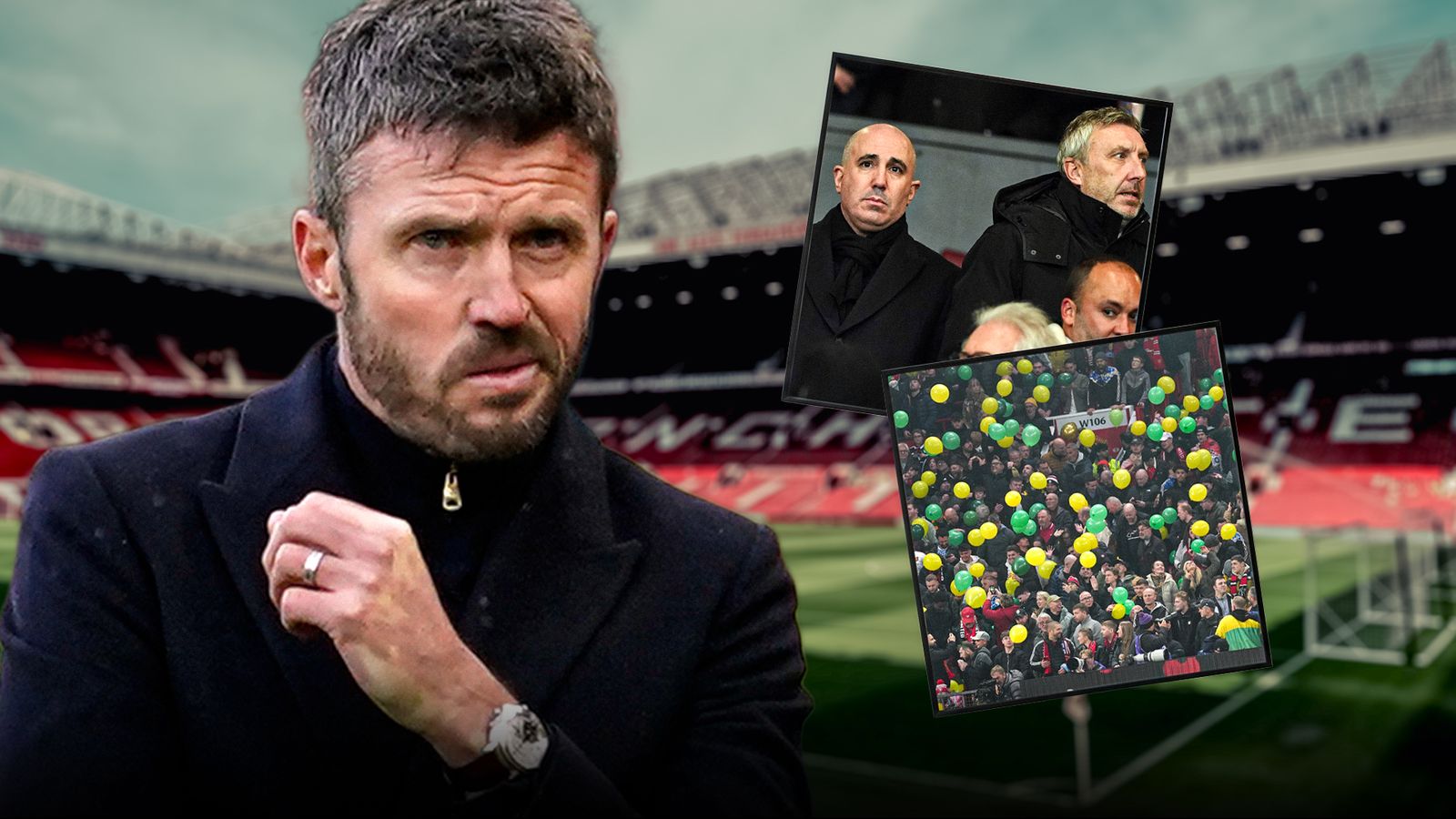
On November 14, 2026, exactly 30 percent of European football’s premier transfer chatter converged on a single dysfunctional address: Old Trafford. Across the morning press review, 3 out of 10 major stories tracked Manchester United trying to manage three conflicting emergencies at once. The club was scouting talent, begging their captain to stay, and firing their manager on the same Saturday morning.
The contrast between outward ambition and internal instability could not be starker. While recruitment staff fed stories to The Sun regarding an ambitious pursuit of Como midfielder Nico Paz for next summer, the senior squad was dealing with the immediate fallout of Michael Carrick’s dismissal. You cannot build a coherent tactical blueprint when your coaching seat is empty.
According to Saturday's reporting, United players were left feeling "confused and bemused" by the boardroom indecision that preceded Carrick's sacking. The hierarchy kept the coach hanging before delivering the axe today. That is terrible operational management.
Elite recruitment requires tactical clarity. When a club targets a creative playmaker like Como's Paz without knowing who will coach the team in August, scouting becomes guesswork. The numbers behind Saturday's market cycle paint a damning picture of a club moving backward.
The Old Trafford Trilemma
Take a magnifying glass to the 10 major stories collected in the Sky Sports paper review. Manchester United occupy 3 distinct entries across the morning news wire. No other club in world football matches that level of media saturation today.
The triad of reports reads like a manual on institutional confusion. The Sun reported that United are monitoring Como star Nico Paz for next summer while trying to convince Bruno Fernandes to sign a new deal. Simultaneously, the paper broke the news that Carrick was dismissed today after weeks in limbo.
These three threads actively cancel each other out. If you are desperate to retain Fernandes as your attacking focal point, why are you actively laying the groundwork to purchase an expensive competitor in Paz? If you are sacking Carrick today, who authorized the scouting profile for the Como midfielder?
The Cost of Administrative Limbo
Consider the human and tactical impact of leaving a coach in administrative limbo. When players describe themselves as "confused and bemused," tactical discipline evaporates on the training ground.
"confused and bemused"
That dressing room reaction, reported by The Sun, represents a devastating critique of executive leadership. Modern pressing schemes rely on split-second collective commitment. If players do not believe in the managerial direction, pressing triggers fail and defensive spacing collapses.
United have now cycled through another managerial tenure without establishing structural continuity. Sacking Carrick on November 14 leaves the squad adrift heading into the packed winter schedule. The board is planning for July 2027 while the current season unspools in real time.
The Fernandes Standoff
The Fernandes situation illustrates this strategic vacuum perfectly. The Portuguese international remains the team's primary creator and captain, but his contract situation has become an unresolved dilemma.
United remain hopeful he will sign an extension, yet every month of delay reduces the club's bargaining strength. Chasing Como's Paz looks like an insurance policy against losing their captain, but buying an expensive playmaker to replace an alienated leader is reactive squad building at its worst.
Brighton and Real Madrid: The Strategic Divergence
To understand how chaotic United look, compare them to the clubs operating with actual discipline. In Saturday's media reports, Brighton and Real Madrid accounted for exactly 20 percent of the dispatches each.
The difference lies in how those stories originate. Real Madrid and Brighton operate with clear performance thresholds and definite timelines. They dictate market terms rather than reacting to fires in their own dressing room.
Brighton's Conditional Recruitment
Look at Brighton's handling of Said El Mala. According to talkSPORT, the South Coast club are tracking the player, but any move is strictly conditional on whether they qualify for the Champions League.
That is disciplined football finance. Brighton do not overcommit resources based on speculative projections. They establish a sporting milestone, calculate the revenue, and only then greenlight the expenditure.
At the same time, Sport reports that Brighton are competing with Real Madrid and Everton for Vitao, the 18-year-old Brazilian defender at Atletico Mineiro. Competing directly with Real Madrid for an 18-year-old talent proves Brighton's analytical scouting models are trusted at the highest level.
Brighton do not care about historical prestige. They care about statistical profiling, age curves, and positional development. Their disciplined data-driven approach keeps them competitive against continental giants.
Real Madrid's Asset Protection
Real Madrid's approach to the January transfer window offers another masterclass in stability. Fabrizio Romano reported on Saturday that Trent Alexander-Arnold has no plans to leave the Spanish capital in the mid-season window.
Madrid shut down winter exit speculation immediately. They maintain squad integrity for their trophy run while quietly positioning themselves to sign Vitao from Atletico Mineiro for the future.
Notice the contrast in market behavior. Madrid protect their senior starters in November while scouting teenage defenders in South America. United fire their manager, leak interest in Como's playmaker, and beg their captain to commit.
European Stability vs Continental Turmoil
The rest of Saturday's news sheet confirms that well-run organizations prioritize retention over erratic spending. Across Germany, Portugal, and England, smart clubs are locking down their best assets.
Take Antonio Nusa at RB Leipzig. As reported by talkSPORT, the winger is actively distancing himself from transfer speculation linking him to Arsenal.
Nusa understands that regular developmental minutes in Leipzig outweigh a speculative bench role in London. Leipzig have established an environment where young talents reject premature transfers to Premier League suitors.
The Lisbon Model
In Portugal, Benfica president Manuel Rui Costa confirmed to Fabrizio Romano that the club are close to agreeing a new deal for Gianluca Prestianni.
By extending Prestianni now, Rui Costa protects player valuation before the winter window opens. Contrast that decisive action with United's drawn-out saga involving Fernandes. One club closes negotiations early; the other lets uncertainty poison the dressing room.
The Human Element in Modern Football
Not every continental story is about boardrooms and contracts. The Daily Mail reported that Kevin De Bruyne's wife Michelle has opened up about her family's struggles living in Naples, expressing a desire to return home to Belgium one day.
That report serves as a timely reminder that elite players are human beings, not tradeable financial assets. Tactical schemes and market values collapse if a player's domestic environment is unhappy.
Meanwhile, The Athletic reported that U.S. Soccer is targeting Pep Guardiola to replace Mauricio Pochettino as head coach of the national team. That ambitious target proves that international federations are now prepared to test the resolve of the game's greatest tacticians.
The Verdict on Market Strategy
When you break down Saturday's dispatches quantitatively, a clear distribution emerges across European football:
- Manchester United generated 30 percent of all major reports, leading the day in institutional turmoil.
- Brighton and Real Madrid accounted for 20 percent each through disciplined talent tracking.
- Exactly 80 percent of tracked stories focused on securing assets or long-term targets.
- Only 20 percent of reports involved immediate executive actions: Carrick's sacking and Rui Costa's extension with Prestianni.
Here is the counterintuitive finding at the heart of today's data: generating headlines does not equal market power. Manchester United dominated the news cycle on Saturday, yet every report weakened their competitive standing.
Como can demand a high fee for Nico Paz because United look desperate. Fernandes holds every card in contract talks because the squad cannot afford to lose him after Carrick's dismissal.
When you study the Saturday paper round-up, the conclusion is inescapable. The modern game rewards structural clarity, long-term age profiling, and decisive executive leadership. Clubs that operate without a tactical plan will find themselves spending millions just to run in place.