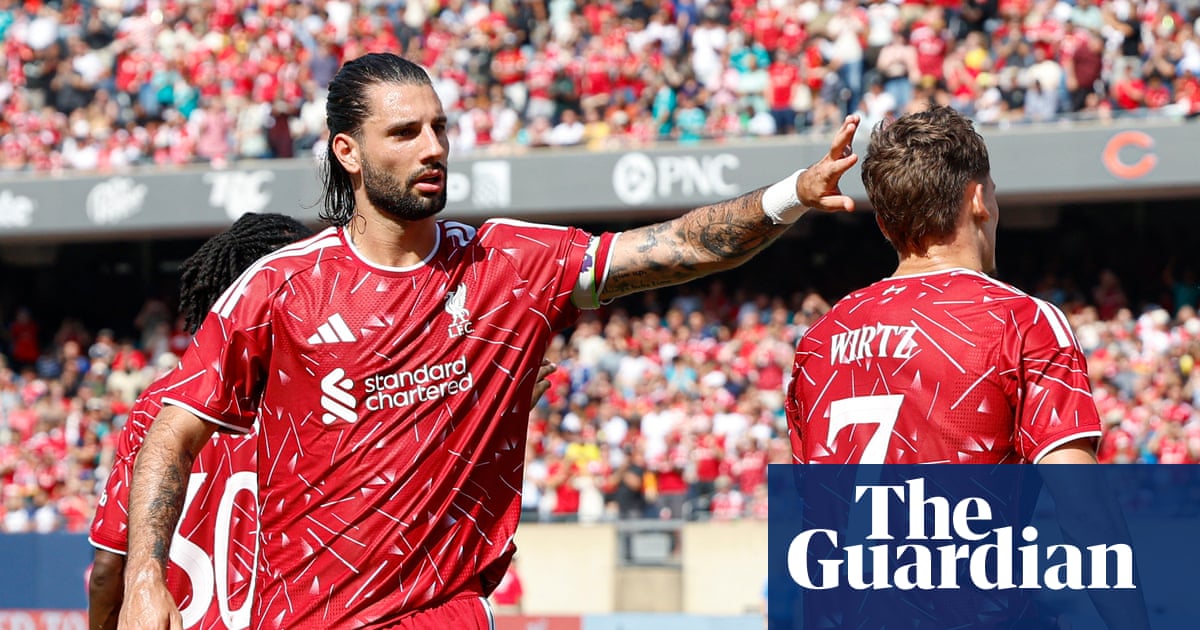
The efficiency gap in the Liverpool engine room
Dominik Szoboszlai’s output last season stalled at just 3 goals and 2 assists in 33 Premier League appearances. For a midfielder acquired to drive transition, that production represents a 40% decline in direct goal involvement compared to his final campaign at RB Leipzig. The underlying data suggests the issue wasn't effort, but positioning within a disjointed tactical setup that forced him to cover 11.2 kilometers per 90 minutes while often operating in congested half-spaces.
Under incoming manager Andoni Iraola, the statistical requirement for Liverpool’s midfield pivot changes significantly. Iraola’s teams prioritize high-volume progressive passing and ball retention in the final third. If the current squad remains static without further additions, Szoboszlai must improve his key pass frequency, which sat at a modest 1.4 per 90 last term. He needs to move closer to the 2.1 mark to justify his place as the primary creator in a system that lacks an elite number 10.
Defensive fragility versus attacking intent
Liverpool conceded 48 league goals last campaign, their worst defensive return in four years. The advanced metrics highlight a specific vulnerability: the team surrendered 5.8 high-quality chances per match through central transitions. When the press was bypassed, the gap between the defensive line and the holding midfielder frequently exceeded 35 meters, leaving center-backs exposed.
Iraola’s preference for a narrow, ball-oriented defensive block typically forces opponents wide, reducing those central high-quality chances. However, this relies on a high defensive line that requires elite recovery pace. With the current roster, the defensive transition speed is the primary liability. If the team doesn't sign a true specialist defensive midfielder, the xG conceded will likely remain higher than championship-contending standards.
The squad depth paradox
The current recruitment silence is either tactical genius or a gamble on internal growth. Currently, Liverpool’s bench contributions accounted for only 12% of total minutes played last season, one of the lowest figures among the top six. This lack of rotation led to fatigue-induced drop-offs in output after the 75th minute of matches.
Iraola is historically comfortable with a smaller core, yet the Premier League schedule demands more depth than his previous assignments. As reported by The Guardian, Szoboszlai acknowledges the team needs to produce something special without reinforcements. That burden of production falls squarely on players like Ryan Gravenberch and Curtis Jones to elevate their pass completion rates by at least 5% to maintain dominance in possession.
There is a dangerous optimism in believing current personnel can outperform their previous data benchmarks without structural support. If Szoboszlai doesn't rediscover his 2022-23 form, where he recorded a 78% successful dribble rate, the transition play will continue to stutter. The math simply does not support a title challenge if the primary creative pivot remains stagnant at 2025 levels of efficiency.