The Scary Four Days in Munich
If you were watching Bayern Munich's pre-season tune-up against RB Leipzig on Saturday, your heart dropped straight into your stomach. Jamal Musiala did what Jamal Musiala does best—he slotted home an 81st-minute strike to seal a 3-1 victory with that trademark velvet touch. But before the applause even faded, the 23-year-old German phenom collapsed onto the turf.
At the time, everybody in Bavaria reached for the easiest explanation on the board. The thermometer hit 30C in Munich, and playing high-octane football in sweltering heat will drain anybody's gas tank. The medical staff checked him out, everyone exhaled, and we all assumed it was a classic case of summer heat exhaustion.
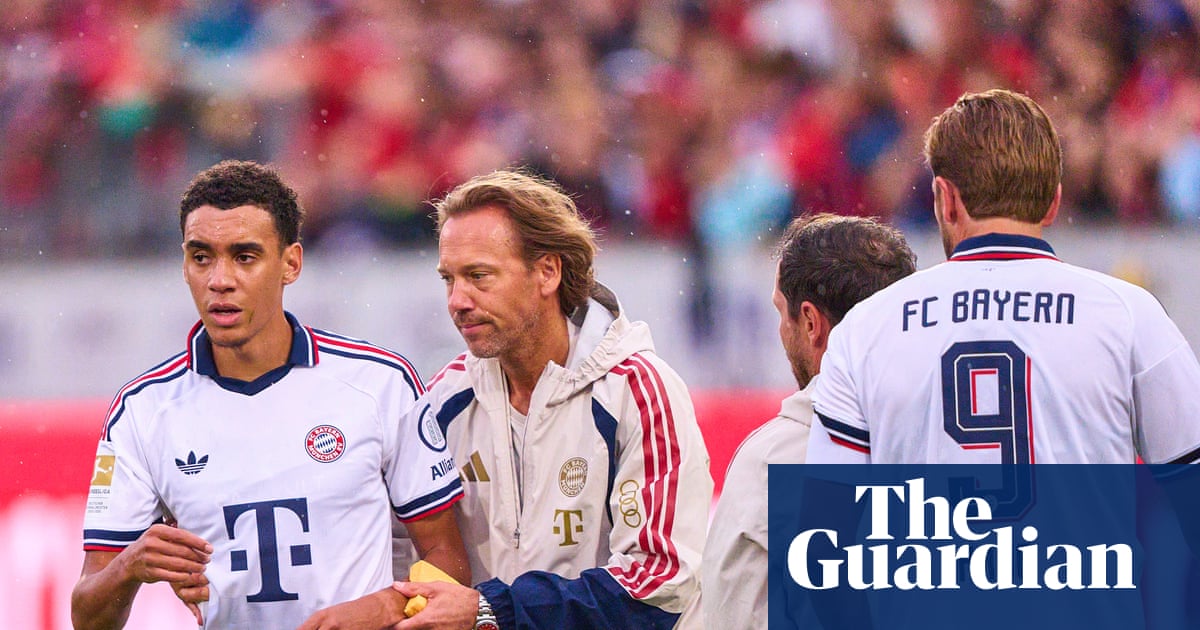
Then came Tuesday night's friendly against Heidenheim, and the nightmare got a terrifying sequel. Musiala came off the bench in the 61st minute to replace Ismaël Saibari, looking to get some light work in. Just eight minutes later, he crashed to the grass again without a soul around him.
He looked completely dazed as the trainers rushed out to stabilize him before helping him off the pitch for Cassiano Kiala. Bayern actually ended up winning the match 4-2 thanks to goals from Felipe Chavez, Arijon Ibrahimovic, Luis Diaz, and Nathaniel Brown. But let's be real—nobody in the stadium gave a single damn about the scoreboard after watching their crown jewel go down twice in ninety-six hours.
The Instagram Bombshell
With panic spreading through the fanbase faster than a deadline-day rumor, Musiala took to Instagram on Tuesday to clear the air. Instead of a vague PR statement about fatigue, the playmaker dropped a medical revelation that stopped the football world in its tracks.
Musiala disclosed that he has been diagnosed with brief, temporary absence seizures caused by a neurological dysfunction. He made it clear that while the scenes look frightening to anyone watching, the condition is treatable and poses no long-term risk to his health.
“I have been diagnosed with brief, temporary – but treatable – absence seizures resulting from a neurological dysfunction. These can lead to the kind of incidents seen recently, such as during the match against Leipzig or the game in Heidenheim.”
As The Guardian reported, Musiala tried his absolute best to calm everybody down. He emphasized that he is under top-tier medical supervision and that FC Bayern and his inner circle are backing him every step of the way.
He specifically asked for privacy while expressing a burning desire to keep playing the sport he loves. Musiala noted that with medical clearance from neurologists, continuing his daily routine and playing football is actually what helps his recovery most.
“In close consultation and regular contact with the experts, it was my personal wish to face this challenge; with the medical clearance of the neurologists, I want to continue doing what helps my recovery most: simply living my life and pursuing my passion for playing football.”
What the Hell Were Bayern Thinking?
Look, I love Jamal Musiala. The kid moves between defenders like he's glitched into an arcade game, and watching him play is pure joy. But we need to take off the rose-tinted glasses for a second and talk about what just happened in Munich, because the optics around this management are wild.
After the Heidenheim match, Bayern sporting director Max Eberl stepped up to the microphones and dropped a quote that raised more red flags than a derby referee. Eberl told reporters: “Jamal will speak about this in the near future. We knew about it and we are aware of the situation.”
Hold on a minute. Let me get this straight. You knew about his neurological condition, watched him collapse on Saturday after scoring in the 81st minute against Leipzig, and then put him back on the pitch seventy-two hours later against Heidenheim?
That is not just reckless; it is an absolute failure of risk assessment. I don't care if Musiala begged the coaching staff to play. Every 23-year-old phenom in world football thinks they are invincible.
If you hand the key of a sports car to a kid who tells you the steering wheel occasionally locks up, you don't blame the driver when he hits the wall. Musiala wrote in his statement that he takes full responsibility for deciding to play. But it shouldn't be on a young player's shoulders to make that call when neurological episodes are occurring mid-match.
The adults in the room at Sabener Strasse needed to step in, lock the locker room door, and protect the player from his own competitive drive. Letting a player run out in 30C heat right after a neurological episode is taking wild gambles with human health.
Navigating Football's Most Delicate Crisis
Managing a medical condition like absence seizures in an elite athletic environment is unprecedented. We aren't talking about a pulled hamstring or a rolled ankle where you slap on some ice, do three weeks of rehab, and move on. Neurological events carry an immense psychological burden for everyone on the pitch.
Imagine being a teammate or an opposing defender when a player suddenly loses awareness and drops. Every player on that field has the traumatic memory of Christian Eriksen at Euro 2020 burned into their brain. Seeing a player fall unattended triggers pure panic, and asking Musiala's teammates to focus on tactical drills while worrying if their star player is about to suffer another episode is an impossible task.
At the same time, we have to respect Musiala's autonomy as a human being. If top neurologists have given him explicit clearance and confirmed there is zero structural danger, robbing a generational talent of his career out of an abundance of caution would be a tragedy of its own.
The club has to establish a crystal-clear protocol moving forward. If heat, stress, or intense physical exertion act as triggers for these seizures, Bayern cannot afford to guess. They need absolute transparency between the medical staff, the coaching team, and the public to ensure that Musiala is never rushed back onto the grass just to hit pre-season fitness targets.
Jamal Musiala is the crown jewel of German football and one of the most exciting talents on the planet. We all want to see him flicking passes around defenders for the next decade. But right now, football takes a backseat to basic health, and Bayern Munich better start acting like it before another scary moment unfolds on live television.
Read Next
- Aston Villa's mid-August transfer scramble is a mess of their own making
- On This Day in Football: August 14
- Arteta wants Arsenal to rule global football and fans don't know how to react
- Barcelona complete £65m Rodri signing as Manchester City face squad overhaul
- 🇩🇪 Germany World Cup 2026 — Die Mannschaft Hub