
Hull City and Rangers are trading keepers for all the wrong reasons
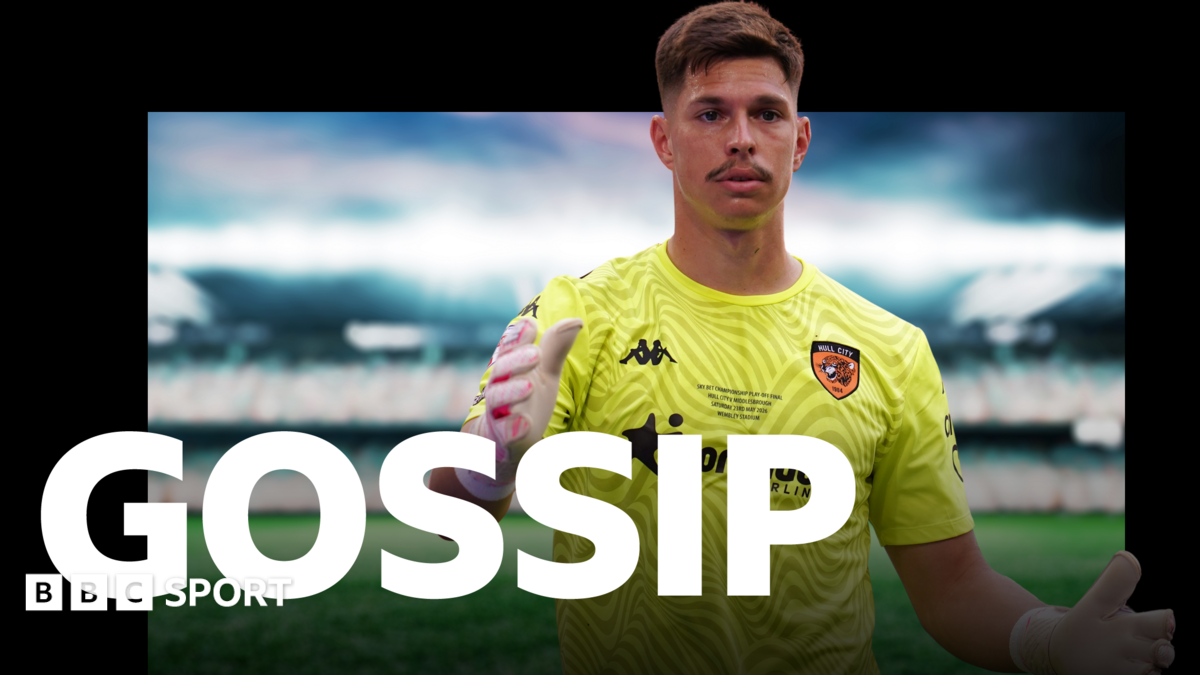
The June 30 Ledger and the Distortion of Football
The modern football calendar does not revolve around the opening weekend of August or the final whistle of a cup final anymore. Instead, the most significant date on the calendar is today, June 30, 2026. This is the financial boundary, the absolute deadline when the ledger for the fiscal year must be closed and submitted to the league authorities.
It is a day of frantic phone calls and artificial valuations. The proposed transfer of Hull City goalkeeper Ivor Pandor to Rangers, with Jack Butland heading in the opposite direction, is a direct byproduct of this accounting panic.
According to the latest details from the BBC Sport transfer feed, both clubs are close to finalizing a deal that makes very little sporting sense for either side. It is a transaction built on balancing ledgers rather than tactical necessity.
But when Profit and Sustainability Rules dictate squad building, sporting sense is the first casualty. Managers must step aside to let the finance directors arrange the pieces. The result is a goalkeeper swap that exposes how deeply the spreadsheets have infected the pitch.
It is a transaction driven entirely by the calendar rather than tactical cohesion or player development. Both clubs are adjusting their sporting ambitions to satisfy the demands of league accountants.
The PSR Shell Game
To understand why this transfer is happening, one must follow the money through the regulatory loopholes. Hull City secured their return to the Premier League in dramatic fashion on May 23, defeating Middlesbrough 1-0 at Wembley.
It was a historic day, decided by Oli McBurnie's 95th-minute winner after Southampton's spy-gate expulsion reshuffled the playoff brackets. That victory was built on defensive organisation, yet the club is now dismantling the backline that got them there.
Instead of building on that defensive resilience, Hull are immediately selling their starting goalkeeper. Rangers are poised to sign Pandor before the midnight deadline for a fee of £6 million. This fee represents a massive, immediate capital gain for Hull's current financial year accounts, allowing them to balance their books at the eleventh hour.
In a separate transaction that will likely be processed on July 1, Hull will then sign Jack Butland from Rangers for a fee of £3 million. By delaying the second signing by just 24 hours, Hull can amortize Butland's transfer fee over a three-year contract. This accounting trick allows them to book a major profit today while spreading the incoming cost over future seasons.
It is clever bookkeeping, but it is a sporting regression. Hull are trading a young, ascending goalkeeper at the peak of his physical powers for an aging shot-stopper whose mobility has declined.
In their bid to comply with financial regulations, Hull are actively downgrading their most important defensive position. The short-term survival of the balance sheet has taken precedence over Premier League survival on the pitch.
Jack Butland's Statistical Decline
Let us look at the notebook on Jack Butland's recent campaign. The 33-year-old goalkeeper played 55 matches across all competitions for Rangers in the 2025/2026 season. During that grueling campaign, he conceded a total of 72 goals, a statistic that should concern any Premier League scout. While Butland kept 17 clean sheets, the vast majority were recorded in domestic fixtures where Rangers faced minimal pressure.
In the Europa League, Butland was repeatedly exposed by quicker attacking units. His slow footwork and deteriorating lateral mobility made him a target for continental opposition. Rangers started their European journey by conceding nine goals across two legs to Club Brugge in August. Things did not improve when they dropped into the Europa League league phase, finishing with a dismal record of one win, one draw, and six defeats. In those eight matches, Butland's limitations were laid bare.
During the 3-0 defeat against SK Brann in Bergen on October 23, 2025, Brann's intense front-line pressing completely shut down Butland's short passing options. He completed just 4 of 19 long passes, repeatedly handing possession back to the Norwegian side. The lack of an outlet meant Rangers could never escape their own defensive third, pinning their center-backs deep inside their own penalty area.
A similar story unfolded on January 29, 2026, in a 3-1 defeat against Porto. Porto's high press targeted Butland's slow release time, forcing him into hurried clearances that bypassed his midfield entirely.
In that match, Butland's long-pass completion rate under pressure was just 32 percent. He consistently panicked when closed down, slicing clearances into touch or turning possession over in the middle third.
A closer look at the shot maps shows a recurring vulnerability. Butland is increasingly slow to drop for low, driven shots across his body. When facing quick transitions, he tends to retreat deep into his six-yard box rather than narrowing the angle. This passivity invites pressure and limits his defense's ability to hold a high line.
Here are the three tactical deficiencies that Jack Butland will bring to Hull's defensive structure:
- Static positioning that pins the backline deep inside their own penalty area.
- Poor long-range distribution that averages under a third of successful attempts under pressure.
- A slow lateral response time when facing low, hard-driven crosses across the face of goal.
For a newly promoted Hull team that will face intense Premier League pressing, this lack of composure is an essential concern. They will spend long stretches defending their box and will need a goalkeeper who can relieve pressure. Butland is no longer that player, and his presence will force Hull into a deeper, more passive defensive shape.
Ivor Pandor's High-Line Sweeping
In contrast, Rangers are securing a goalkeeper whose profile is suited to a modern, proactive system. Ivor Pandor was a key figure in Hull's promotion campaign, starting 48 matches. His performance at Wembley against Middlesbrough showcased his mental strength under intense pressure, securing a clean sheet when everything was on the line.
Tactically, Pandor is the polar opposite of Butland. He averaged 1.4 defensive actions outside his penalty area per 90 minutes last season.
This high starting position allows his defensive line to squeeze the midfield, knowing Pandor will sweep up any direct balls over the top. It reduces the space between the midfield and defensive lines, preventing opponents from exploiting the pockets of space.
Pandor is also comfortable playing as an auxiliary center-back in build-up play. He possesses an 81 percent short pass completion rate under pressure. He is comfortable receiving the ball on either foot, shifting the point of attack, and playing through the opponent's first line of press. This will allow Rangers to build more fluidly from the back under pressure.
However, this transfer is not without significant risk for Rangers. Pandor has never played top-flight football in a major European league. The Scottish Premiership presents a unique, physical brand of football that tests a goalkeeper's aerial command.
In the Championship, Pandor was shielded by a dominant possession-based system. At Ibrox, he will face a different kind of scrutiny, where every mistake is amplified by the fans and media. Rangers are spending a large chunk of their budget on a developmental gamble while their midfield needs reinforcement.
The Systemic Looting of the SPFL
This goalkeeper swap is not an isolated incident. The wider context, as reported in the gossip column published by the BBC, reveals a broader trend. Aberdeen, Dundee, Dundee United, and Motherwell have all received bids for their key players during this window. The financial gravity of the English leagues is pulling key assets away from clubs across the Scottish Premiership.
In Dundee, the boardroom is bracing for the departure of young defender Luke Graham. Both Stoke City and Portsmouth have launched seven-figure bids, with Dundee holding out for a fee close to £2 million. It is a massive sum for Dundee, but it leaves them with a defensive void that is difficult to fill at short notice.
Further north, Aberdeen manager Stephen Robinson is fighting a multi-front battle to balance the books. Swedish club Elfsborg has launched a six-figure bid for Danish defender Alexander Jensen, while Hungarian side Debrecen has seen bids rejected for Finnish winger Topi Keskinen as Aberdeen hold out for at least £800,000. Robinson has to navigate this interest while trying to integrate eight new signings into his squad.
Meanwhile, Motherwell are struggling to retain Elijah Just, the New Zealand winger whose stock rose during the summer. With Celtic lurking and his agent actively exploring options behind the scenes, Motherwell face the reality of losing their creative hub. This constant churn of talent makes it impossible for Scottish clubs to build sustainable, long-term projects.
English clubs, squeezed by PSR regulations, are turning their sights toward the Scottish market for cheap squad depth. They can no longer afford the bloated fees demanded by European clubs for backup players. Instead, they are exploiting the financial disparity north of the border, where moderate bids can destabilize established squads.
Even Rangers, despite their historical stature, are finding themselves at the mercy of this financial food chain. They are forced to participate in these accounting games just to refresh their squad. It is a stark reminder of the division of wealth in the modern game, where a newly promoted Hull City can dictate the terms of a goalkeeper exchange to a European regular.
The Victory of the Finance Directors
When the history of the 2025/2026 season is analyzed, this transfer will stand as a clear example of how regulations shape sporting decisions. Hull City are sacrificing their defensive stability in exchange for short-term compliance. Rangers are taking on a developmental gamble to offload a veteran on high wages.
The managers will have to adapt to squads built by finance directors. If Hull struggle to keep clean sheets next season, the finger will be pointed at the coaching staff.
Yet the decision to trade Pandor for Butland was made in an office, not on the training ground. It is the tactical plan of the accountant, not the coach.
Modern football has created a system where the most critical victories are won on the balance sheet. Until the rules are reformed to prioritize sporting merit over accounting tricks, we will continue to see these synthetic transfers.
For now, the fans must watch as their clubs trade away the future to survive the present. The spreadsheets have won, and the pitch is merely the place where we tally the results.
Adidas Unisex-Adult Starlancer Club Soccer Ball
A classic, durable ball for casual kickabouts at the park.
Frequently Asked Questions
Why are Hull City and Rangers swapping goalkeepers?
How much is Rangers paying to sign goalkeeper Ivor Pandor?
How does Hull City benefit financially from the Jack Butland transfer?
How did Hull City secure their promotion to the Premier League?
Why is June 30 a significant date for football club accounts?
More Coverage

Rio Ferdinand is 100 percent right about the JJ Gabriel drama at Man United
4 hours ago
Man City got caught and Mauricio Pochettino wants his lost trophies back
9 hours ago
Manchester City's legal showdown is about to tear the Premier League apart
13 hours ago
Top 10 Real Madrid Transfer Sagas and Squad Dilemmas
14 hours ago
Liverpool's £90m Van Dijk replacement comes with a massive tactical catch
22 hours ago
Why Man City's guilty verdict could trigger Premier League civil war
1 day agoMore Analysis

Celtic's financial hangover is colliding with a scary on-field slump
6 days, 14 hours ago
Mourinho rants, Chelsea collapse, and Rangers shock Celtic before the break
1 week ago
Top 10: Top Moments
1 week, 4 days ago