The Midfield Engine and the Non-League Frontline
Tournament football strips away all room for error. Next week, the South Asian Football Federation Championship begins with Bangladesh serving as host nation. The pressure on the hosts will be intense, but the tactical structure they plan to roll out is unlike anything this competition has ever staged.
At the base of the midfield stands Hamza Choudhury. On Sunday at Whitechapel Town Hall, Choudhury's match-worn shirt from Leicester City's 2021 FA Cup final win against Chelsea sold for £7,000 to restaurateur Haleem Kherallah. His 2021 Community Shield winner's medal fetched £3,000, helping raise roughly £90,000 for the Children Not Numbers charity.
Now, Choudhury swaps fundraising galas for the heat of Dhaka. For Bangladesh, having a proven Premier League ball-winner in the center of the park changes the entire tactical equation. He provides defensive protection and positional discipline that few regional opponents can easily bypass.
Watch his defensive positioning when Bangladesh lose the ball. Choudhury thrives on closing down lateral spaces, breaking up counter-attacks before they enter the defensive third, and recycling possession with rapid, short passes. He does not take unnecessary risks with the ball. He simply secures the central zone and allows the attackers to push forward.
Yet international fixtures are not won solely by elite midfield screening. Bangladesh's most unusual tactical challenge sits at the opposite end of the pitch. Lining up in the attacking unit is 18-year-old striker Mohammed Mahe Khan.
Mahe Khan currently plays his club football for Moulton FC. That is the United Counties League Premier Division South, situated in the ninth tier of the English football pyramid. He is now set to be included in Bangladesh's final tournament squad.
Consider the extraordinary gap in competitive environments here. You have an FA Cup winner anchoring the midfield, distributing passes to an 18-year-old striker who spends his Saturdays battling on non-league pitches in Northamptonshire. The physical contrast and speed of thought between those two worlds is enormous.
In the ninth tier, a centre-forward often gets extra seconds to control, turn, and assess passing options. In international tournament play, that time vanishes. Center-backs close down angles instantly, and loose touches get punished by swift transitions.
Farhaan Ali Wahid's Movement Between the Lines
Because of that gap, the attacking weight falls squarely on 19-year-old Farhaan Ali Wahid. The Fulham prospect is currently gaining senior experience on loan at National League leaders Boreham Wood. In Bangladesh's system, he is the attacking linchpin.
Earlier this month, Ali Wahid took home the Johnny Haynes Trophy as Fulham's academy player of the year. That award carries serious pedigree, with past winners including Fabio Carvalho and Jay Stansfield. He earned the honor after recording 17 goal contributions across 21 PL2 appearances last season.
Ali Wahid provides the vertical threat that Bangladesh desperately need. Rather than staying pinned to the touchline, he attacks the inside channels, running between full-back and centre-back. His acceleration forces defensive lines to drop five yards deeper.
That five-yard cushion is gold dust for Choudhury. When the opposing backline retreats to track Ali Wahid's runs, it creates central space in front of the box. Choudhury can step into that vacated zone to win second balls and maintain sustained attacking pressure.
As Sky Sports reported, Ali Wahid's rise through the professional ranks has been rapid. Next week in Dhaka, Bangladesh need him to translate that National League sharpness directly onto the international stage.
The Structural Risk of a Tier-Nine Gap
Let us be entirely realistic about the tactical risks facing Bangladesh. Romantic storylines about diaspora talent do not automatically produce defensive cohesion. The team faces serious structural vulnerabilities that smart opponents will attempt to target.
The primary concern is the pressing distance between units. If Bangladesh attempt to press high up the pitch with an inexperienced frontline, they risk leaving massive gaps in behind. Mahe Khan has never played in a system requiring coordinated, high-intensity pressing against seasoned international defenders.
If the front line presses erratically, opposing midfielders will easily play around them. That leaves Choudhury isolated in a vast expanse of open grass. Even a midfielder of his calibre cannot defend 40 metres of central space against two-on-one overloads.
Furthermore, turnover management will be precarious. If Bangladesh lose possession during transitions from the ninth-tier tempo to international speed, their full-backs will be caught out of position. Bangladesh cannot afford to be naive when committing numbers forward.
Why India Are Watching With Envy
While Bangladesh have moved swiftly to bring their diaspora talent into the squad, their rivals across the border remain frozen by administrative red tape. India will be watching next week's tournament with immense tactical envy.
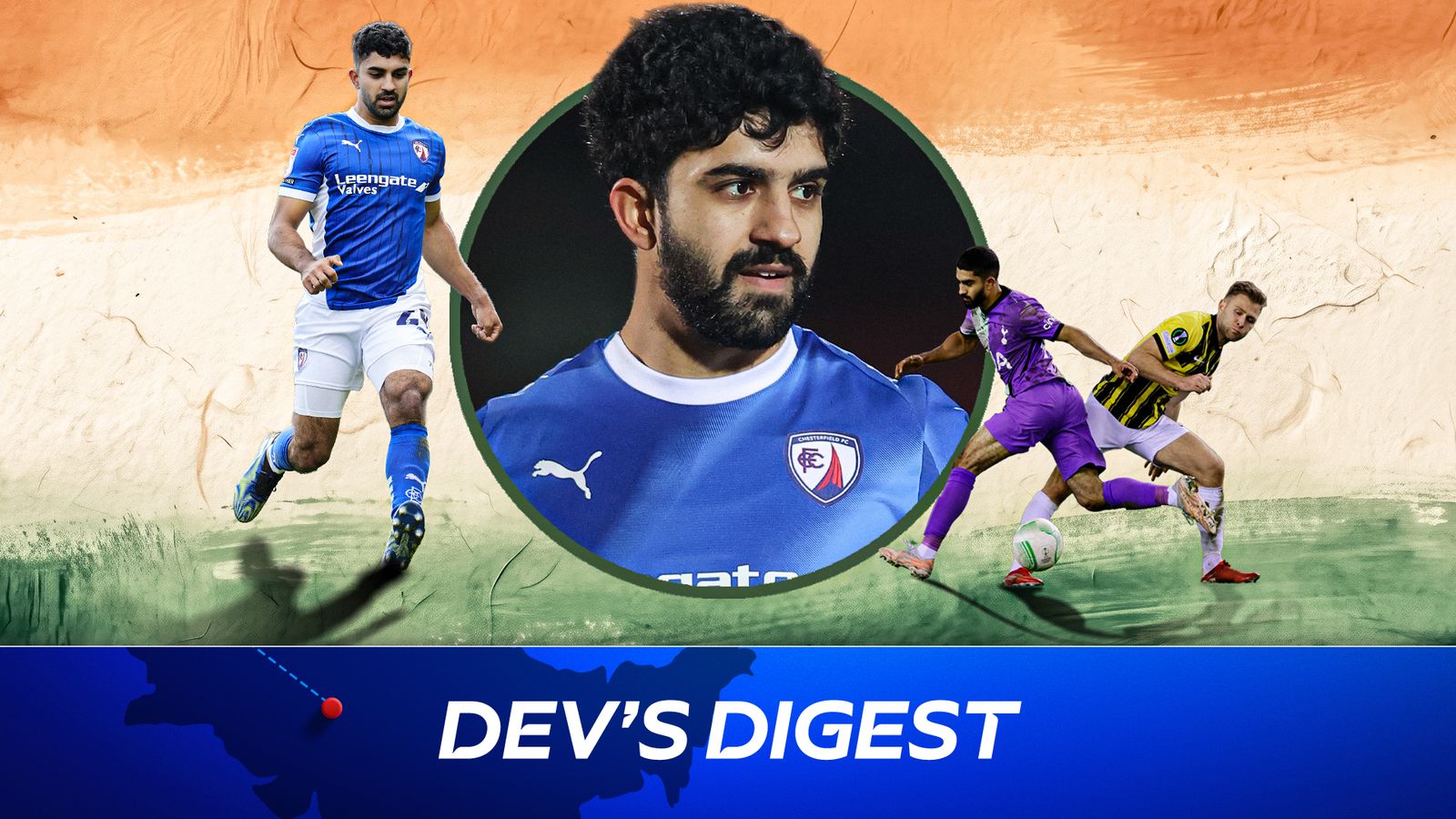
Chesterfield winger Dilan Markanday, who recently marked five years since becoming Tottenham Hotspur's first British South Asian player, has openly declared his ambition to represent India. Markanday attended India's clash with Jamaica in the Unity Cup this summer to study their setup in person.
Markanday told Sky Sports News he was very eager to join the setup:
"A hundred per cent, I'm super interested in that happening. I went to watch the game against Jamaica in the summer and just thought what a great opportunity to watch them, see how they play, see the players and how they go about things."
Markanday added that he was impressed with the players' professionalism and felt he had genuine quality to bring to tournament play. Yet Indian passport laws dictate that Overseas Citizens of India must surrender their British passports to gain eligibility. That legislative barrier keeps an in-form EFL winger stranded on the sidelines while Bangladesh deploy their English-based talent.
As revealed in Dev's Digest on Sky Sports, Indian football chiefs hold growing optimism that diaspora rules will shift. But optimism does not put points on the board next week.
Similar ambitions are driving other young talents across the British game. Barnsley midfielder Vimal Yoganathan, who has three goals in seven games since returning from injury in September, captained his side against Stockport County in the Jersey Mike's Trophy and is targeting the senior Wales squad. In the women's game, West Brom forward Riya Mannu has driven her side to six consecutive victories in the National League Northern Premier Division, trailing leaders Rugby Borough by three points.
Opening Match Prediction
When the SAFF Championship kicks off next week, Bangladesh will face an immediate tactical examination. The home crowd will demand expansive, front-foot football from the opening whistle. Giving into that impulse too early would be a massive tactical mistake.
The solution is patience. Managerial pragmatism must take precedence over emotional exuberance. Bangladesh must establish a compact 4-1-4-1 defensive block, let Choudhury anchor the midfield, and allow Ali Wahid to exploit transitional moments against stretched defences.
Expect a cagey opening half-hour where Bangladesh adjust to the tactical rhythm and iron out spacing issues between the midfield and the attack. The opening exchanges will likely be scrappy, filled with misplaced passes and hesitant pressing.
Quality eventually tells in tournament football. Choudhury will shut down central counter-attacks, and Ali Wahid's direct dribbling will force the breakthrough midway through the second half. Bangladesh should grind out a measured 2-0 victory to open their tournament campaign next week.