Manchester United's Mid-August Opening Day Drama (1989–1995)
August 19, 1989: Michael Knighton's Pitch Stunt and Arsenal's Defeat
On August 19, 1989, Old Trafford experienced one of the strangest pre-match spectacles in English football history. Michael Knighton, a 37-year-old former property developer who had agreed a £20 million takeover for Manchester United, walked onto the pitch before kickoff. Wearing a full United kit, Knighton performed keepy-uppies in front of 47,245 stunned fans at the Stretford End before volleying the ball into an empty net.
The bizarre circus outside the tunnel stood in stark contrast to the tactical battle inside. Arsenal arrived in Manchester as reigning First Division champions, fresh off their famous title-clinching victory at Anfield three months earlier. George Graham's side possessed the most disciplined backline in the country, but Alex Ferguson's team tore through them from the opening whistle.
Steve Bruce opened the scoring with a second-minute header, setting a furious tempo. Second-half goals from Mark Hughes, Neil Webb, and Brian McClair completed a 4-1 demolition of the champions, with David Rocastle providing Arsenal's lone reply. The result felt like a seismic shift in the English game, but financial reality soon intervened.
Knighton's financial consortium collapsed within weeks when key backers pulled out of the transaction. Knighton settled for a seat on the board rather than controlling ownership. On the pitch, United failed to sustain their form, tumbling to a dismal 13th-place finish and saving Ferguson's managerial position only through an FA Cup run.
August 19, 1995: Aston Villa Exposes Ferguson's Youth Movement
Six years later, on August 19, 1995, Ferguson took another high-stakes opening-day gamble at Villa Park. After selling experienced core leaders Mark Hughes, Paul Ince, and Andrei Kanchelskis, United fielded a starting lineup packed with academy graduates. Gary Neville, Phil Neville, Paul Scholes, Nicky Butt, and David Beckham all started in a bold tactical shift.
Aston Villa ruthlessly punished United's early disorganization. Ian Taylor opened the scoring, Mark Draper added a second, and Dwight Yorke converted a penalty to push Villa into a three-goal halftime lead. United's inexperienced midfield struggled to contain Villa's movement, exposing the defensive line to constant pressure.
Brian McClair pulled a goal back late in the second half, but the 3-1 defeat sparked instant nationwide skepticism. On BBC's Match of the Day that evening, pundit Alan Hansen delivered the most famous sentence in television football analysis:
"You can't win anything with kids."
Hansen's critique missed the fundamental technical quality and mental toughness of United's young core. The loss at Villa Park proved to be an isolated opening-day anomaly rather than a systemic failure. Ferguson's young team won their next five Premier League matches and ended the campaign by capturing both the Premier League title and the FA Cup.
Debut Magic, Galáctico Teething Troubles, and Emirates Debt (2000–2006)
August 19, 2000: Mario Stanić's Stamford Bridge Masterclass
Opening weekend of the 2000–01 Premier League season produced a moment of individual brilliance at Stamford Bridge. Chelsea had signed Croatian midfielder Mario Stanić from Parma for £5.6 million to add tactical flexibility and goalscoring threat to Gianluca Vialli's midfield. Facing West Ham United on August 19, 2000, Stanić delivered an unforgettable opening statement.
Collecting the ball 35 yards out, Stanić juggled it three times on his right thigh and foot without allowing it to touch the turf. On the third flick, he struck a dipping volley that flew past goalkeeper Shaka Hislop into the top corner. Gianfranco Zola and new signing Jimmy Floyd Hasselbaink also scored in Chelsea's 4-2 victory, but Stanić stole the headlines.
Stanić scored twice in that match, setting a record for the most goals by a Chelsea player on their Premier League debut. Serious knee injuries later shortened his career, leaving that summer afternoon as his defining moment in English football.
August 19, 2001: Zinedine Zidane's Galáctico Debut in Zaragoza
On August 19, 2001, Zinedine Zidane made his official competitive debut for Real Madrid in the Supercopa de España first leg against Real Zaragoza at La Romareda. Real Madrid had paid a world-record 150 million Deutsche Marks to acquire the French playmaker from Juventus. President Florentino Pérez had built his Galáctico vision around Zidane alongside Luís Figo and Raúl.
Zidane struggled initially with the summer heat and an unfamiliar left-sided midfield assignment from manager Vicente del Bosque. Operating from the flank, he showed flashes of vision but could not dismantle Zaragoza's stubborn backline. The match ended in a 1-1 draw, with Flavio Conceição scoring for Madrid and Yordi equalizing for the hosts.
Spanish media questioned whether Del Bosque could integrate so many individual stars into a coherent tactical unit. It took months of adjustments for Zidane to hit full stride in Spain. By May 2002, his famous volley against Bayer Leverkusen in Glasgow sealed the Champions League title, putting early doubts to rest.
August 19, 2006: Opening Emirates Stadium Under Financial Discipline
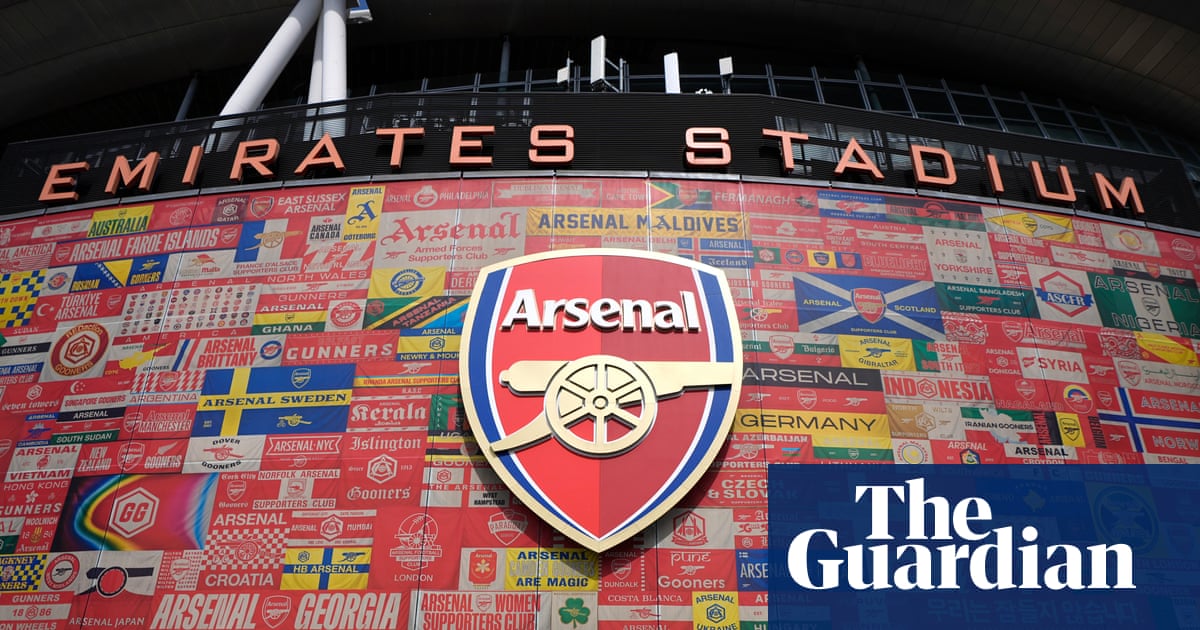
On August 19, 2006, Arsenal officially opened the Emirates Stadium for competitive football, ending a 93-year residency at Highbury. A capacity crowd of 60,023 gathered in North London to watch Arsène Wenger's side take on Aston Villa. The celebration faltered in the 53rd minute when Villa defender Olof Mellberg headed home from a corner to score the first competitive goal at the venue.
Wenger turned to his bench in the 73rd minute, introducing 17-year-old Theo Walcott for his senior club debut. Walcott provided instant verticality on the right wing. Eleven minutes later, the teenager delivered a curling cross for Gilberto Silva to volley home an 83rd-minute equalizer, securing a 1-1 draw.
The stadium provided state-of-the-art facilities, but the accompanying debt reshaped Arsenal's squad construction for a decade. The club entered a period of strict financial discipline just as foreign capital transformed rival contenders across Europe.
Seven-Minute Blitzes and Pandemic Nights in Lisbon (2012–2020)
August 19, 2012: Eden Hazard's Seven-Minute Destruction of Wigan
Eden Hazard arrived in England under massive expectation after choosing Chelsea over both Manchester clubs. On August 19, 2012, the Belgian needed less than two minutes to dismantle Wigan Athletic at the DW Stadium. Receiving the ball in central midfield, Hazard turned defender Iván Ramis with a sharp swivel and set up Branislav Ivanović for the opening goal.
Five minutes later, Hazard tortured Ramis again, drawing a clumsy tackle inside the penalty area. Frank Lampard converted the resulting penalty to give Chelsea a two-goal lead inside seven minutes. Chelsea controlled the remaining minutes with ease, closing out a 2-0 win.
Hazard's debut highlighted his balance, change of pace, and spatial awareness. Over the next seven seasons, he became the division's premier attacking force, winning two Premier League titles and two Europa League trophies before moving to Real Madrid.
August 19, 2020: Bayern Munich's Semi-Final Treble March in Lisbon
The final chapter of August 19 history took place in Lisbon under unprecedented conditions. On August 19, 2020, Bayern Munich faced Lyon in the UEFA Champions League semi-finals at the Estádio José Alvalade behind closed doors. Fresh off an 8-2 demolition of Barcelona, Hansi Flick's side weathered early chances from Lyon forward Karl Toko Ekambi.
Serge Gnabry turned the match in the 18th minute with an extraordinary solo goal, cutting past three defenders before driving a left-footed strike into the top corner. Gnabry added a second before halftime, reacting fastest to a loose ball in the six-yard box. Robert Lewandowski sealed the 3-0 victory with an 88th-minute header.
The win set up Bayern's victory over Paris Saint-Germain four days later, completing their second European treble. It remains a snapshot of a team operating at physical peak during a strange, compressed summer tournament that shifted the European calendar.
Why August 19 Distorts Early-Season Expectations
Mid-August matches occupy a unique space in the football calendar. Teams are rarely fully match-fit, summer transfer sagas remain unresolved, and tactical setups are still evolving under pressure. Results on this date frequently generate dramatic overreactions that crumble over a full 38-game season.
Several recurring factors explain why August 19 outcomes often mislead media and supporters:
- Opening-day victories frequently mask underlying roster gaps and lack of depth.
- Initial tactical formations are constantly refined once managers assess player chemistry.
- Unresolved transfer speculation creates temporary squad friction that disappears by autumn.
Manchester United's 1989 victory over Arsenal created false optimism before a 13th-place finish, while their 1995 opening defeat preceded a double-winning campaign. Similarly, Zidane's slow debut in Zaragoza gave way to European glory in Glasgow less than nine months later.
From pitch-invading prospective owners to adolescent debutees and empty-stadium semi-finals, August 19 repeatedly shows that early-season storylines rarely survive contact with a full campaign. The date stands as a permanent reminder that momentum shifts quickly when competition begins in earnest.