The European Repeat Offender Syndrome
European football creates strange habits. Draw buttons in Nyon spin, spherical plastic capsules pop open, and somehow the exact same two sides end up staring each other down across a pitch for the third consecutive cycle.
Slavia Prague and Fenerbahçe are becoming European football's most persistent recurring nightmare. Having already collided in the Conference League and Europa League, the footballing gods have thrown them together once more in the Champions League league stage.
This is not a matchup born of romantic legacy. It is a grueling tactical recurring battle between two clubs with wildly divergent footballing philosophies.
As The Guardian's football archives point out, drawing the same opponent across three separate European competitions in such short order is a statistical oddity. Yet here we are on September 02, 2026, preparing for chapter three.
Slavia arrive with their trademark relentless high press and aggressive man-to-man tracking across the middle third. Fenerbahçe counter with technical composure, patient build-up through their double pivot, and explosive wide counters.
Familiarity breeds contempt, but in tactical football, familiarity breeds meticulous paranoia. Neither manager can hide behind novel tactical elements because every pressing trigger and movement sequence has already been filmed, cataloged, and dissected.
Pressing Triggers and Half-Space Trapdoors
The tactical battle lines are sharply drawn. Jindřich Trpišovský's Slavia push their defensive line to the halfway stripe, using their front three to cut off vertical passing lanes to Fenerbahçe's central midfielders.
Slavia triggers their trap whenever the ball travels sideways to the fullback. When Fenerbahçe's right-back touches the ball, Slavia's wing-back jumps aggressively out of shape, backed by a hard-tackling central midfielder.
It is high-risk, high-reward football. In their domestic campaign, Slavia forced 14 high turnovers per 90 minutes, leading to an average of 1.85 expected goals per match.
However, when opponents break that initial wall, Slavia's central defenders get caught isolation-exposed in wide spaces. Fenerbahçe's primary objective will be quick, third-man combinations to bypass that initial wave of pressure.
If Fenerbahçe complete their first pass under pressure—where they currently sit at an 84% success rate—the entire pitch opens up behind Slavia's backline. That brief transition phase is where this match will be decided.
Fenerbahçe must resist the urge to rush forward prematurely. Passing back into the goalkeeper to draw Slavia's press twenty yards further upfield will create the diagonal passing lanes their wingers crave.
Midfield Rotations and Structural Asymmetry
Watch the spatial battle in the left half-space during Fenerbahçe's build-up phases. Fenerbahçe's inside forward frequently drops deep into the midfield channel, dragging Slavia's right center-back out of line.
If Slavia's defender follows him, Fenerbahçe's left-back immediately bombs into the vacated corridor behind. That single movement sequence generated three major scoring chances in their previous European encounter.
Slavia's response requires rigid positional hand-offs rather than aggressive personal man-marking. If their midfield pivot fails to communicate the switch within two seconds, Fenerbahçe will flood the box with unchecked runners.
Disciplinary Edge Cases and Meltdown Risk
High-intensity pressing requires impeccable timing and immense emotional control. One late tackle, one mistimed challenge, and the entire structure collapses.
Consider what happened recently when Clyde were leading 3-0 at The Spartans. Logan Dunachie received a red card in the 60th minute, and just 28 minutes later, the scoreline sat at 3-3.
That is the quantitative cost of losing a man in a system reliant on spatial coverage. Slavia cannot afford to let aggression spill over into recklessness when pressing near the touchlines.
Refereeing patience will be thin. In matches of this friction, a single second-half dismissal can completely undo an hour of dominant tactical instruction.
Pressure does odd things to team cohesion under bright European lights. When fatigue sets in around the 70th minute, mistimed tackles transform routine fouls into match-defining disciplinary red cards.
Goalkeepers, Penalties, and Edge Cases
Set-piece structure and penalty efficiency will weigh heavily on the outcome. In high-stakes European ties, small sample sizes routinely punish defensive negligence.
Look at penalty trends across lower divisions for perspective on goalkeeper execution. Chesterfield's goalkeepers saved five consecutive penalties this season, with Zach Hemming stopping two and Ryan Boot denying three.
Penalty preparation is no longer an afterthought; it is an exact science. Both Fenerbahçe and Slavia have spent the week refining their spot-kick routines and analyzing opponent run-ups.
Goalkeeper Madness and Unorthodox Tactics
Goalkeepers under duress sometimes produce unforgettable moments of panic or desperation. History offers bizarre warnings for keepers straying too far out of position.
Back in March 2001, Oliver Kahn provided the ultimate cautionary tale when Bayern Munich trailed Hansa Rostock 3-2. Kahn charged into the opponent's six-yard box for a late corner and double-fist punched the ball straight into the net, picking up a swift second yellow card for his efforts.
As documented in The Knowledge's breakdown of eccentric goalkeepers, punching the ball into the net at the opponent's end remains the gold standard of outfield madness.
While neither keeper tonight is likely to channel their inner Kahn, high aerial claims under heavy contact in the six-yard box will test their composure to the limit.
Commercial Overlap and Domestic Distractions
Off the pitch, modern football creates odd structural repetition beyond European cup draws. Corporate saturation across league fixtures is reaching unprecedented levels this season.
In the English Championship, betting firm Midnite sponsors three separate clubs—Middlesbrough, Sheffield United, and Wolves—meaning they feature in 24% of all league matches this term. That echoes 1990 in Brazil, when Coca-Cola sponsored 16 out of 20 top-flight sides.
"Slavia Prague and Fenerbahçe have played each other in the Conference League, Europa League and have been drawn to play each other in this season’s UCL league stage."
For Fenerbahçe and Slavia, domestic dominance is taken for granted, but European execution defines their season trajectories. Neither fan base will accept tactical excuses if their side bows out softly.
Cup final mental blocks are painfully real in European football culture. Look at Dutch side NEC Nijmegen, who have reached six domestic cup finals (1973, 1983, 1994, 2000, 2024, and 2026) and lost every single one of them.
Pedigree, Flaws, and Final Verdict
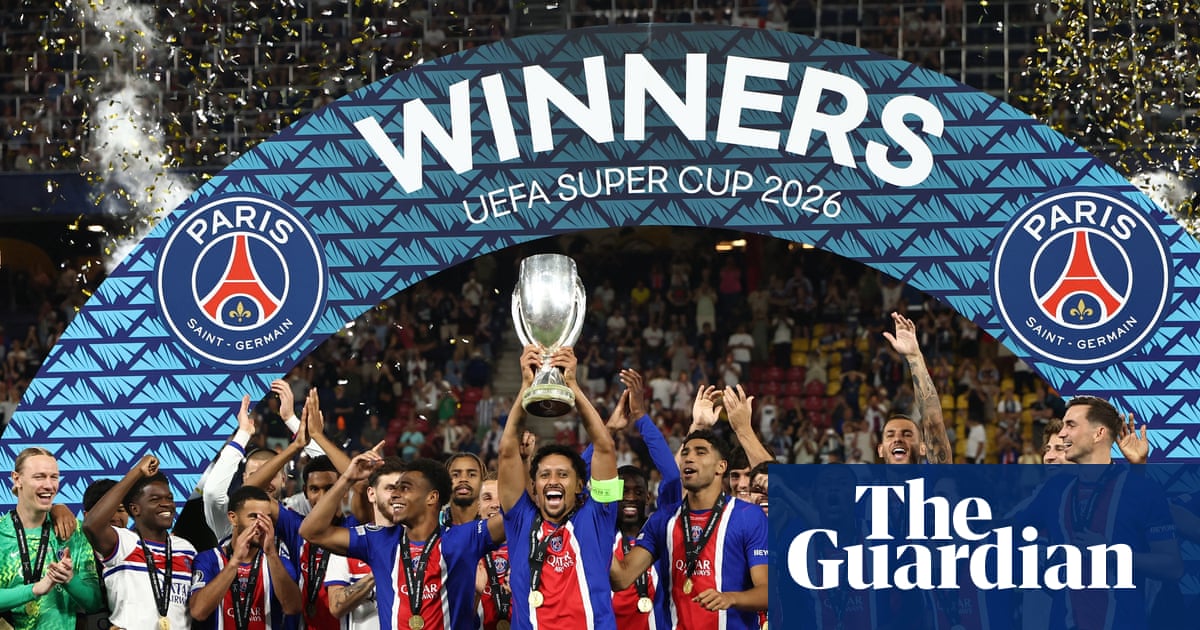
To understand what separates genuine European elite from ambition-filled challengers, look at the staggering standards at the top of the game. Marquinhos recently collected his 41 trophies in club football after Paris Saint-Germain defeated Aston Villa 3-2 in the Super Cup, as noted in The Guardian's analysis of glittering club careers.
That level of serial winning stems from ruthless clinical execution in tight moments. Neither Fenerbahçe nor Slavia possesses that luxury yet.
Fenerbahçe still show a frustrating habit of dropping their defensive line too deep when defending a narrow lead. That retreat allows opponents to pepper their penalty area with secondary crosses and second-phase recycling.
Slavia, meanwhile, suffer from glaring wasteful finishing. In their last continental fixture, despite generating 1.94 xG, they converted only once due to poor body shape at the back post.
Here is how the battle unfolds. Slavia will dominate the opening 30 minutes with furious energy and territory, but Fenerbahçe's technical midfield will gradually take control as the tempo stabilizes.
Fenerbahçe's wingers will exploit the space behind Slavia's surging wing-backs on two lethal second-half counters. Expect a tight, fiery contest where technical composure outlasts raw physical pressing.
Prediction: Fenerbahçe to carve through the press and seal a hard-fought victory with a scoreline of 2-1.
Read Next
- Man City look dominant, but European rotation will stretch them thin
- Liverpool Women look ready to break out after last season's nightmare start
- Scott Phelan's new Everton attack must deliver before November arrives
- Crystal Palace are back in the WSL, but Bethany England can't solve everything
- 🔥 Turkish Süper Lig 2025-26 — Istanbul Derby Hub
- ⭐ UCL 2026 — Champions League Quarter-Finals Hub