Tragedy in Fukuoka and the Summer of Athlete Collapses
The mercury-scorched summer of 2026 has pushed elite global athletics past a dangerous physiological redline. Across Europe, Asia, Africa, and North America, inhabitants have endured the warmest July of their lives while elite athletes collapse on live television.
The human cost turned fatal on August 7 in the southern Japanese city of Fukuoka. Saimoni Vunilagi, a young Fijian rugby player for Kyuden Voltex, died from suspected heatstroke following an intense morning training session in 35C heat.
Vunilagi was not an isolated victim of severe thermal load. In tennis, Ekaterina Alexandrova collapsed on court in Memphis, while Czech prospect Jakub Mensik suffered a near-identical heat collapse during grueling matchplay in Paris.
British cyclist Tom Pidcock plainly described the Tour de France as a war zone as competitors fought melting asphalt and soaring heatwaves. Even experienced match officials are breaking under extreme thermal strain on the pitch.
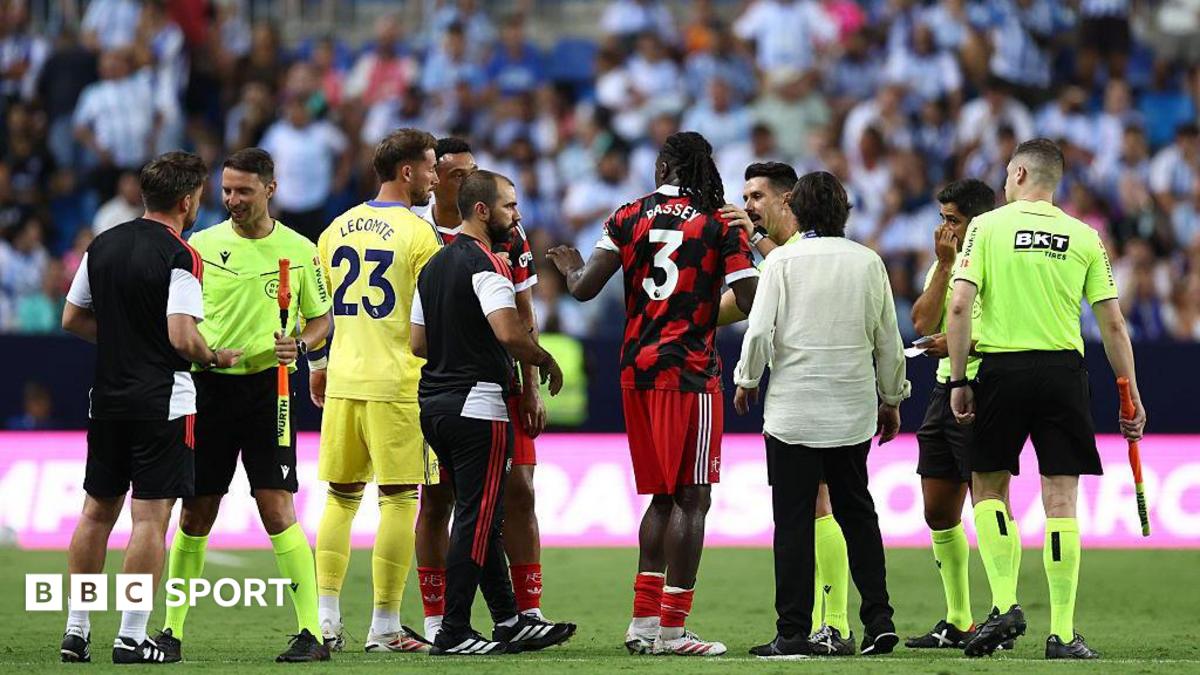
During France's chaotic last-16 World Cup victory over Paraguay, referee Ilgiz Tantashev was heavily mocked by supporters for his sluggish movement. Subsequent medical checks revealed Tantashev was suffering from acute heat strain during the match.
With the Premier League kicking off this Friday, European football is hurtling into the same sweltering reality. Club medical departments are scrambling to adapt, but traditional pre-season preparation is proving woefully inadequate.
As detailed in The Guardian's report on heat in elite sport, rising summer temperatures are forcing a fundamental reassessment of how professional athletes train and compete.
How Extreme Heat Tricks the Human Brain
For decades, sports scientists operated under the belief that the human central nervous system acted as an absolute governor. Under normal weather, mounting fatigue forces an athlete to slow down long before internal organs sustain thermal damage.
Extreme heat shatters that physiological protection mechanism completely. Exercise researcher Alex Hutchinson, author of Endure: Mind, Body, and the Curiously Elastic Limits of Human Performance, noted this dangerous shift after returning from an early run in Toronto, Canada.
When Hutchinson wrote Endure in the 2010s, he viewed heat as a minor issue mostly confined to US deep south August football practices when unconditioned players returned to training. Now living in famously frosty Canada, his perspective has changed drastically.
Hutchinson explains that while the human brain usually prevents runners from deliberately working themselves to physical collapse, extreme thermal conditions bypass those internal safety circuits.
blockquote>'Heat is one of the very few things that can trick the brain’s protective circuitry.' — Alex Hutchinson, author of EndureWhen high ambient heat pairs with dense humidity, sweat evaporation slows and core body temperature rises uncontrolled. Internal heat accumulates rapidly even after the brain signals total muscular exhaustion.
The medical danger escalates exponentially when hidden underlying health factors enter a squad environment. Athletes carrying undeclared viral loads, prior sickness, diarrhoea, or unrecorded medications face extreme physiological vulnerability.
Dr. Lee Taylor, a world leader in preparing elite athletes for extreme environments at Loughborough University, warns that combining minor sickness with heavy exertion creates a lethal internal storm. Under those conditions, routine fitness drills can escalate into exertional heatstroke within minutes.
Commercial Cash Beats Athlete Safety in Tournament Protocols
Despite multiplying medical emergencies across major sports, governing bodies continue prioritizing broadcast revenue over player welfare. Scatter-gun adaptations like television-friendly hydration breaks look responsible, but they fail to protect bodies under severe thermal stress.
Official tournament protocols provided no extra cooling concessions even when the Wet Bulb Globe Temperature crossed 32C. Governing authorities repeatedly refused to extend halftime intervals, denying players vital recovery time in cooled dressing rooms.
The commercial hypocrisy was highlighted during the World Cup final. While organizers refused extra halftime minutes for suffering players, they willingly lengthened halftime for an elaborate commercial entertainment show starring Cristiano Ronaldo, Ronaldinho, and Madonna.
Broadcasting dollars dictated match logistics while athlete health was treated as secondary. Reporting published by The Guardian on climate adaptation in sport underscores how commercial interests repeatedly block necessary safety reforms.
Historical precedent demonstrates how catastrophic poor heat preparation can be for elite competitions. At the 2019 Doha World Athletics Championships, up to 40% of runners in road events failed to finish due to sweltering night conditions.
Dr. Lee Taylor noted that in Doha, properly acclimatized athletes eliminated nearly half the field simply by staying standing. Unprepared competitors dropped out in droves as their bodies overheated.
Recreational runners hit an identical physiological wall every spring at the London Marathon. A sudden warm day routinely causes mass heat casualties because participants trained through six months of freezing winter weather without hot-weather runs.
The High-Risk Blood Chemistry Bargain in Pre-Season
Why do elite football clubs continue pushing players through sweltering pre-season workouts? The decision is driven by cellular adaptation and cardiovascular performance.
Dr. Lee Taylor points out that six weeks of structured heat exposure can expand an athlete's haemoglobin mass by 3%-6%. That red blood cell expansion matches the physiological gains achieved at high-altitude training camps in the Alps or Andes.
Coaching staff view hot weather as a performance opportunity. By exposing players to high thermal stress, clubs aim to expand blood volume and enhance oxygen delivery before domestic league action begins.
However, chasing blood adaptations carries immense physiological trade-offs. Training in intense heat requires the heart to pump blood simultaneously to working muscles and to the skin for cooling, causing massive cardiovascular strain.
That dual burden severely compromises session quality, slows muscle recovery, and accelerates glycogen depletion. Technical precision drops sharply during tactical drills as central fatigue takes hold.
Clubs that overwork players in hot weather risk entering opening fixtures with chronically fatigued squads. Soft-tissue injuries inevitably spike when exhausted muscles struggle to clear thermal metabolic waste.
To safeguard players, clubs must construct pitchside heat decks staffed by medical experts with cold-water immersion capabilities. Rapid, aggressive whole-body cooling remains the gold standard treatment to prevent fatal outcomes from exertional heatstroke.
As The Guardian's coverage of athletic performance demonstrates, treating thermal management as an afterthought is no longer a viable option for professional teams.
Why Historical Weather Models Can No Longer Save Sport
The central challenge facing modern sports science is that historical climate data has lost its predictive value. Club doctors can no longer rely on past weather averages to plan safe training workloads.
blockquote>'We used to prepare for the worst possible outcome... But that’s gone out the window over the last five years because we have these crazy outliers.' — Dr. Lee Taylor, Loughborough UniversityUnprecedented weather outliers across Europe, Asia, and North America mean dangerous heat spikes occur unpredictably. Preparing for historical worst-case scenarios leaves athletes exposed when extreme climate events strike.
Tactical managers must also adapt their matchday strategies to this new environmental reality. Head coaches who demand relentless high-pressing tactics without managing energy expenditure will see late-game collapse rates soar.
Dr. Lee Taylor emphasizes that sport faces a simple choice: adapt operations or stop playing altogether. Logistics, match timings, shading, and extended rest periods must all be adjusted.
Football cannot continue prioritizing commercial convenience over biological reality. If governing bodies refuse to flex schedules, mandate heat decks, and extend halftimes, tragedies like Vunilagi's death will become regular sports page news.
Elite sport has reached a critical juncture as autumn approaches. Without immediate, systemic changes to cooling protocols and tournament scheduling, the physical cost of summer competition will continue to climb.