Stoppage-time drama hides underlying structural issues
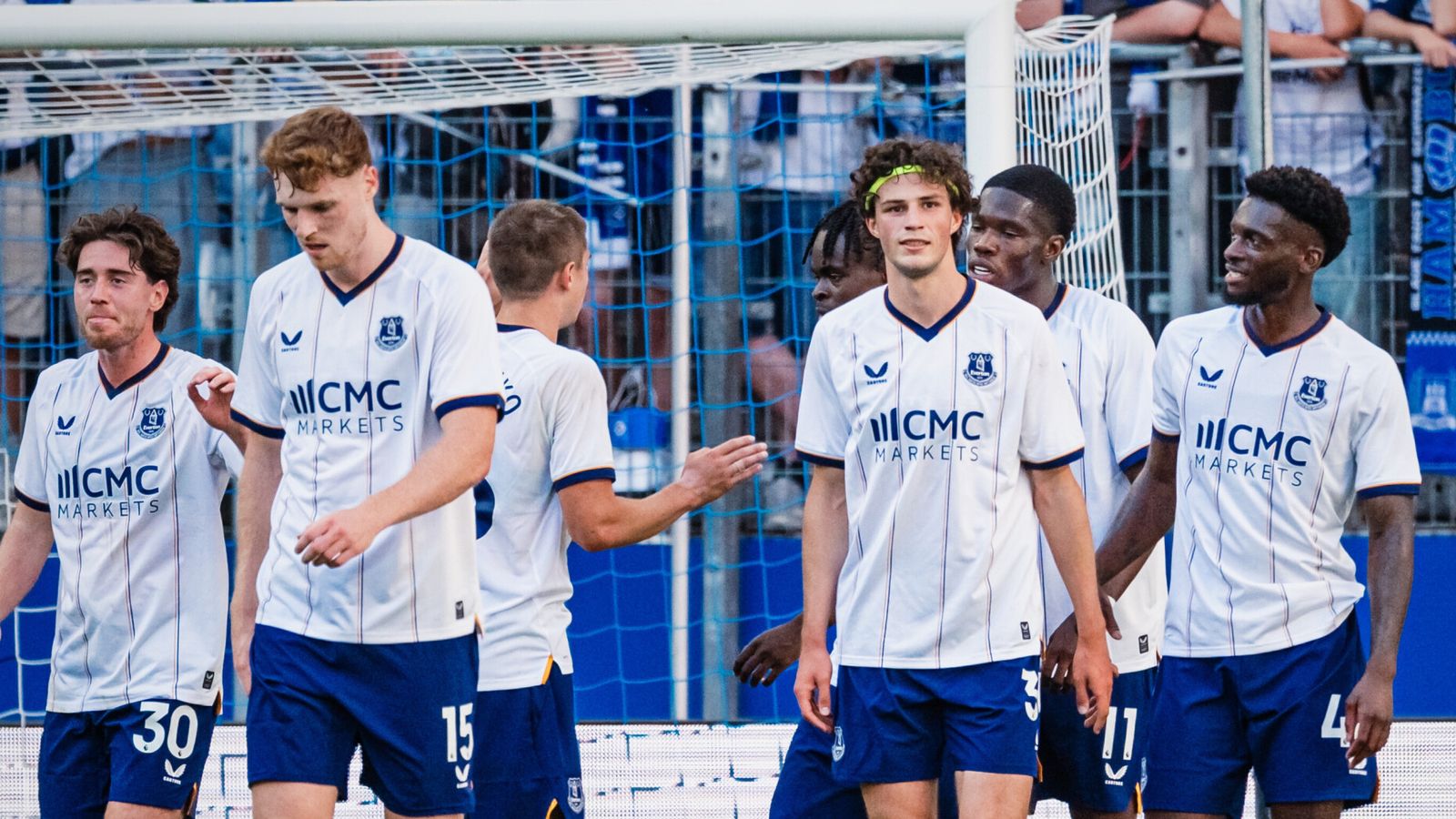
Pre-season results are famous for lying to us. A late goal in a friendly can soften the narrative, but Everton's stoppage-time victory over Hamburg on Saturday did little to mask the tactical friction sitting right in central midfield.
David Moyes got the result, yet the mechanics of the performance showed a team struggling to bridge the gap between their defensive line and the front four. Against a side operating with a mid-block, Everton struggled to progress the ball through the central channels without losing shape.
The midfield geometry isn't adding up
When Moyes sets up his low block, the spacing needs to be pristine. In Hamburg, the distance between Everton's double pivot and the attacking midfielder stretched beyond 25 meters during defensive transitions.
That disconnect left vast pockets of space for Hamburg to exploit on the counter-attack, forcing Everton's center-backs into uncomfortable recovery sprints. While they escaped with a win thanks to that late strike, Premier League transition teams won't be so forgiving come matchday one.
The pressing trigger failure
The issue isn't just about positioning; it's about timing. Everton attempted to implement a high press twice in the first half, but both attempts failed because the front line triggered the press without support from the central midfielders.
That lack of sync meant Hamburg easily bypassed the first line with simple diagonal passes into the half-spaces. If Moyes wants a compact defensive block, his midfield needs to step up in tandem with the forwards rather than staying pinned to the edge of their own box.
The bold call for the opening weekend
Expect Everton to struggle early in the domestic campaign until Moyes solves this spacing dilemma. Their opening fixture will test this exact vulnerability against teams equipped with dynamic central ball-carriers.
My prediction is clear: Everton will concede the first goal in their Premier League opener as direct result of a turnover in the central third. Until the midfield distance is compressed from 25 meters down to a tight 12 meters, top-flight opposition will slice right through them.