
Disney treated the Women's Champions League like CBBC and paid the price
The Farfalle Incident and the Failure of Gimmick Telemetry
When live coverage of high-stakes European football launches, viewers expect tactical graphics, passing networks, and pressing telemetry. On Wednesday, September 23, 2026, Disney+ opened its inaugural Women's Champions League broadcast by displaying a giant screen of farfalle pasta.
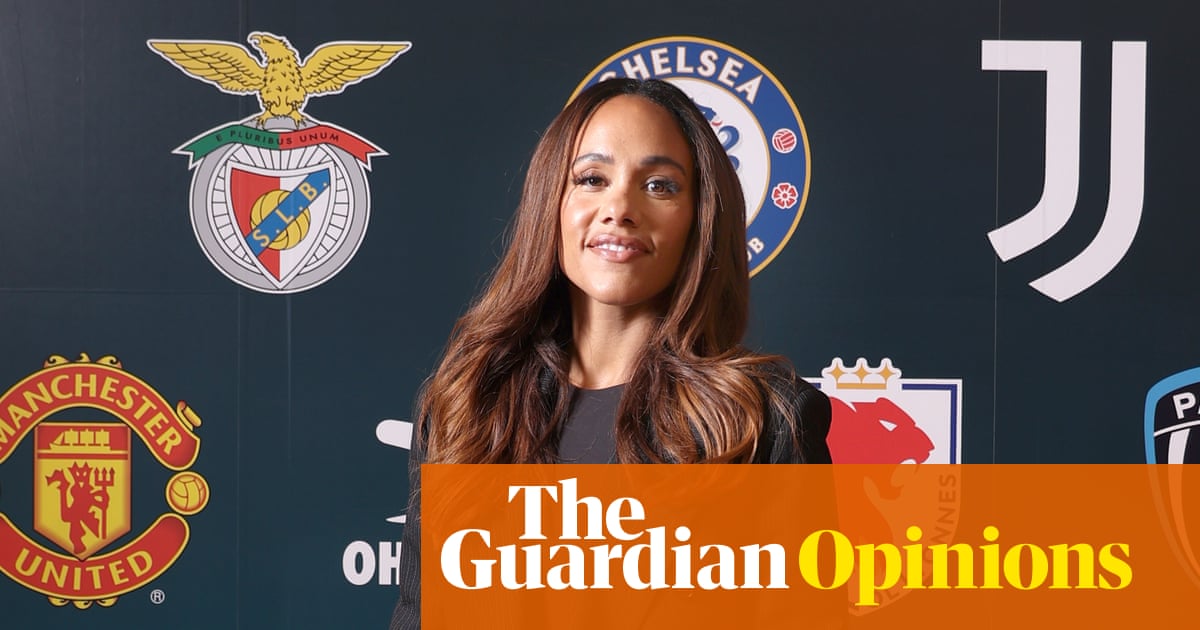
The broadcast, branded as The Hangout, featured former England international Alex Scott alongside Lianne Sanderson, content creators Tyra Mills and Alex Bailess, and a golden retriever named Barley Boy. Instead of evaluating midfield overloads or wing-back positioning, the studio panel engaged in an Italian geography quiz to identify pasta types.
Barley Boy arrived on set boasting 82,000 more Instagram followers than veteran presenter Max Rushden. Yet for serious supporters of the women's game, the spectacle felt less like premium sports journalism and more like children's television.
The contrast between expectation and reality was jarring. While fans anticipated granular analysis of squad rotation and pressing intensity, they received an impromptu cooking segment. Studio time in European football is a premium asset that should illuminate the game, not reduce it to background noise.
The optical failure was stark. A video screen built to display defensive block structures and expected goals data was instead displaying farfalle to an audience hungry for tactical breakdown. Broadcasters cannot claim to elevate elite women's competition while reducing studio presentation to lighthearted party games.
The immediate fallout across sports media was swift and unforgiving. Writing for the Telegraph, journalist Kathryn Batte offered an understandable critique of the production choices. Broadcaster Flo Lloyd-Hughes captured the collective bewilderment in a viral post on X.
"Disney’s new UWCL coverage is the closest we’ve seen to CBBC football (derogatory). I wouldn’t be surprised if we see someone gunged for making a wrong prediction or perhaps Raven will make a cameo. Keep stopping to remind myself this isn’t a dream."
High-end football broadcasts rely on authority and tactical context. Replacing pre-match tactical breakdowns with trivial games misreads why supporters tune in. Fans want to understand how a back three handles mid-block transitions, not what a reporter is cooking in Milan.
Supporters who follow the Women's Champions League are analytical consumers. They track player movement, pressing triggers, and tactical flexibilities across domestic and European leagues. Offering them pasta quizzes reveals a deep disconnect between network executives and the sport's core audience.
The Single-Show Bottleneck in Women's Football Broadcasting
The core defect of Disney's production strategy stems from a structural miscalculation in sports television. Men's football coverage benefits from dedicated segmentation across multiple specialized slots. Mainstream broadcasts deliver serious tactical analysis on matchdays, while lighthearted banter is partitioned into morning shows or social streams.
Women's football, however, frequently suffers from compressed airtime. When a network holds rights to a marquee tournament, it often attempts to squeeze every demographic target into a single pre-game hour. Broadcaster Marva Kreel diagnosed this exact problem on X following the broadcast.
"I think a lot of the problem with the debates in women’s football broadcasting over analysis and punditry v content creation and gimmicky fun, is that in men’s football you can get both – and in different shows. In women’s football you get one show, and so they try to do it all."
This single-show bottleneck creates an impossible editorial collision. Attempting to satisfy tactical purists, casual viewers, and teenage social media users simultaneously guarantees that nobody gets a satisfying broadcast. Analytical depth is sacrificed to make room for viral stunts.
Consider how traditional broadcasts build narrative tension before kickoff. Analysts isolate key matchups, track defensive shape, and measure central midfield turnover rates. Pundits dissect how full-backs exploit space when opponents press high up the pitch.
When content creation overwrites tactical analysis, the match itself becomes secondary background noise. Tyra Mills and Alex Bailess brought energy and charisma to the set, but their inclusion reflected a producer's mandate rather than an analytical necessity. Content creators bring existing followers, but converting social media likes into paid network subscriptions requires compelling, respectful match coverage.
Networks often treat younger audiences as an alien species incapable of digesting tactical information. That assumption is flatly incorrect.
Younger fans consume football through analytical YouTube breakdowns, data visualizations, and tactical video essays. Offering them pasta guessing games misjudges their football literacy.
If a broadcaster stripped out tactical analysis during a Men's Champions League fixture to quiz analysts on regional cuisine, the outcry from supporters and sponsors would be immediate. Women's football deserves the exact same structural rigor and analytical respect.
Social Media Metrics vs Broadcast Integrity
Television production has spent 20 years struggling to adapt to digital consumption habits. As Guardian columnist Max Rushden noted in his evaluation of the show, major networks face declining production budgets alongside intense pressure to generate instant social engagement.
Rushden pointed out how a casual Facebook livestream shot on an iPhone in a Sky green room could generate as many views as an expensive studio production. Network executives see those raw view counts and assume that informal, chaotic content should replace traditional broadcasting norms.
As outlined in The Guardian's review of the broadcast, TV executives routinely demand that producers capture younger demographics without understanding how younger sports fans actually consume live events. The result is an uncomfortable hybrid that alienates core viewers without retaining casual skimmers.
Executive panic often drives poor production decisions. When network leadership fixates on algorithmic engagement, they mistake fleeting social media clips for sustainable broadcast value. Sustained viewership is built on trust, authority, and deep tactical insight.
Traditional live sports television has maintained the same fundamental structure for over 50 years. Presenters deliver team news, managers provide pre-match thoughts, pundits break down tactical systems, and the broadcast hands over to commentators. At half-time and full-time, the panel analyzes pivotal incidents, missed assignments, and structural adjustments.
That classic template endures because it works. It respects the game as an elite athletic contest. Deviating from that formula requires subtle innovation, not chaotic studio stunts that distract from the match on the pitch.
In men's coverage, a studio host rarely faces demands to host a live pet segment before a Champions League tie. If Sky Sports introduced a golden retriever to dissect a tactical battle between Liverpool and Real Madrid, supporters would demand immediate editorial accountability. Women's football deserves the exact same standard of analytical respect.
Scott found herself anchored in the middle of another media firestorm. Studio hosts operate under strict producer directives; when executives order a lighthearted format, the anchor must execute it with conviction. Blaming the host for a failed production format ignores the executive directives that designed the studio setup in the first place.
The media discourse surrounding Scott often gets co-opted by bad-faith commentary. Critics who genuinely want rigorous tactical coverage must distinguish between valid production critiques and bad-faith culture war noise. The problem with The Hangout was not the talent on set, but the misguided production philosophy behind it.
Tactical Respect is the Only Path Forward
Broadcasting live football is fundamentally about honoring the action on the pitch. Viewers tune in primarily because they care about the competition, the tactical chess match, and the dramatic stakes of European knockout football. If audiences wanted pure comedy, they would choose scripted entertainment over a pre-match buildup.
By the second night of coverage, Disney quietly adjusted its format. Barley Boy was removed from the set, and the studio presentation shifted toward a more conventional setup. The rapid correction demonstrated that executive panic yields quickly when fans demand standard journalistic rigor.
The lessons from Disney's mid-week misstep are clear for every rights holder in women's sport. Networks must establish clear production priorities if they want to retain subscribers and build long-term viewership.
- Prioritize tactical analysis over studio gimmicks and trivia games.
- Separate informal creator watchalongs onto secondary digital platforms.
- Treat the Women's Champions League with the same broadcast rigor as the men's game.
First, tactical depth must be non-negotiable. Pundits should be breaking down pressing traps, defensive line heights, and expected goals models rather than hosting parlour games. The sophistication of modern football tactics requires expert commentary that illuminates the pitch for the viewer.
Second, content creators should complement coverage through specialized auxiliary streams, not hijack the primary pre-match broadcast. If a network wants an informal second-screen watchalong, build a dedicated digital feed. Preserve the main studio show for rigorous analysis, tactical breakdowns, and professional commentary.
Third, stop condescending to the audience. Women's football does not require artificial gimmicks or animal sidekicks to attract viewers. The rapid growth of the women's game over the past decade has been driven by elite athleticism, tactical evolution, and compelling rivalries.
When broadcasters treat the game with seriousness and analytical depth, audiences respond with loyalty. Subscriptions are earned through quality coverage that respects the intelligence of the viewer. Broadcasters do not need to invent circus tricks when the tactical reality on the grass is already captivating.
Moving forward, Disney and rival networks must realize that respecting the game is the most effective marketing strategy available. Give analysts the telestrator, highlight the pressing triggers, explain the tactical shifts, and leave the pets at home.
Premier League: The Official History by Anthony Dyer
The ultimate deep dive into the world's most popular league.
Frequently Asked Questions
What caused controversy in Disney's Women's Champions League coverage?
Who featured on Disney's Women's Champions League broadcast panel?
When did Disney+ launch its Women's Champions League broadcast?
Why was Disney's Women's Champions League coverage compared to CBBC?
How did journalists react to Disney's Women's Champions League launch?
More Coverage
Anthony Gordon is telling the truth about England's fatal flaw
9 hours ago
Mohamed Salah built an empire on Anfield's right wing
12 hours ago
Arsenal will get Julian Alvarez in January and Barcelona are handing it to them
13 hours agoOn This Day in Football: September 24
14 hours ago
Brighton exposed Arsenal's broken build-up and Arteta knows it
2 days, 23 hours ago
Shaun Wright-Phillips on Strictly is a reminder of football's lost wingers
5 days, 7 hours agoMore Analysis
Anthony Gordon is telling the truth about England's fatal flaw
9 hours ago
Mohamed Salah built an empire on Anfield's right wing
12 hours ago
Arsenal will get Julian Alvarez in January and Barcelona are handing it to them
13 hours agoOn This Day in Football: September 24
14 hours ago
Brighton exposed Arsenal's broken build-up and Arteta knows it
2 days, 23 hours ago