Tennis balls on the 15th green
The pristine fairways of St Andrews usually offer a sanctuary of polite applause and calm sea breezes. On Saturday afternoon at the Alfred Dunhill Links pro-am, that tranquil picture shattered into open hostility. The peaceful setting of world-class golf became the latest battleground in Scottish football's bitterest internal war.
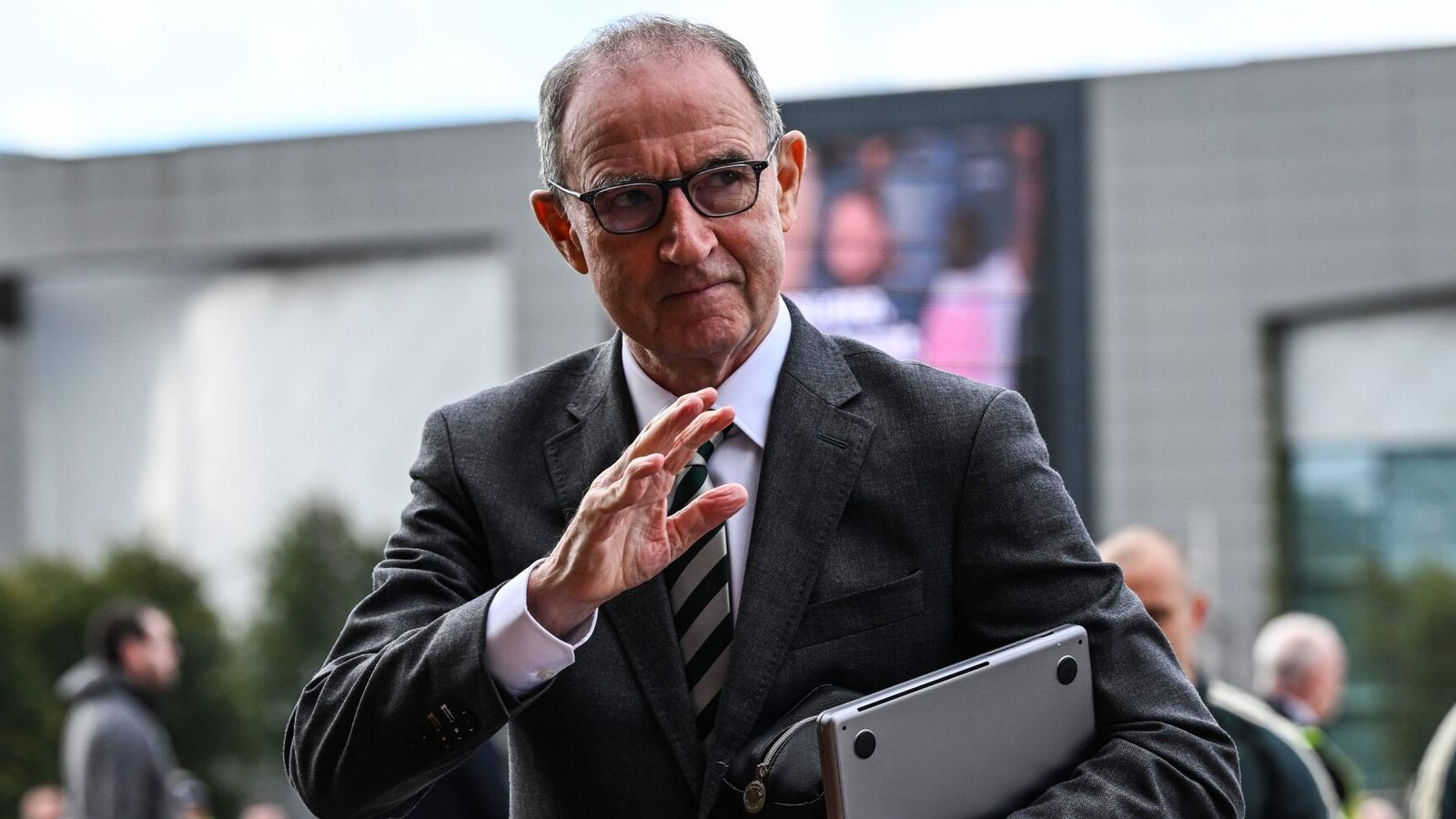
Celtic's principal shareholder Dermot Desmond was standing on the green of the 15th hole when yellow tennis balls began raining down around him. Each ball carried a printed image of the 76-year-old billionaire's face, crossed out in thick red ink. Course security moved in fast, bundling Desmond off the turf as spectators watched in astonishment.
This was no random act of individual frustration. It was a planned symbolic strike, launched on a global stage where the club's hierarchy could not simply look away.
Shortly after Desmond was escorted away, the Celtic Fans Collective released footage of the incident online. Their accompanying statement laid out their grievances without holding back:
"Dermot Desmond has essentially been allowed to run Celtic Football Club whilst using his wealth to hide from supporters and accountability. Fans took the chance today to send a message that this arrangement cannot continue."
Celtic's hierarchy issued an angry rebuttal before nightfall. The board condemned the action as a premeditated campaign that brought shame upon the club. As The Guardian's report detailed, the club immediately severed all recognition of the Celtic Fans Collective and promised indefinite stadium bans for anyone involved.
The official response was swift, punitive, and completely detached from reality. Banning fan groups does not erase the rot spreading across the pitch.
A thin lead masking tactical decay
Boardroom statements cannot hide what is happening on the grass. To understand the anger exploding in St Andrews, you must look at how Celtic played before the October international break.
On paper, Celtic still top the Scottish Premiership table, maintaining a slender margin of two points over rivals Rangers. That league table is a dangerous illusion. It masks a worrying collapse in form and structural discipline.
Martin O'Neill's side lost three consecutive matches right before the international break. The downward slide started with a demoralizing 3-1 home defeat to Ferencvaros in their Europa League opening match.
Against Ferencvaros, Celtic's defensive shape fell apart whenever possession was turned over. Both full-backs pushed absurdly high up the pitch, leaving central defenders completely unprotected against direct counter-attacks. Ferencvaros needed only three vertical passes to slice through Celtic's sluggish mid-block.
Things grew far worse in domestic play. Rangers defeated Celtic twice in back-to-back derby clashes, including a crushing victory inside Parkhead.
During that home derby, Rangers employed an aggressive central press that exposed Celtic's inability to play under pressure. Celtic completed under 72% of their forward passes, turning the ball over constantly in their own half. Whenever the central midfielders were pressed, they panicked and lumped aimless long balls toward isolated wingers.
The lack of midfield pressing triggers has left Celtic vulnerable to opponents who move the ball quickly into wide areas. O'Neill's refusal to adapt his tactical setup has allowed teams with far modest budgets to dictate tempo at Parkhead.
A closer look at Celtic's tactical shape reveals three glaring structural weaknesses:
- Midfield gaping: The central midfield trio lacks a true defensive anchor, allowing opponents to transition through the central channel unchecked.
- Isolation on the flanks: Full-backs fail to overlap, leaving wide players double-teamed against compact defensive low blocks.
- Predictable build-up: Slow distribution from the back allows opposition blocks to shift effortlessly across the pitch.
Martin O'Neill performed admirable rescue work last season after Brendan Rodgers walked out at the start of the 2025-26 campaign. O'Neill rallied the squad to claim the Premiership title ahead of Hearts on the final day. Yet nostalgia cannot mask his team's present tactical paralysis.
Celtic's attacking play has become completely predictable. They rely on individual moments of brilliance rather than rehearsed positional rotations.
The fallout of absentee ownership
The tactical decline on the pitch is the direct result of governance choices made over successive transfer windows. When money is hoarded instead of reinvested in squad quality, continental failure is guaranteed.
Supporters have grown exhausted by a transfer policy that treats European competitions as an afterthought. Summer windows consistently close without adding proven talent, forcing managers to stretch depleted squads across multiple competitions.
When results faltered early in the 2025-26 campaign, Desmond publicly blamed Rodgers for the squad's shortfalls. That pattern of deflecting blame onto managers while protecting corporate executives has eroded all trust between the stands and the board.
Desmond's distant management style worked when Celtic dominated domestic trophies without serious challenge. In a tighter title race, absentee ownership feels like abandonment to supporters paying high season ticket prices.
The tension boiled over at last November's annual general meeting. The AGM disintegrated into chaos and had to be abandoned after furious protests from shareholders and fans.
During that abandoned meeting, Desmond's son Ross read a written statement on his father's behalf. The statement defended chairman Peter Lawwell and chief executive Michael Nicholson while taking aim at disgruntled supporters:
"Those people are bullies."
Calling active fans bullies did not quiet the opposition. It cemented the belief that Celtic's leadership views its fanbase as an inconvenience rather than the lifeblood of the institution.
The board followed that meeting by banning the Green Brigade ultras group and cutting off communication channels. As BBC Sport reported, the club's decision to sever ties with the Celtic Fans Collective marks a complete breakdown in supporter relations.
You cannot run a modern football club through intimidation and legal bans. Alienating your core support while the team stumbles on the pitch is a recipe for disaster.
Why the crisis will deepen before it settles
Celtic return from the international break into a furnace. Parkhead will not be a welcoming place if O'Neill's side starts slowly against domestic opposition.
O'Neill must fix his midfield pressing triggers immediately. Continuing with a passive mid-block will invite aggressive opposition to overrun Celtic's central space again and again.
Simultaneously, the board's aggressive legal threats will fail to quell fan protests. Throwing tennis balls onto a golf green was a peaceful, high-profile demonstration. Banning the organizers will only push angry supporters toward more disruptive protests inside the stadium.
Celtic still possess enough individual quality to win matches against bottom-half Premiership teams. But against structured, physical sides, their tactical flaws will continue to be exposed.
Here is my prediction, and I own it completely. Celtic will surrender their league lead within the next six weeks.
Rangers will overtake them before the winter break unless Desmond sanctions serious January investment and opens genuine dialogue with supporter groups. Until the board stops hiding behind press releases, Celtic will remain a club at war with itself.
Read Next
- The Tennent's Sixes is back and modern sports science would hate it
- A 50-point penalty for Man City isn't cruel, it's basic arithmetic
- Frenkie de Jong's return gives Xavi the ultimate Dutch tactical engine
- This Week in Football: England Rampant and City Fallout (Sep 28–Oct 04, 2026)
- ⚽ Scottish Premiership 2025-26 — Celtic vs Rangers Hub