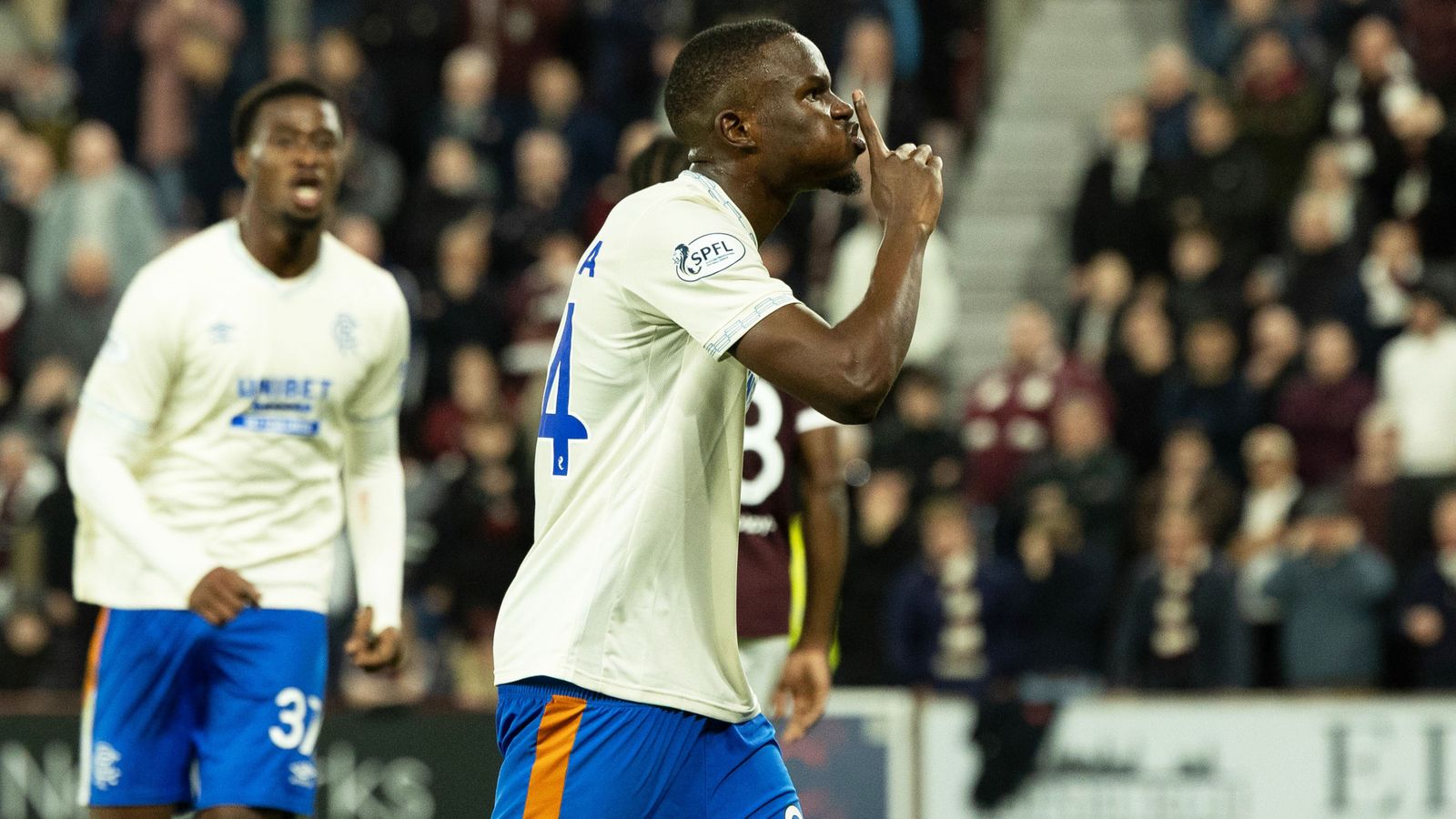
Possession without penetration at Hampden
Derek McInnes stood on the touchline at Hampden Park and watched a familiar structural problem almost derail Rangers' afternoon. For eighty minutes against Aberdeen, his team held 74% possession, stroked the ball across the halfway line, and did almost nothing with it. Aberdeen sat deep, clogged the channels, and dared Rangers to unlock them.
The numbers from the semi-final tell a damning story about Rangers' current attacking cohesion. McInnes watched his players fire 25 attempts toward goal, yet only managed five on target before the breakthrough finally arrived. Most of those efforts were wild, speculative drives from distance that never troubled the goalkeeper.
That lack of sharpness is an issue McInnes refused to sugarcoat. As BBC Scotland reported after the final whistle, the manager was far from thrilled despite securing a spot in the December final. He knows that dominating the ball means nothing if his creative players consistently pick the wrong option in the final third.
"The stats will show possession, 25 shots, but to only have five shots on target isn't good enough. Those stats are similar to what we see most weeks in terms of not enough shots on target and it's bad decision-making."
His assessment was blunt, accurate, and completely necessary. Rangers circulated possession with neat triangles between the full-backs and midfield, yet rarely tested the Aberdeen backline with direct penetrative passing. When the breakthrough came in the 83rd minute, it arrived through sheer persistence rather than tactical finesse.
Aberdeen failed to clear a scrappy ball, allowing Ryan Naderi to stab home from close range. It was an ugly way to settle a semi-final, but McInnes accepted the outcome without celebrating the method. Getting through by hook or by crook works in October, but it will not stand up in December.
The defensive wall fronted by Olwethu Makhanya
While the attack continues to misfire, Rangers are surviving on elite defensive structure. McInnes has constructed an exceptional foundation at the back, turning what used to be a fragile side into an unyielding unit. That resilience has fueled an impressive 11-game unbeaten run.
Even more impressive is the defensive concentration across that sequence. Rangers have now secured seven clean sheets across those eleven matches, suffocating opposition attacks before they can develop. When an opponent drops ten men behind the ball, counter-attacks become the primary threat, and Rangers have largely neutralized them.
At the center of that defensive transformation is Olwethu Makhanya. The centre-half has performed with remarkable consistency, reading transitional breaks and dominating his aerial duels. Against Aberdeen, Makhanya ensured the opposition forwards had virtually zero space to exploit when Rangers committed bodies forward.
His defensive discipline allows McInnes to push the rest of the team higher up the pitch without suffering sudden counters. When an attack breaks down in the final third, Makhanya's positioning snuffs out the danger at the source. It is the single biggest reason Rangers remain in matches even when the forward line goes cold.
Yet leaning so heavily on clean sheets is a dangerous way to live. If Rangers concede an early goal, they currently lack the rhythm to break down an organized low block at pace. McInnes understands this flaw better than anyone in the stadium.
The Ryan Naderi paradox
Nobody embodies Rangers' odd blend of grit and limitation quite like Ryan Naderi. Arriving from the German third tier in February, the Czech Republic forward initially looked out of his depth. Supporters questioned his touch, his mobility, and whether he possessed the pedigree to lead the line for a club under relentless scrutiny.
Those early doubts have been answered with an extraordinary display of efficiency. Naderi has now bagged eight goals this season, cementing his reputation as a big-game finisher. He proved it by bagging the decisive goal in the 1-0 league victory at Celtic Park, and he proved it again at Hampden.
Former Ibrox midfielder Andy Halliday highlighted that shift in perception when evaluating Naderi's recent output. Naderi has evolved from a hard-working squad option into an indispensable match-winner when everything else is breaking down.
"Naderi is just a man that is completely transformed this season. Not only is he complimenting that work ethic that's always been there but with goals and effectiveness at the top end of the pitch, it's that man again who comes up with the goods."
His importance has multiplied because McInnes is currently navigating a severe personnel shortage in attack. Both Lawrence Shankland and Youssef Chermiti remain unavailable, stripping the squad of two focal attacking threats. Without them, Naderi has carried the goalscoring burden almost entirely on his own shoulders.
Still, McInnes made an intriguing tactical observation regarding his target man's profile. Speaking to BBC Scotland, McInnes labelled Naderi a parasite who feeds on service. The forward does not create his own chances out of nothing; he thrives purely when accurate deliveries arrive inside the box.
That is where Rangers are letting their Czech striker down. The service from wide areas on Saturday was repeatedly floaty, behind the runner, or easily headed away by the first defender. If McInnes wants Naderi to maintain his scoring rate, the quality of delivery from wide channels must improve significantly.
What awaits in December against the Edinburgh rivals
Rangers will now wait to see whether Hearts or Hibernian emerge from the other semi-final to meet them at Hampden in December. Both Edinburgh outfits present tactical headaches that will mirror the problems Aberdeen caused. Neither side will give Rangers room to breathe between the lines.
Whether it is Hearts or Hibs lining up across the pitch, McInnes will face a familiar tactical blueprint. Expect a compact mid-block, aggressive challenges on the wings, and immediate attempts to isolate Makhanya on the counter. If Rangers repeat their slow ball circulation from the semi-final, they will find themselves in deep trouble.
To win that final, McInnes must demand three specific adjustments from his squad over the coming weeks:
- Faster ball speed through the central midfield to prevent the low block from shifting across comfortably.
- Sharper decision-making on the edge of the box rather than firing wild shots into packed defensive bodies.
- Drastic improvement in cross delivery, providing Naderi with driven, whipped balls into the six-yard box.
The stakes surrounding this final can hardly be overstated for Derek McInnes. Having managed Hearts, Kilmarnock, and Aberdeen across a dugout career spanning more than 800 matches, he has claimed just a single major trophy. Delivering silverware at Ibrox at the very first time of asking would instantly define his tenure.
The pressure from the stands will be intense. Rangers supporters have watched their club claim only three major trophies since 2012, an unacceptable return for a fanbase that demands dominance. Reaching finals is expected; winning them is the only currency that matters at Ibrox.
McInnes acknowledged that reality directly when discussing the noise that surrounds every cup tie. He knows that failing to win at Hampden unleashes immediate chaos, while victory preserves the feel-good factor around the club. Reaching the final is merely the baseline requirement.
Tactical prediction: McInnes grinds out his milestone
Can Rangers find the necessary attacking spark between now and December? The evidence suggests they will not suddenly transform into a free-flowing, high-scoring juggernaut. Shankland and Chermiti will not fix every structural issue the moment they return.
Instead, McInnes will do what he has done throughout his 800-game managerial journey: double down on structure. He will trust Makhanya and his backline to maintain their remarkable run of clean sheets. He will instruct his players to control territory, avoid cheap turnovers, and wait for Naderi to strike.
Hearts or Hibernian will make life suffocating for long stretches of the December final. The Edinburgh side will sit narrow, absorb pressure, and hope Rangers run out of ideas just as they nearly did against Aberdeen. It will be tense, cagey, and heavily tactical.
Expect McInnes to find a way through the mire once again. With Makhanya locking down the penalty area and Naderi converting the one clear opening he gets, Rangers have perfected the art of the narrow cup win. McInnes will lift his second career major trophy at Hampden, securing a gritty 1-0 victory to silence the doubters.