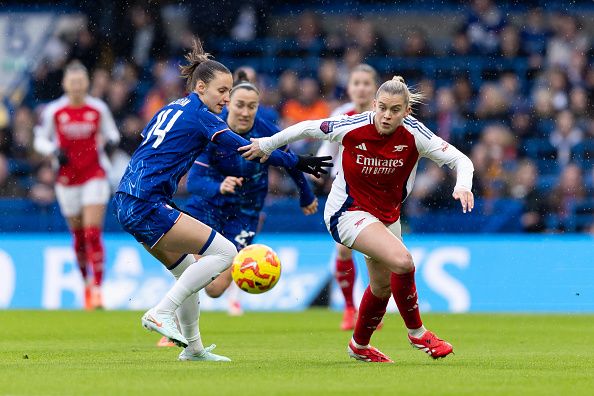
Watching Crystal Palace take the pitch against Chelsea feels like watching an indie wrestler climb into the ring with prime Brock Lesnar on Monday Night Raw. You love the underdog narrative and you respect the blood spilled to get here. Then the bell rings, reality hits like a folding chair, and you realize heart does not stop a German suplex.
This fixture was marketed across broadcast schedules as an electric London derby. Calling this a derby is like calling a falling anvil a polite disagreement with the pavement. One side operates on Champions League riches and Olympic pedigree, while the other spent last spring grinding out rainy afternoons in the Championship.
Palace earned their spot at this table through honest graft under Laura Kaminski. Winning promotion was a massive achievement for a club that spent decades wandering in the football wilderness. But the WSL does not offer welcome mats or polite introductory periods.
The moment Kaminski's side walked out to face the champions, the talent gap looked like the Atlantic Ocean. Chelsea did not just control possession. They suffocated every blade of grass, leaving Palace gasping for air inside the first ten minutes.
Selhurst Park was buzzing at kickoff, full of supporters hoping for a spirited smash-and-grab performance. Instead, they got a masterclass in why top-flight football can be utterly unforgiving. It was harsh, relentless, and completely predictable.
Sonia Bompastor turned the machine up a notch
When Emma Hayes left south-west London to take over the United States women's national team, half the league quietly celebrated. Rivals convinced themselves that Chelsea's psychological grip on English football might finally loosen. That wishful thinking lasted about five minutes into Sonia Bompastor's tenure.
Bompastor did not arrive from Lyon to preserve someone else's legacy in bubble wrap. She brought that cold, continental arrogance that treats anything less than total domination as an insult. Under her watch, Chelsea press higher, move quicker, and punish defensive hesitation with ruthless precision.
Look at the way Erin Cuthbert sets the tone in the middle of the park. Cuthbert does not just win tackles; she makes opponents regret ever asking for the ball. She treats every fifty-fifty duel like a personal insult to her family lineage.
Next to her, Chelsea rotate stars that would walk into any starting eleven in Europe. When Lucy Bronze is overlapping on the right flank like a marauding winger, an opposing full-back has nowhere to hide. Bronze has won every trophy in the sport, yet she still sprints seventy yards to close down clearances.
Then you have Lauren James drifting across the front line with pure, unfiltered swagger. James plays football with the casual disregard of an older sibling playing video games on beginner mode. She drops a shoulder, sends two defenders sliding into the advertising hoardings, and curls the ball into the top corner without breaking a sweat.
Palace could not get close enough to foul her. When James decided to accelerate into the half-spaces, Palace's defensive line collapsed into pure panic mode. That is what elite world-class talent does to newly promoted teams.

Chelsea's bad habits and the myth of perfection
Nobody should crown this Chelsea squad as flawless football gods just yet. Despite the lopsided scorelines, Bompastor's team has an irritating habit of getting sloppy whenever they pull ahead by multiple goals. They flip into exhibition mode, and against sharper opponents, that arrogance will cost them silverware.
Once Chelsea had Palace dead and buried, their backline started playing with their food. Kadeisha Buchanan and Millie Bright began wandering into the final third, leaving vast acreage behind them. A better attacking unit with genuine pace would have punished those self-indulgent lapses.
Guro Reiten was exceptional creating chances from the left, but Chelsea's central midfield grew lazy with their back-passes during the second half. They gave away cheap turnovers in areas that against Manchester City or Arsenal would lead to conceded goals. Bompastor was visibly fuming on the touchline, and she had every right to be.
When you have won five straight league titles, boredom is your biggest enemy. Chelsea players know they can operate in third gear and still blow past half the division. But that entitlement builds dangerous muscle memory for Champions League nights when the margin for error drops to zero.
Palace actually had two decent opportunities when Chelsea fell asleep at the wheel. Shanade Hopcroft managed to slip a clever through-ball into space, catching Chelsea's high line flat-footed. Unfortunately for Palace, the finishing touch matched their Championship budget rather than their top-flight ambitions.
The brutal reality of the WSL divide
Watching Chelsea dismantle Palace with 78 percent possession raises uncomfortable questions that television executives prefer to sweep under the rug. The parity in this league is a complete illusion. We love pretending every weekend brings drama, but mismatches like this are essentially expensive training sessions.
The financial gulf between the traditional top four and the rest of the pyramid has created two entirely different competitions. Chelsea operate like a heavyweight superclub backed by limitless resources, while Palace are fighting for basic survival on a fraction of the budget. When those two realities collide, the result is ugly.
We saw this exact horror film play out with Bristol City last year. They won promotion, were outmatched from opening day, and spent nine months getting pummeled before sinking straight back down. Palace are staring into the exact same abyss unless they find a way to make their home ground an absolute sewer to visit.
You cannot play expansive, open football against Chelsea when your back four lacks elite recovery pace. That was Kaminski's biggest mistake on the day. Trying to build from the back against a Bompastor press is tactical suicide, plain and simple.
Palace needed to park two double-decker buses outside their penalty box, kick every ball into the stands, and turn the match into an unwatchable scrap. Instead, they tried to trade punches with an Olympic boxer and ended up flat on the canvas. Bravery is admirable in sports, but stupidity gets you hammered 7-0 before the final whistle sounds.
Survival is not won against the giants
Palace supporters heading home through south London should not burn their season tickets or plunge into despair. Nobody expected Palace to extract points from Chelsea, and pretending this match defines their season is ridiculous. This fixture was a free hit, even if it felt like a direct blow to the jaw.
The true test for Kaminski and her squad begins when the circus leaves town. Survival in the WSL is not about beating Chelsea, Arsenal, or Manchester City. It is about taking four points from West Ham, grinding out an ugly draw against Everton, and winning your six-pointers against fellow relegation candidates.
There were tiny silver linings buried under the wreckage if you looked closely enough. Annabel Blanchard showed flashes of genuine composure when she had the ball under pressure, proving she belongs at this level. The work rate from the front line never dropped, even when the scoreline turned into a farce.
Kaminski has to use this humiliation as fuel rather than a death sentence. Her players now know the exact speed of thought and physical intensity required at the highest level. You either adapt to that standard rapidly, or the WSL spits you back down into the Championship before winter arrives.
For Chelsea, this was just another afternoon at the office, clocking in, collecting three points, and moving on to European commitments. For Palace, it was a terrifying wake-up call to the realities of life among the elite. The honeymoon of promotion is officially over, and the grim fight for survival starts right now.