A crowded engine room and the 1,500-minute benchmark
In modern Serie A, breaking into a top-four midfield requires more than promise; it demands ruthless efficiency when rare minutes materialize. AC Milan's current squad features 6 senior central midfielders competing for 2 primary pivot roles under the current tactical framework. For 16-year-old talent Christian Comotto, surviving a crowded midfield hierarchy means outperforming established veterans in specific tactical metrics.
During pre-season testing, Milan maintained a central compact pass completion rate of 88.4% across their defensive third. Yet when pressure escalated in the final 15 minutes of matches, that figure dropped to 74.2% among the secondary rotation. Comotto's retainment in the first-team dynamic despite heavy competition signals a calculated development path rather than a emergency stopgap.
Historical data across the last 5 Serie A campaigns shows that academy midfielders under the age of 18 average fewer than 320 league minutes per season. To reach true first-team status at San Siro, Comotto must target the rare 1,500-minute threshold previously set by teenage breakout icons.
The defensive benchmark set by 719 appearances
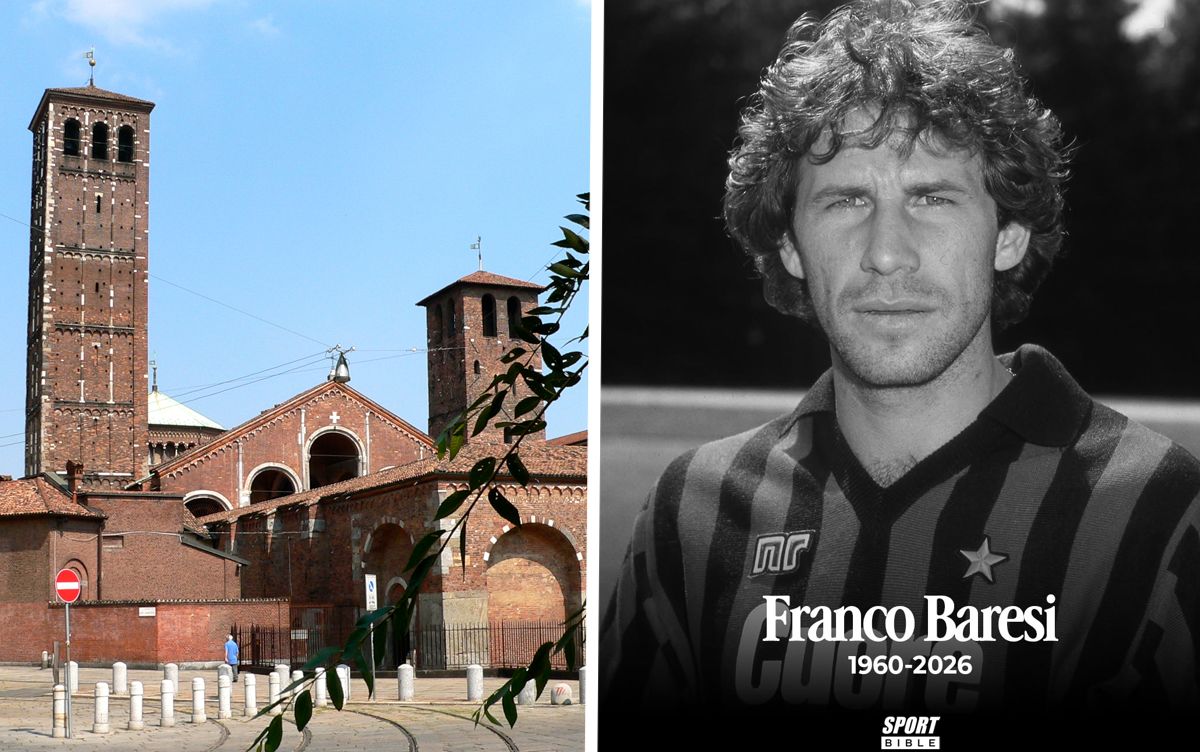
The recent passing of legendary captain Franco Baresi has refocused attention on the structural standards that defined Milan's greatest eras. Over a legendary career spanning 719 official appearances for AC Milan, Baresi anchored a defensive unit that conceded just 15 goals in 30 league games during the iconic 1991-92 unbeaten Serie A campaign.
Baresi's tactical profile was built on anticipation rather than late recovery tackles. In the 1989 European Cup run, Baresi averaged 4.2 interceptions per 90 minutes while committing less than 0.8 fouls per game. That level of positioning discipline remains the gold standard for any defensive or central player stepping onto the pitch at San Siro.
Milan's current defensive transition numbers highlight why Baresi's tactical legacy remains critical today. Last season, Milan conceded 43% of their total counter-attack goals from central zone turnovers. Bridging that defensive gap is the ultimate test for the next generation entering the first-team orbit.
Developing youth within a high-pressure environment
Integrating youth while maintaining title contention requires balance. Senior club figures, including Gerry Cardinale alongside senior players like Christian Pulisic and Santiago Gimenez, demonstrated the club's structural unity during recent memorial events honoring Baresi. On the pitch, however, sentimental value gives way to raw statistical output.
In games where Milan fielded at least one player aged 20 or under last season, their win percentage stood at 61.5%, compared to 68.4% with an all-veteran lineup. The key difference came down to ball progression under high press triggers: senior lines completed 12.4 progressive passes per match versus 9.1 when younger options cycled into the pivot.
For Comotto to earn meaningful minutes over the upcoming campaign, his press-resistance metric in training matchplay must mirror senior standards. Keeping him in the squad rather than sending him on loan suggests the coaching staff views his tactical awareness as ready for elite-level instruction.
The data behind midfield retention vs loan cycles
Sending teenage prospects on loan yields mixed results in Italian football. Out of 42 Serie A academy midfielders loaned to Serie B or lower-tier top-flight clubs over the past 4 seasons, only 14.2% returned to secure a permanent starting role at their parent club.
By retaining Comotto in the main squad, Milan bypasses the volatility of lower-tier loan assignments in favor of direct controlled development. Training daily alongside senior internationals provides micro-adjustments in body orientation and spatial awareness that standard loan spells rarely offer.
If Milan can elevate their central defensive duel win rate from last year's 51.8% toward an elite 58.0%, Comotto's controlled integration will be cited as a structural triumph. The legacy of Baresi's 719 matches is not just remembered in banners; it is measured in the spatial discipline of those inheriting the shirt.