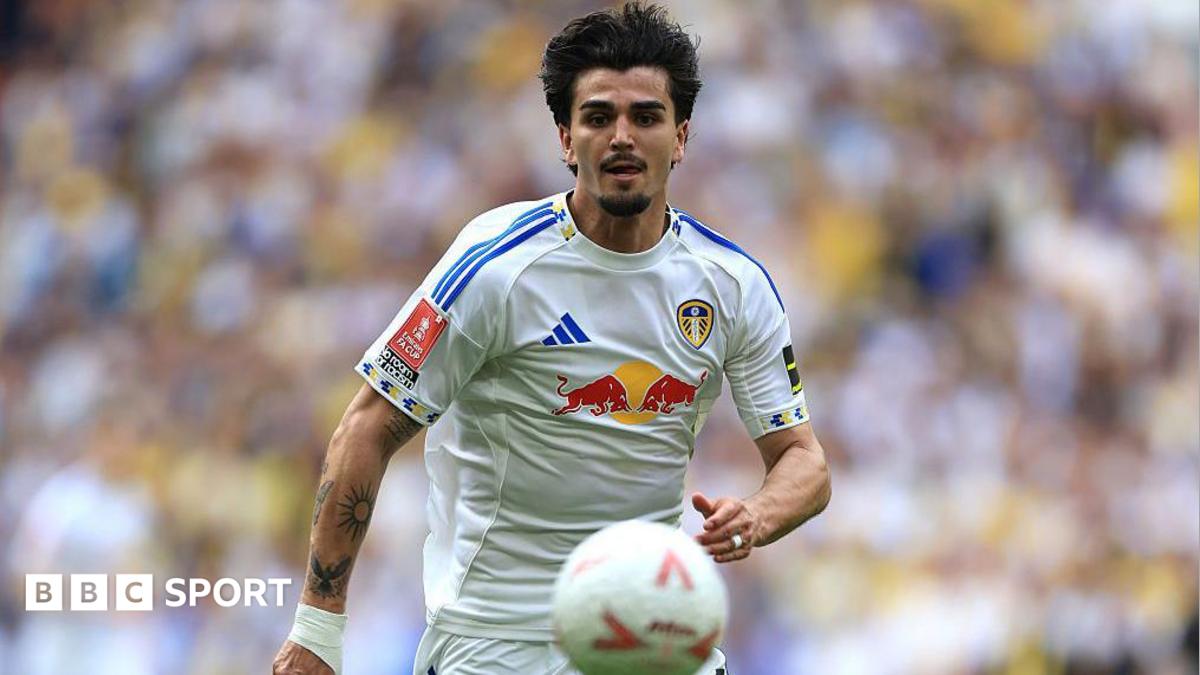
Brighton & Hove Albion have finalized the signing of Leeds United defender Pascal Struijk for a fee understood to be around £20m, committing the 26-year-old to a five-year contract at the Amex Stadium. As reported by BBC Sport, the undisclosed deal marks the end of Struijk's eight-year association with Leeds, where he made 196 appearances and established himself as a central pillar of their backline.
Yet behind the official club announcements and photos of Struijk holding the blue-and-white shirt, a quiet tension lingers within the medical offices at Lancing. The Dutch defender passed his medical examination earlier this week, but Brighton’s recruitment staff are well aware that this transfer represents a calculated physical risk. The player’s medical history is dominated by a persistent, complex groin pathology that threatened to derail his career just two seasons ago.
For Brighton’s technical director Mike Cave and Head of Performance Gary Walker, the medical evaluation of Struijk was not a routine check. It was a rigorous assessment of a pelvic region that has repeatedly broken down under high mechanical loads. In a Premier League environment that demands maximum physical output, signing a player with Struijk's history for such a substantial fee is a bold, borderline reckless decision.
Inside the medical file: The chronic groin pathology
To understand the risk Brighton are taking, one must review the timeline of Struijk’s struggles with adductor and pelvic instability. The turning point occurred on December 26, 2023, during a Boxing Day clash against Preston North End, when Struijk limped off the pitch with what was initially diagnosed as a routine groin strain. What followed was a frustrating, multi-month saga of failed conservative rehabilitation under Leeds' former medical staff.
By March 2024, after consultation with specialists, the club abandoned conservative treatment, and Struijk underwent surgery to repair a damaged adductor longus tendon. This procedure effectively ended his 2023/24 campaign, forcing him to watch from the sidelines as Leeds missed out on promotion. The surgery was designed to reattach and stabilize the tendon, but the pelvic ring is a complex network where issues in one area frequently manifest in another.
Although Struijk returned to action for the 2024/25 pre-season, the mechanical stress on his hips has remained a recurring issue. In May 2026, during the final weeks of the Premier League season where Leeds fought to secure a 14th place finish, Struijk again suffered a setback. A localized hip and groin issue forced him to miss critical training sessions and matches, before he was rushed back for the season finale against West Ham on May 24, 2026.
Here is a breakdown of Struijk's physical availability over his final three seasons at Elland Road:
- 2023/24 Season: Missed 26 matches following a Boxing Day groin injury and subsequent adductor surgery.
- 2024/25 Season: Played consistently but required strict load management to prevent adductor inflammation.
- 2025/26 Season: Missed two matches in May 2026 due to recurring hip/groin discomfort before returning for the final day.
Tactical demands under Hürzeler versus Farke
The primary concern for Brighton is how Struijk’s pelvic biomechanics will hold up under the tactical demands of head coach Fabian Hürzeler. Under Hürzeler, Brighton employs a notoriously aggressive defensive block, often pushing their center-backs to the halfway line to squeeze the opposition. This style forces defenders to make rapid lateral adjustments and explosive recovery sprints over 40 to 50 yards when the press is bypassed.
Physiologically, these recovery runs place extreme eccentric stress on the adductor muscles and the symphysis pubis. When a defender must turn at maximum speed while backpedaling, the adductors work to stabilize the pelvis against the rotational forces of the hip joint. For a player who has undergone adductor surgery, these repeated explosive transitions are the primary trigger for chronic inflammation and secondary issues like osteitis pubis.
In contrast, Daniel Farke’s defensive system at Leeds, while physically demanding, offered more structural protection. Leeds often controlled possession in a lower tempo, minimizing the frequency of isolated, long-distance recovery sprints for their center-backs. By moving to Brighton, Struijk is entering a system that will test his pelvic stability to its absolute limits, raising serious questions about whether he can remain a consistent starter.
Strategic risk and the wider impact on Leeds
Brighton’s willingness to sanction this deal reflects a desperate need for a left-sided, ball-playing defender who can progress play from deep. With Lewis Dunk now entering the twilight of his career and Igor Julio showing inconsistent form, Hürzeler needed a composed presence on the left side of his back three or back four. As The Argus reported, Brighton moved quickly to secure the Dutchman once it became clear he would not extend his Leeds contract.
Struijk’s passing range is undeniable, and his ability to break lines with his left foot makes him a perfect tactical fit. But Brighton already possess a cautionary tale in their squad in the form of Adam Webster, whose career at the Amex has been severely disrupted by persistent muscle and joint issues. Relying on two central defenders with chronic fitness concerns is a dangerous game for a club aiming to challenge for European spots.
If Gary Walker’s performance staff cannot manage Struijk’s load effectively, Brighton risk having a £20m asset sitting in the treatment room. The club's medical department underwent a major restructure following the departure of Florian Pfab in December 2025, and this transfer will be the first major test of their new integrated performance model. The pressure is on Walker to prove that his sports science team can keep Struijk on the pitch without compromising his performance levels.
For Leeds United, the departure of their vice-captain is a bitter blow but one that became financially inevitable. Entering the final year of his contract and rejecting extension offers, Struijk forced Leeds' hand, and the £20m fee represents solid business for a player with known physical vulnerabilities. Head of Medicine Henry McStay will likely feel a sense of relief at passing this physical dossier over to his counterparts on the south coast.
Farke must now use these funds to rebuild a defense that lost its most comfortable ball-carrier. While Leeds fans will mourn the loss of a player who stood by the club during their recent relegation and promotion cycles, the recruitment team at Elland Road can now pivot to younger, more durable targets. The Championship and lower Premier League tiers are filled with robust defenders who do not carry the same medical baggage as the departing Dutchman.
Ultimately, the success of this transfer will be judged by Struijk’s tactical output in August, but his availability in March. If his groin and hip issues flare up under the intense winter schedule of the Premier League, Brighton will be left counting the cost of a very expensive gamble. For now, the Seagulls have secured a high-caliber defender, but the physical clock is ticking.
Read Next
- Liverpool's Salah headache and Brighton's defensive rebuild are getting messy
- Norway and Ivory Coast hit by major injury blows ahead of knockout clash
- Arsenal are finding out that defending a Premier League title is absolute hell
- Bayern Munich are closing in on a massive deal for Nathaniel Brown
- 🏟 EFL Championship 2025-26 — Promotion Race & Play-Off Final Hub