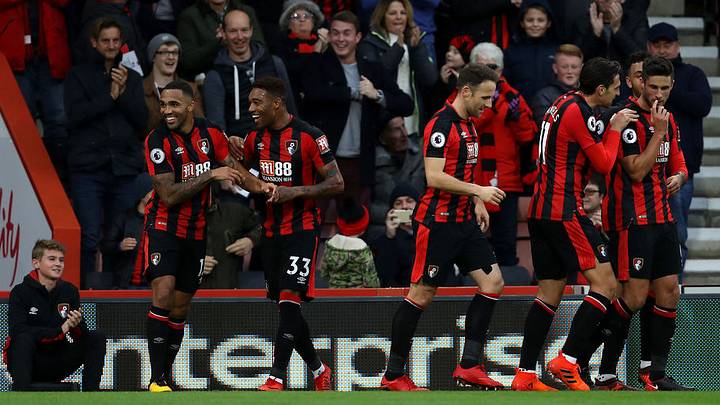
If you logged onto social media late Thursday night, you witnessed football delirium in its purest form. Bournemouth supporters were openly trading hotel booking confirmations for Frankfurt on BBC Sport match threads and fan forums. Nobody was checking cancellation policies or worrying that winter has barely begun.
Welcome to the magic of an improbable European run. One chaotic away night in Spain can convince a sensible coastal fanbase to plan a trip to Germany six months early. The Cherries fell behind early in Vigo to an Iago Aspas strike before Bafode Diakite was sent off midway through the first half.
Facing a deficit and down a man, most squads curl up and protect their goal difference. Bournemouth simply refused to lie down. Alvaro Rodriguez equalised after the break, and Rayan grabbed the winner to seal a club-record 10 consecutive wins across all competitions.
Even more staggering was the tactical endurance required to pull it off. Bournemouth contested 75% of the fixture with ten men. By full time, they looked like the team dictating terms.
The Historical Magic and Why the Numbers Defy Logic
The excitement sweeping across Dorset is not just drunken post-match optimism. Look at the Europa League standings, and you will find Bournemouth sitting alone at the summit. They are the only club in the entire competition with a perfect record of five wins from five matches.
That five-match start puts the Cherries in elite company that sounds almost made up. Bournemouth are only the third side in European competitive history to win their opening five games, joining Nuremberg from 1961-62 and Ararat from 1972-73. That is more than half a century of continental football history rewritten by a club from the south coast of England.
The offensive firepower is just as ridiculous. Bournemouth have scored at least twice in each of those five European ties. No English club had achieved that scoring mark in their opening five European games since Queens Park Rangers did it in 1976.
When your current squad is matching records set during the Ford administration, supporters have every right to get carried away. Midfielder Alex Scott certainly did not try to douse the flames when questioned on TNT Sports after the final whistle. Asked about supporters already chanting about reaching the final on 26 May, Scott embraced the ambition:
"Of course that's our dream. When you grow up wanting to be a footballer you dream of winning trophies. Where this club has come from to where it is now, full credit to everyone who has built it."
Scott added that the squad still has work to do to secure a top-eight finish before turning their attention toward lifting silverware. That dressing-room confidence runs deep. Amine Adli, who set up the Rodriguez equaliser, went even further by linking this squad to his former teammates.
Earlier this month, Adli noted striking similarities between this Bournemouth squad and the Bayer Leverkusen side he played for in 2023-24. That Leverkusen team went unbeaten across their entire domestic campaign and reached the Europa League final. When an attacking midfielder who won major silverware in Germany starts seeing those same traits in Dorset, fans cannot be blamed for looking at flight schedules.
Tactical Improvisation, David Brooks, and the Manchester United Contrast
Winning with ten men usually involves a desperate scramble, frantic clearances, and lucky deflections. This victory felt fundamentally different. As detailed in the match reporting from Galicia, Bournemouth absorbed the initial shock of Diakite's dismissal and methodically outplayed Celta Vigo on their own turf.
Much of that credit belongs to head coach Marco Rose, who took over in the summer after Andoni Iraola departed for Liverpool. Losing a manager of Iraola's caliber would destabilize most mid-tier clubs. Instead, Rose has Bournemouth playing the sharpest football in their modern history, netting at least twice in every single game during this ten-match winning streak.
Rose's in-game adjustments in Vigo proved decisive. When Diakite walked, Rose shifted David Brooks into the backline to play right defender. Brooks adapted instantly, shutting down attacks with veteran poise.
Rose told BBC Radio Solent after the match that Brooks looked like he had played fullback for ten years. Rose also revealed a sideline conversation with Tyler Adams, reminding the American midfielder that wild nights like this go far beyond chalkboard diagrams. Relentless character and shared belief mattered far more than rigid systems.
The contrast between Bournemouth's resilience and the rest of English football was impossible to ignore. Just days before this match, Manchester United faced a similar crisis against Liverpool. United suffered an early red card and promptly disintegrated into an embarrassing 4-0 humiliation.
Bournemouth did the exact opposite. They tightened their defensive shape, controlled possession in transition, and punished Celta Vigo with clinical finishing. Former England manager Glenn Hoddle was effusive in his praise on TNT Sports:
"They have deserved this result. They've played beautifully with 10 men - probably as good as I've seen a team play defensively and with the ball. I've not seen a team go down to 10 men for so long and dictate a game and deserve to win the game."
Hoddle concluded that Bournemouth were absolutely brilliant. It was high praise from a seasoned tactical mind, and it validated everything supporters were seeing on the pitch.
The Red Card Warning and the Cold Reality of Spring Football
Now comes the cold water. Amid all the romantic talk of European silverware, Bournemouth cannot afford to ignore how close they came to disaster. Getting a man sent off midway through the first half in a hostile away environment is inexcusable at this level.
Diakite put his teammates in an awful position. Overcoming that handicap against Celta Vigo makes for an unforgettable night, but it is an awful operational blueprint. Elite knockout sides in the spring will not allow a ten-man opponent to dictate tempo.
There is also the sobering question of Bournemouth's historical ceiling. The biggest honor in the club's entire history remains the second-tier Championship title from 2014-15. Before that, their standout cup run was the 1983-84 Associate Members' Cup, an obscure tournament that eventually became the EFL Trophy.
Leaping from lower-league memories to conquering Europe is a massive psychological jump. Knockout football in the spring is unforgiving. A single defensive lapse or a twisted ankle for Adams could instantly shred Bournemouth's European campaign.
Moreover, relying on Brooks to cover fullback positions highlights the real danger of squad depth. The Cherries have an electric starting unit, but their bench is not built like a continental juggernaut. If Rose is forced to invent defensive solutions every time a player is suspended, the squad will eventually hit a wall.
Why the Dreamers Are Right to Keep Their Bookings
Yet when you weigh the risks against the sheer joy of this moment, the Frankfurt dreamers have the better argument. Football fandom is not an accounting exercise. It exists for nights like Thursday in Vigo, where logic gets tossed out the window.
Finishing in the top eight of the Europa League table offers a massive structural benefit. It allows Bournemouth to bypass the knockout play-off round entirely, moving straight into the round of 16. That eliminates two grueling fixtures in the dead of winter, protecting the squad from unnecessary fatigue.
As Rose told BBC Radio Solent, teams entering competitions like this are always allowed to dream. The manager knows the road is long and that many fixtures remain, but he has instilled genuine conviction across the dressing room.
Bournemouth have spent decades clawing through administration, lower-league mud, and relegation scraps. Now they stand alone atop a major European tournament, setting scoring benchmarks that have stood since the seventies. If supporters want to spend their wages on non-refundable German hotel rooms right now, let them enjoy every single second.