Arsenal's £50m Defensive Bet
Four days before Aston Villa travel to Brighton for their season opener, Unai Emery lost the central pillar of his backline. Arsenal agreed a deal worth £50m-plus for Ezri Konsa after a week of recruitment maneuvering. The England defender now heads to London for his medical, leaving Villa Park stripped of its defensive foundation.
Mikel Arteta did not take a straight path to this signing. As BBC Sport reported, Arsenal reopened talks last week, stalled on valuation, and briefly targeted Bayer Leverkusen center-back Jarell Quansah. Reverting to Konsa reveals Arsenal's insistence on proven Premier League durability over developmental project profiles.
Konsa arrives after accumulating 286 appearances across seven seasons in the West Midlands. Since joining Villa in July 2019, he missed fewer than ten league fixtures due to muscular injuries. That physical reliability is exactly what Arteta needed to stabilize his back four alongside William Saliba.
Decoding the Quansah Pivot and Tactical Versatility
Arsenal's brief flirtation with Quansah highlights a clear hesitation in their transfer strategy. Turning back to Villa's center-back cost them additional advantage in negotiations, forcing them over the fifty-million barrier. Yet Konsa offers tactical flexibility that Quansah could not guarantee immediately.
During the 2025-26 campaign, Konsa logged 48 matches across all competitions, scoring twice and supplying one assist. His main value lies in his spatial intelligence when shifting between right-back and central roles. Under Emery, Konsa frequently formed a fluid three-man build-up shell that protected against central counter-attacks.
That hybrid role mirrors Arteta's preferred build-up mechanics at the Emirates Stadium. Ben White and Jurrien Timber have shared those duties, but neither offered Konsa's aerial block percentage in low-block scenarios. Konsa held a seventy percent duel success rate when defending isolated wide channels last season.
Furthermore, Konsa's progressive passing output has quietly expanded under Emery's coaching. He averaged four progressive passes per game last season, up from under three during the 2023-24 campaign. That improvement allows Arsenal to bypass initial opposition pressing traps without risking turnover in central midfield zones.
Aston Villa's Structural Collapse Before Brighton
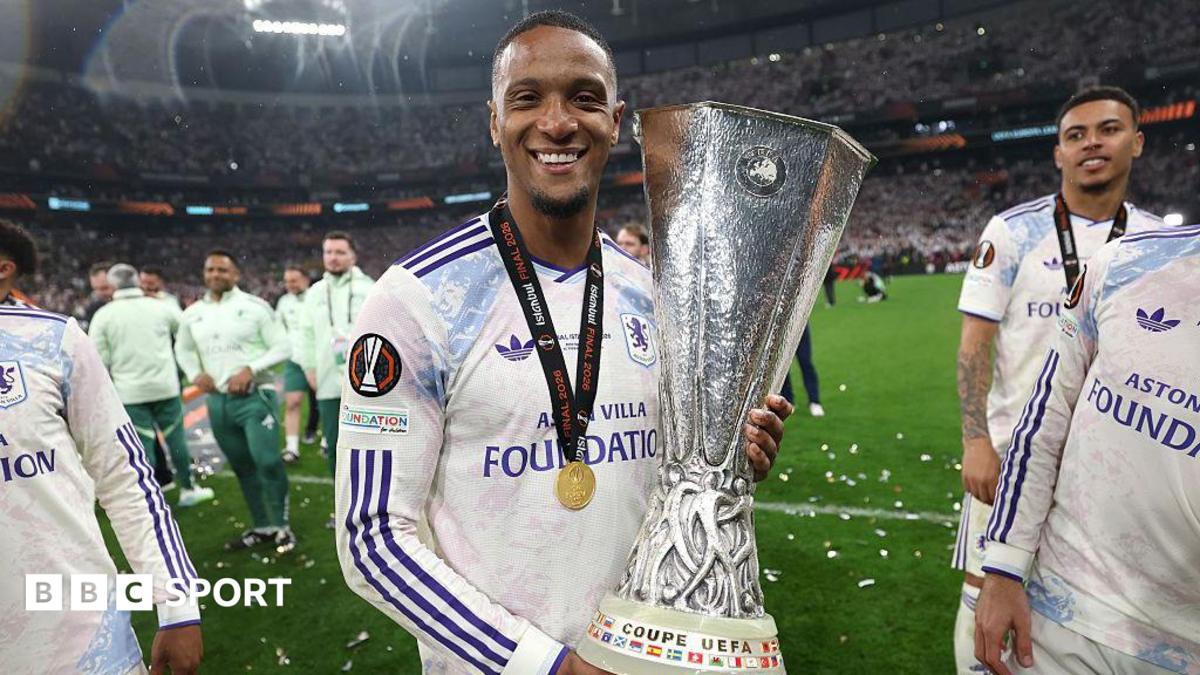
Winning European trophies usually solidifies a club's trajectory. Instead, Villa's Europa League final victory over Freiburg in May marked the peak of this squad before financial regulations forced a complete teardown. Villa finished fourth in the Premier League to claim Champions League football, only to see their core roster dismantled.
The numbers behind Villa's fire sale are staggering. Morgan Rogers left for Chelsea in a club-record £117m transfer after scoring in that Freiburg final. Youri Tielemans, who scored the second goal in May, was sold to Manchester United to satisfy financial rules.
Left-back Lucas Digne was allowed to join Paris Saint-Germain, replaced by Matteo Ruggeri from Atletico Madrid. With goalkeeper Emiliano Martinez also preparing his exit, Konsa's departure strips away four guaranteed starters from last May's lineup. Villa are attempting a squad transformation that typically requires three separate transfer windows.
Zero Pre-Season Minutes Creates Immediate Vulnerability
The timing of this transfer creates acute tactical friction for Emery. Konsa played every minute of England's World Cup run to third place, forcing Villa to grant him four full weeks of mandatory rest. Consequently, he featured in zero pre-season matches for Villa this summer.
He missed the 2-1 Super Cup defeat to Paris Saint-Germain entirely. Emery confirmed his absence after their final friendly against Borussia Monchengladbach, stating:
"They are joining us after this match."
Integrating a new center-back pairing four days before facing Brighton is a recipe for defensive disorganization. Ruggeri and new central combinations have had no game reps together under match conditions. Villa's offside trap relies on total synchronization, which cannot be forged in two training sessions.
Without Konsa covering the right channel, Villa's high line becomes immensely vulnerable to runners behind. Last season, Konsa recovered over three loose balls per game inside the defensive third. Replacing those instincts overnight with unproven partnerships presents massive risk for Villa's opening fixtures.
Statistical Analysis of Konsa's Impact
To understand what Villa are losing and Arsenal are gaining, we must look at defensive efficiency numbers. Over seven seasons, Konsa consistently ranked in the upper quartile for recovery tackles inside the penalty area. His composure under high pressing triggers turned defensive recoveries directly into transition attacks.
During England's World Cup campaign in North America, Konsa recorded a ninety-one percent pass completion rate under pressure. That statistical profile matches top-tier modern center-backs who thrive in high-line defensive schemes. He rarely commits reckless fouls, averaging under half a yellow card per game across his 286 Villa games.
However, critics can fairly point to his passive aerial numbers when defending dynamic set-piece routines. In European matches last season, Villa conceded five goals from corner situations where Konsa lost his marker at the back post. Arsenal's set-piece coach Nicolas Jover will need to address that specific weakness immediately.
Additionally, Konsa's duel winning rate drops from 72 percent on the ground to 54 percent in high aerial duels. Against physical target men like Erling Haaland or Ivan Toney, he relies heavily on body positioning rather than raw leap. If isolated against aerial power, he requires central cover from a partner like Saliba.
Squad Dynamics and Squad Building Context
Arsenal's defensive spending fits a broader squad restructuring this August. With Ethan Nwaneri expected to depart on loan to secure regular starter minutes, Arteta is streamlining his senior squad. Adding Konsa provides defensive insurance while allowing younger squad options to gain development exposure elsewhere.
The tactical payoff also connects to Martin Odegaard's return to peak sharpness. A refreshed Odegaard leading the front press requires absolute security behind the midfield line to prevent counter-attacks. Konsa's speed across the turf provides that exact safety net when Arsenal pin opponents into deep low blocks.
The Cost of Financial Compliance
Villa's management has publicly criticized profitability rules, but their squad gutting is self-inflicted by aggressive wage structuring. Selling Rogers, Tielemans, and Konsa generates over two hundred million in revenue, yet it severely degrades matchday quality. A squad qualified for Champions League football should be adding depth, not shedding international starters.
Captain John McGinn remained vocal last week, insisting the squad retains its core tactical principles and identity. Yet tactical identity relies on individual execution, which disappears when four elite starters walk out the door simultaneously. As discussed in recent coverage of England's defensive reshuffle, losing established national team defenders alters a club's trajectory.
Final Tactical Verdict
Arsenal are securing an elite defender at the peak of his career. At twenty-eight, Konsa brings championship experience, tactical elasticity, and proven Premier League resilience. His ability to cover wide gaps allows Arteta to commit extra midfielders forward without exposing central gaps.
For Aston Villa, the immediate outlook is grim. Stripping away 286 matches of defensive cohesion days before the opening fixture against Brighton creates enormous tactical risk. Emery is one of Europe's premier strategists, but even his meticulous coaching cannot instantly repair a broken defensive spine.
Read Next
- Arsenal's £51m Ezri Konsa deal solves a crisis, but flaws remain
- Unai Emery is rebuilding Aston Villa on the fly and the cracks are showing
- Arsenal turn to Victor Osimhen as Julian Alvarez door slams shut
- Ethan Nwaneri's Arsenal future hinges on late loan offers before deadline
- ⭐ UCL 2026 — Champions League Quarter-Finals Hub