
Arsenal are taking a massive risk by selling Leandro Trossard
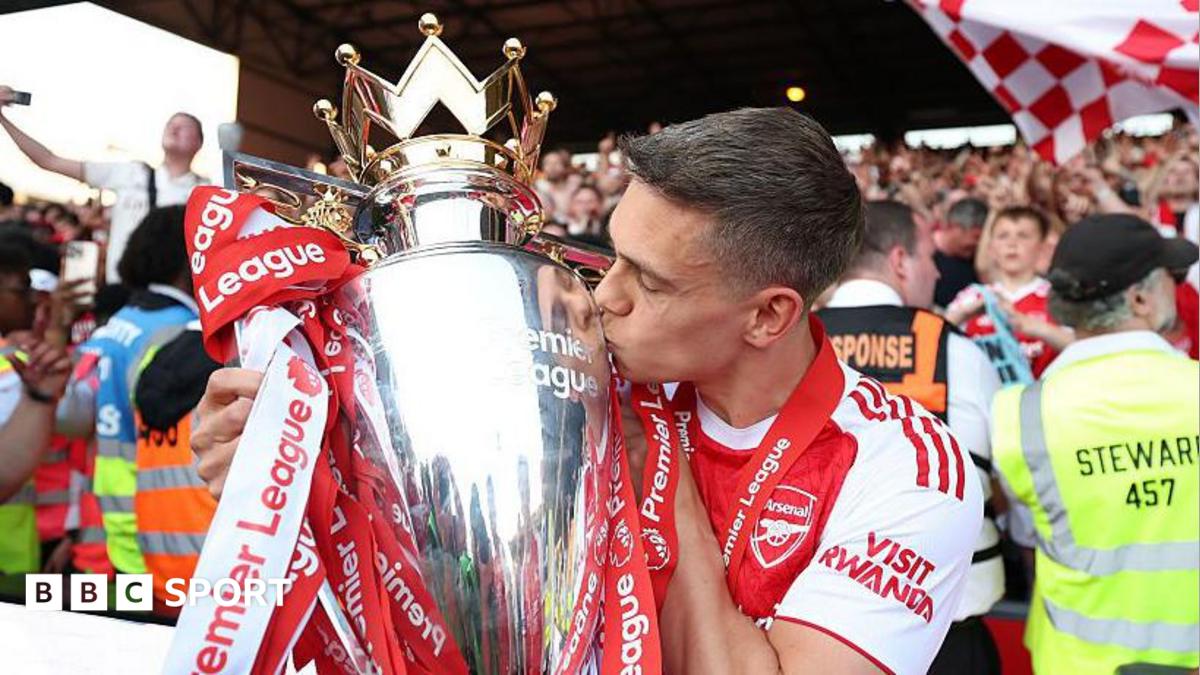
Arteta's tactical safety valve is gone
The tactical implications of Arsenal's latest transfer are significant. As the BBC reported, Arsenal have agreed a fee to sell Belgium forward Leandro Trossard to Besiktas. While moving a player turning 31 years old looks like standard squad maintenance, this sale strips Mikel Arteta of his most reliable safety valve.
Trossard was the ultimate game-state corrector. When Arsenal's structured possession stagnated against deep defensive blocks, he was the player who could inject unpredictability. His departure leaves a void that cannot be easily filled by the current squad members.
When Arsenal missed out on Mykhailo Mudryk in January 2023, signing Trossard from Brighton felt like a backup plan. Yet, the Belgian immediately proved to be the superior tactical fit. His first half-season yielded ten assists, including three in a single half against Fulham.
Trossard possessed the football intelligence to grasp Arteta's complex positioning guidelines instantly. He understood the timing of the press, knowing exactly when to drop deep to drag center-backs out of position. This tactical maturity made him a favorite during key title run-ins.
The numbers behind the super-sub illusion
Labeling Trossard a super-sub ignores his immense statistical contribution. During the 2023/24 campaign, his finishing efficiency kept Arsenal in the title race, yielding 17 goals in all competitions. He specialized in finding the corners of the net with minimal backlift, catching goalkeepers off guard before they could set their feet.
His shot conversion rate during that peak period stood at 24%, putting him in the absolute elite bracket of European wingers. He did not need a series of clean possession sequences to make an impact. Instead, he manufactured shooting opportunities from tight half-spaces inside the penalty box.
But that extreme efficiency masked a physical decline that became impossible to ignore last season. His off-the-ball sprint volumes fell, and his defensive intensity waned. In Arteta's demanding system, a winger who cannot sustain a high-intensity press is a luxury the team cannot afford.
Arteta's defensive strategy relies on a coordinated front-line press to protect the midfield. When Trossard first arrived, his defensive actions in the final third were high, averaging over four per match. He was disciplined in shutting down passing lanes and tracking back to support his fullback.
By the end of last season, those defensive numbers had fallen dramatically. His successful tackles in the final third dropped by half, creating a defensive weak spot on the left side. Opponents targeted this area, bypassing Arsenal's first line of press with ease.
This drop-off forced Declan Rice to sprint wide to cover the space, leaving the center of the pitch exposed. The tactical imbalance created by Trossard's physical decline outweighed his goal-scoring contributions. Arteta decided that structural security was more important than occasional individual brilliance.
The physical demands of the Premier League have reached unprecedented levels, particularly for wide players. Wingers are expected to sprint back to help their fullbacks, press opposing center-backs, and make runs in behind. This continuous high-intensity workload takes a heavy toll on players as they enter their thirties.
Trossard's physical data over the past year indicated that he was struggling to meet these intense physical requirements. His top speed in sprints had declined slightly, and his recovery times between high-intensity runs were longer. While his technical skills remained world-class, his body could no longer sustain the physical output that Arteta demands over a full ninety minutes.
The left-side construction site and the depth gamble
Arsenal's left flank has been a tactical puzzle for several seasons. When Oleksandr Zinchenko inverted into midfield, Trossard excelled by drifting inside to occupy the vacated central spaces. He formed a strong understanding with Kai Havertz, letting the left-back handle the wider areas.
As opponents adapted to this rotation, Arteta adjusted by utilizing more defensive fullbacks like Jurrien Timber. These players do not overlap with the same frequency, meaning the left winger must stay wide to stretch the opponent's backline. This shift exposed Trossard's lack of raw pace.
He lacks the explosive acceleration to beat defenders on the outside like Gabriel Martinelli does. When forced to play as a traditional winger, Trossard's passing accuracy under pressure dropped to 74% as he recycled possession backward. The tactical system began to work against his natural strengths.
Trossard's best moments often came when pairing with Kai Havertz. The two players shared an intuitive understanding of space, constantly swapping positions to confuse opposing center-backs. When Trossard occupied the false nine role, Havertz was free to make late runs into the box from deep midfield positions.
This rotation was particularly effective against teams that employed man-marking schemes. The movement dragged defenders out of their zones, creating channels for wingers to exploit. When Havertz moved forward to lead the line, Trossard's diagonal runs from the left flank provided a constant second threat.
Without Trossard, Arsenal's attacking patterns risk becoming more predictable. Martinelli is a direct runner who prefers to receive the ball wide and drive at his defender. This simplifies the defensive task for opponents, who can focus on isolating the winger without worrying about central rotations.
Arteta is notorious for his reluctance to rotate his starting lineup. Bukayo Saka and Martin Ødegaard are routinely played to the point of exhaustion. Without Trossard to share the load, the physical demands on the remaining forwards will increase significantly.
The burden now falls entirely on Gabriel Martinelli to recapture his best form. Martinelli's goal output has fluctuated, and he has struggled when teams defend in a low block. If he suffers an injury, Arsenal lack an experienced alternative on the left flank.
Relying on academy prospects like Ethan Nwaneri in high-stakes matches is a massive risk. While Nwaneri is talented, he lacks the physical maturity required for the Premier League. Arsenal's title aspirations could easily be derailed by a single injury in the forward line.
What Besiktas are getting and the replacement puzzle
For Besiktas, this transfer represents an excellent piece of business. The Turkish league is played at a slower tempo, which will suit Trossard's current physical profile. He will not be required to make recovery runs over fifty yards to help his fullback.
Instead, Besiktas can focus on using his technical skills in the final third. His close control and two-footedness will make him incredibly effective against low defensive blocks. He will likely thrive in a central playmaker role where he can dictate the attack.
In Istanbul, Trossard can be the focal point of the team rather than a utility player. If his minutes are managed carefully, he can perform at a high level for several seasons. He leaves London having played a key role in Arsenal's recent rise, but his departure marks the end of an era.
Trossard was the player Arteta trusted in the most tense situations. His goal against Chelsea at Stamford Bridge secured a vital draw when the team was struggling to create chances. He also scored the only goal in a tight 1-0 victory at Goodison Park, a ground where Arsenal historically struggle.
In European competition, he proved his value on the biggest stage. His goal against Porto rescued Arsenal's Champions League campaign, sending the tie to penalties. He possessed a rare composure, never rushing his decisions in the penalty area regardless of the match context.
This composure is not easily replaced, especially in a squad that has occasionally struggled with pressure. While younger players have higher physical ceilings, they often lack the tactical patience Trossard exhibited. His departure removes a significant amount of competitive experience from the dressing room.
Modern football clubs do not operate in a vacuum, and Arsenal's transfer decisions are heavily influenced by financial regulations. Selling a player in his thirties represents a smart piece of business from a bookkeeping perspective. It allows the club to book a profit on a player bought for a modest fee, while freeing up significant room on the wage bill.
However, fans do not celebrate healthy balance sheets when a title challenge falters in spring. Reinvesting the funds from Trossard's sale directly into the squad is vital to maintain competitiveness. If the board uses the savings to offset previous spending rather than reinforcing the attack, it will damage their relationship with the fanbase.
The decision to sell Trossard suggests that Arsenal have a specific replacement profile in mind. Arteta needs a player who can combine the technical security of Trossard with the physical dynamism of Martinelli. Finding such a player in the current transfer market is both difficult and expensive.
The ideal candidate must be comfortable playing in tight spaces while maintaining the capacity to run in behind defenses. They must also possess the defensive discipline required to execute Arsenal's counter-press. If Arsenal do not sign a player of this caliber, the squad will be weaker than it was last season.
Entering the new campaign with fewer attacking options is a massive gamble for a club aiming to win the title. The hierarchy must act quickly to fill the void left by Trossard's departure. Otherwise, the decision to agree to this sale will be remembered as a costly, avoidable miscalculation.
Read Next
- Arsenal's transfer strategy takes a hit as Trossard move nears
- Arsenal are gutting the bench and chasing shadows
- Arsenal can stop chasing Bruno Guimaraes before they go bankrupt
- Arsenal's transfer strategy is shifting from controlled to chaotic
- 🔥 Turkish Süper Lig 2025-26 — Istanbul Derby Hub
- ⭐ UCL 2026 — Champions League Quarter-Finals Hub
The Mixer: The Story of Premier League Tactics, from Arte to Guardiola
The must-read deep dive into the modern Premier League.
Frequently Asked Questions
Why did Arsenal decide to sell Leandro Trossard to Besiktas?
What tactical role did Leandro Trossard play for Arsenal?
How did Trossard's decline affect Arsenal's midfield defense?
How productive was Trossard during his time at Arsenal?
What happens to Arsenal's squad depth after Trossard's departure?
More Coverage

Arsenal face Leeds with Arteta locked in and a point to prove
5 days, 7 hours ago
Why Tottenham Are Screwed and Man City's Perfect Start Means Nothing
5 days, 8 hours ago
Tottenham are stuck at the bottom and history says they should panic
5 days, 8 hours ago
Erling Haaland Chose Barcelona Over Arsenal and It Makes Total Sense
5 days, 20 hours ago
Top 10: World Football's Biggest Storylines, Scandals, and Shocks of 2026
6 days, 7 hours ago
Why Martin Odegaard and Premier League Stars Are Obsessed With VR
6 days, 14 hours agoMore Analysis
Arsenal face Leeds with Arteta locked in and a point to prove
5 days, 7 hours ago
Why Tottenham Are Screwed and Man City's Perfect Start Means Nothing
5 days, 8 hours ago
Tottenham are stuck at the bottom and history says they should panic
5 days, 8 hours ago
Erling Haaland Chose Barcelona Over Arsenal and It Makes Total Sense
5 days, 20 hours ago
Why Martin Odegaard and Premier League Stars Are Obsessed With VR
6 days, 14 hours ago